In industries such as apparel, luggage, and children’s strollers, bulk purchasing of metal buttons not only reduces unit costs but also ensures supply chain continuity. However, if a supplier’s production capacity is unstable, quality fluctuates significantly, or delivery lead times are unpredictable, this can actually result in greater losses for brands.
Therefore, for buyers seeking metal button factories in China’s major cities, understanding how a Shenzhen-based metal button factory ensures stable supply through systematic production management is essential for making informed decisions. This article will analyze the key factors behind stable production, using the nearly three-decade-long experience of Shenzhen Songji Buttons as a case study.
Why is stable production the core requirement for well-known brands when sourcing metal buttons?
For apparel brands, children’s stroller manufacturers, or luggage companies, a disruption in the supply of a single button can bring an entire production line to a standstill. For example, a high-end children’s stroller may contain anywhere from a dozen to over sixty metal buttons, used in various components such as seatbelt fasteners, seat adjustments, and canopy connections. If there is a supply disruption for a specific type of four-hole button or I-shaped button, the assembly line cannot complete the finished product.
So, how do Shenzhen-based metal button manufacturers achieve stable production? Let’s examine five key aspects: production capacity, raw material management, quality control systems, customization capabilities, and supply chain coordination.
Large-scale production capacity and fully automated production lines form the foundation of stable supply
Metal button production involves multiple processes, including stamping, polishing, electroplating, and assembly. A bottleneck in any of these stages can lead to delays. Factories equipped with fully automated production lines can precisely control each step through preset programs, significantly reducing human error and downtime.
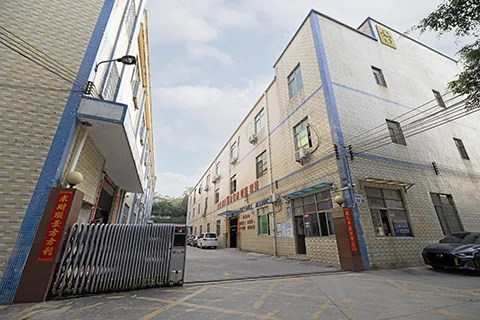
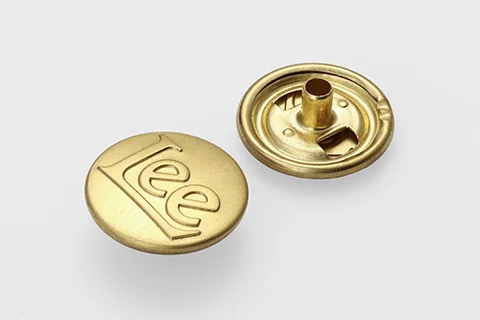
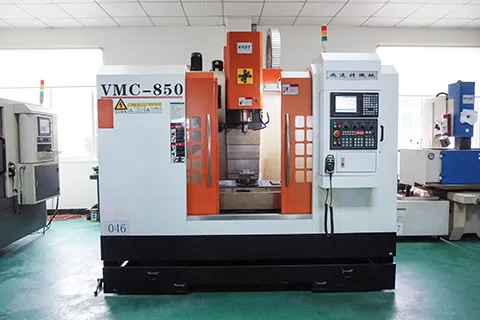
Songji Buttons operates a proprietary production facility in Shenzhen spanning over 12,000 square meters, equipped with nearly 700 advanced production and testing machines, including fully automated high-speed punch presses, CNC machining centers, mirror-finish spark erosion machines, automatic button sorting machines, and automatic packaging machines. Songji Buttons’ proprietary “one-die-multi-button” patented process enables the simultaneous molding of 4 to 6 buttons in a single stamping operation, increasing production capacity by 6 to 10 times compared to traditional methods. At full production capacity, the facility consumes 300 tons of copper and 60 tons of alloy per month. This large-scale production capability allows the company to fulfill massive orders from retail giants such as Walmart and GAP, while also providing a stable supply of denim buttons to brands like LEE and CARHARTT.
Raw Material Control and Safety Stock Mechanisms Mitigate Supply Risks
The primary raw materials for metal buttons are copper and zinc alloys, whose prices are highly susceptible to market fluctuations. Insufficient raw material reserves can easily lead to production interruptions due to price hikes or supply shortages. Therefore, professional button manufacturers establish routine safety stock systems.
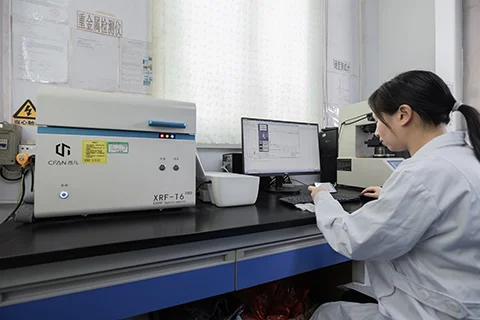
Songji implements batch identification management for every incoming shipment of copper and zinc alloy. Using a spectrometer, the company screens for purity to ensure that eco-friendly copper contains no less than 99.5% copper, and employs a heavy metal detector to keep total lead content below 60 ppm.
In addition, Songji anticipates quarterly demand forecasts from clients to pre-stock common specifications of finished and semi-finished products, establishing a safety stock mechanism. For urgent bulk replenishment requests from brands such as Walmart and GAP, we can respond within 72 hours. This “stock on demand, replenish immediately” model effectively prevents delivery delays caused by raw material shortages or sudden surges in orders.
End-to-End Quality Control and Traceability System Ensure Consistent Quality
Stable production requires not only the ability to supply but also “consistent supply”: every batch of buttons must be highly consistent in size, color, and fastening strength. Songji has established over 30 standardized inspection checkpoints covering the entire supply chain, from raw material intake to finished product shipment.
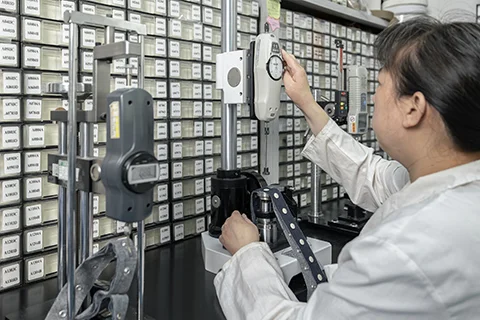
During production, hourly inspections are conducted on processes such as stamping, polishing, and electroplating to immediately remove 15 common defects, including button deformation, burrs on button heads, and eccentricity in snap fasteners. At the finished product stage, reliability is verified using equipment such as tensile testers, salt spray testers, and wash testers: standard five-prong snaps have a tensile strength of ≥90N, child-specific four-prong snaps ≥35kg, and special hook-and-loop fasteners can reach 300kg. Salt spray testing can be conducted at multiple levels, including 24 hours at 1% concentration, 24 hours at 5% concentration, or 50 hours at 5% concentration.
All test reports are categorized and retained for at least five years. Each product batch is assigned a unique traceability code, allowing for the retrieval of information such as raw material batch numbers, production dates, and quality inspectors. Thanks to this system, Songji has successfully passed 72 factory audits conducted by eight international brands—including GAP, Walmart, LEE, and Carter’s—over the past decade, maintaining a factory defect rate below 0.3%.
Deep Customization Capabilities and Rapid Response
Stable production does not mean limiting ourselves to standard products. Many brands require the integration of logos, unique shapes, or brand color schemes into button designs, which demands that the factory possess customization capabilities ranging from mold development to rapid prototyping.
Songji boasts a team of professional designers who launch an average of 100 new styles per month. The company has secured over 100 national patents for button products and offers end-to-end OEM/ODM services—from mold development and manufacturing to surface finishing. Custom prototyping cycles can be compressed to just 5 to 7 days.
The four-hole buttons custom-made for the NUNA stroller brand feature edges polished with a mirror-finish spark machine, boast a tensile strength of 95N, and pass a 72-hour salt spray test; the vintage-style I-shaped buttons custom-made for LEE jeans maintain color stability even after 50 enzyme washes; and the connectors developed for BMW’s child safety seat brand meet 300kg tensile strength tests and automotive-grade safety standards. This consistent standard of quality, maintained from small-batch prototyping through to mass production, has established Songji as a long-term partner to over 500 brands, including Armani, Burberry, DIESEL, and PORTS.
Supply Chain Coordination and Logistics Support
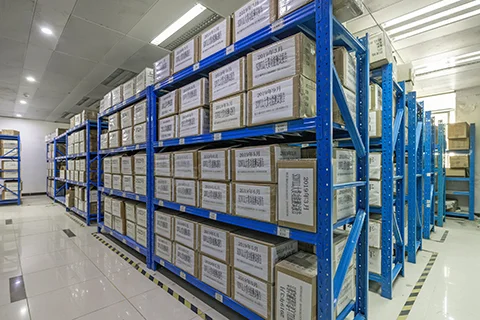
The final link in stable production is logistics. Songji Button Factory has established long-term partnerships with multiple major logistics companies and selects air, land, or sea freight based on the urgency of the order. Domestic orders are shipped within 48 hours, and international orders are delivered within 7 days. Through our logistics information management system, customers can track the status of their shipments in real time. For remote areas or adverse weather conditions, we develop alternative transportation plans in advance to prevent delivery delays caused by force majeure.
As a core supplier to Germany’s Prym (with a 460-year history), Morito Scovill (the world’s largest apparel accessories trader), and WONDERLAND Mingmen (the world’s largest ODM manufacturer of children’s strollers), Shenzhen Songji Button’s supply chain management capabilities have been effectively validated by renowned industry brands.
Conclusion
To achieve stable production of metal buttons, a metal button factory in Shenzhen, China, must establish a comprehensive system encompassing raw material reserves, large-scale production capacity, end-to-end quality control, deep customization, and logistics support. If you are seeking a reliable metal button supplier, choosing a source manufacturer like Shenzhen Songji Buttons means lower supply chain risks and more enduring quality assurance. Songji Buttons offers integrated services ranging from design and mold development to mass production. Contact us today!