What separates a high-end button from a standard one is not only the surface finish. It is the testing standards behind it. A standard button may leave the factory after a few pieces are spot-checked for pull strength. A high-end button goes through a full suite—tensile testing, salt spray, heavy metals, dimensional tolerance and surface colour consistency—before it ships. Two five-prong buttons can look identical. One was tested on a single parameter. The other has measured data for every test item, archived by batch.
If you are sourcing metal buttons for a high-end brand and need to know whether a supplier's testing regime matches your brand's standards, this article uses Songji as a reference to break down the core tests high-end buttons must pass, and how to tell whether the testing is genuinely operational.
I. Where the pull-test bar sits for high-end buttons
A standard fashion snap fastener needs to clear a little over ten kilograms. High-end buttons face a far more complex loading landscape—pushchair fasteners absorb continuous vibration and impact, workwear buttons are assembled and detached repeatedly on heavy fabric, and fashion buttons carry the durability expectation that comes with a premium price tag. Different product categories operate at different levels, and the required figure is not the same across the board.
Songji grades pull-strength standards by category. The baseline for snap fasteners is 35 kg—not a rough estimate, but the minimum pass mark on the tensile tester for every batch. Specialist hook fasteners reach 300 kg, enough to suspend the weight of a small electric scooter without releasing. These numbers were not set in a meeting room. They were built through engineering collaboration with brands such as NUNA pushchairs and BMW child safety seats, where each brand applies its own force-direction and torque requirements, and Songji's customisation capability means the pull-test protocol is adapted to the engineering specification of the project.
Pull-test data is recorded for every batch, archived by lot number and retained for at least five years. Across the 72 international brand audits Songji has passed over the past decade, pull-test records have been a mandatory review item every time—brand quality inspectors randomly specify a lot number and pull the corresponding tensile curve and measured values.
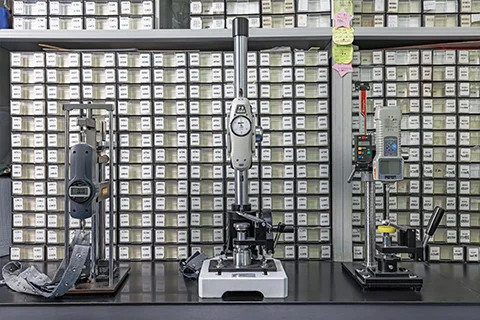
II. Why salt-spray testing is non-negotiable for high-end brands
Customers of high-end brands expect longevity. A Burberry trench coat is not bought for one season. A custom PORTS womenswear button needs to survive repeated dry-cleaning chemical contact. The corrosion risk a button faces across that usage cycle cannot be exposed through short-term wear.
Salt-spray testing simulates long-term corrosion resistance. Songji runs two concentrations—1% to replicate humidity and mild saline contact in everyday use, 5% to replicate coastal and extreme-humidity exposure. Durations are split into 24-hour and 50-hour brackets, matched to different product-category durability requirements.
This test matters especially for pushchair brands. A stroller taken to the coast, parked under summer sun that drives metal-component temperatures sharply upward, and exposed to sustained humidity—these are not edge cases. They are normal use. Songji's salt-spray data is generated per batch and archived per batch, running within the same four-inspection system as the pull test.
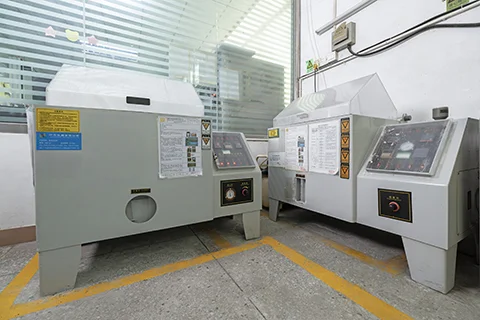
III. Heavy-metal testing and the compliance risk that hits high-end brands hardest
The supply-chain compliance scrutiny that lands on a high-end brand is in a different league. Before a finished garment reaches the shelf, the fabric, lining and trims all undergo chemical-substance testing. Buttons are metal trims. If lead, cadmium, nickel or hexavalent chromium exceeds the limit on any one of those, the fix is not swapping out a button—the entire garment batch gets rejected.
REACH regulation governs mandatory compliance for products entering the EU market. OEKO-TEX Standard 100 governs harmful-substance residues in finished products—Class I is the infant-product grade, the highest standard, with formaldehyde below 16 ppm and extractable heavy-metal limits far lower than those for adult products. Songji holds OEKO-TEX Standard 100 Class I certification across its full metal button range, not on a handful of selected styles.
Songji's internal heavy-metal control standard is below 40 ppm, covering lead, cadmium, mercury, hexavalent chromium and nickel release. This is not a one-off lab submission. Every batch is tested for heavy metals before dispatch, and the data is archived by lot number. It runs as part of the four-inspection system alongside tensile, salt spray and dimensional checks. The defect rate of below 0.3% includes the heavy-metal dimension—it is not a figure calculated only from dimensional and tensile pass rates.
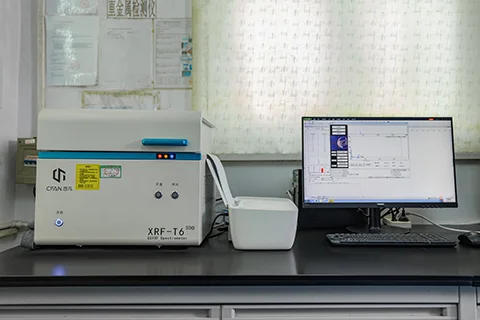
IV. Dimensional tolerance and what the assembly line reveals
On a standard button, tolerance may not be tightly controlled. On a high-end button, the requirement moves to a different order of magnitude—functional dimensional tolerance held to plus or minus 0.025 mm, general tolerance to within 0.05 mm. This is not "close enough." It means every batch produces measured data.
Tolerance affects every aspect of a high-end button. For snap fasteners, it determines whether the pressing force feels consistent from piece to piece. For five-prong buttons, claw-spacing tolerance determines whether the fabric takes the load evenly. For logo-embossed buttons, tolerance determines whether the surface detail holds up under a designer's close inspection in a brand showroom.
Songji achieves this precision because it operates its own tooling workshop—CNC machining centres and mirror EDM machines produce moulds to a level of accuracy that standard milling equipment cannot match. Over 100 patents are concentrated in the tooling and stamping area. Dimensional inspection runs within the same four-inspection system as tensile, salt spray and heavy metals for every batch, rather than operating as a separate workflow.
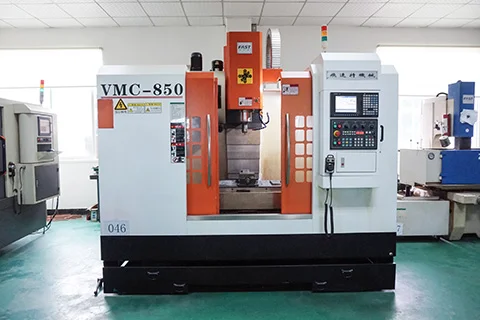
V. Five questions to tell whether a supplier's testing is genuinely operational
Every supplier's test report says "pass." The question is whether pass means every batch was genuinely tested, or whether it means a sample was submitted once.
Ask for pull-strength data. Is there a measured value for every batch, or just a statement that "the 35 kg standard is met"? A complete report shows the maximum, the minimum and the spread within the same batch. If the numbers are identical every time, that is a red flag—normal variation exists in production, and cloned replication suggests the data was not generated from real measurement.
Ask about salt-spray testing. How many hours, and at what concentration? Running 24 hours at 1% covers a different set of scenarios from running both 24-hour and 50-hour tests at two concentrations.
Ask about heavy-metal testing. Is it done on the finished product or only on the raw material? If the incoming material was tested once and never checked again, heavy metals introduced at the surface-finishing stage will not be caught. Songji tests at both the raw-material and finished-product ends—the two checkpoints cross-validate each other.
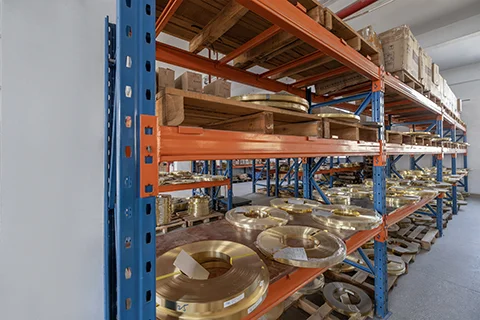
Ask for dimensional data. Does the report show the measured dimensions of each sample piece? A statement that "tolerance is within specification" without actual values almost certainly means no systematic measurement was done.
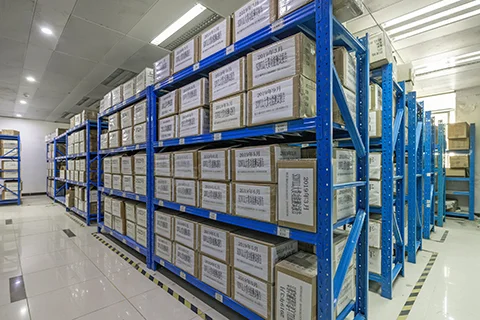
Ask about traceability. Can the full test dataset for a batch produced three years ago be pulled? Songji retains testing records for at least five years. Across 72 factory audits, traceability has been spot-checked every time—data that can be retrieved demonstrates that the testing system is continuously operational.
Songji has been making metal buttons since 1999. The testing regime has been refined across 27 years of continuous operation and repeatedly verified through 72 factory audits. If you need custom metal buttons, we would be glad to work with you. Get in touch today.