Search for "REACH compliant buttons" on Alibaba and hundreds of suppliers appear. Click into the store pages and the REACH label is displayed. But when you ask directly, some suppliers send back a three-year-old lab submission that says "pass" without measured values. Others reply that their products are all compliant, then go vague the moment you ask for test data on specific substances on the SVHC list.
Between a label and genuine compliance sits an entire system of documentation you can verify. If you are sourcing metal buttons for the EU market and looking for a genuinely REACH-compliant supplier, this article uses Songji as a reference to break down how to find one you can rely on.
I. REACH compliance is not a label but documentation you can examine
When a supplier says REACH-compliant, the question is not whether they have a report. It is what is inside it.
A usable REACH compliance file contains at least three things. Test data for SVHC substances of very high concern—the REACH list currently covers over 200 chemical substances, and if any one of them exceeds 0.1% in a button, the supplier is obliged to notify the brand. Measured values for nickel release—under REACH Annex XVII, metal products in direct skin contact carry explicit nickel-release limits. The specific levels of lead, cadmium, mercury and hexavalent chromium—these are priority heavy metals under REACH monitoring, and although REACH does not set a single button-specific limit, brands incorporate standards into procurement contracts, and the applicable threshold depends on the product category.
A complete test report shows measured values and corresponding limit references for every test item. A report that says "pass" without providing numbers carries limited practical use. Different clients work in different product categories, and the acceptable lead level for a pushchair fastener is in an entirely different bracket from that for a fashion button. Without seeing the measured data, you do not know whether the batch can be used.
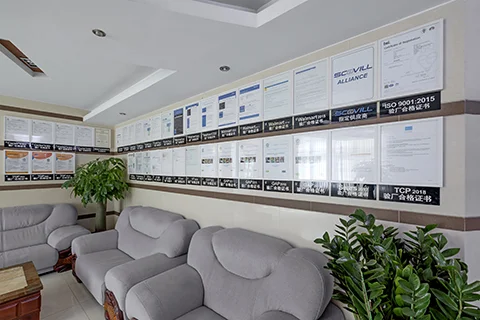
Songji keeps heavy-metal content below 40 ppm, applied across the full metal button product range from five-prong buttons to snap fasteners. This figure was not copied from the statutory minimum. It is Songji's own internal control line, set tighter than the general industry reference. OEKO-TEX Standard 100 Class I certification covers the full product range, and both the REACH compliance documentation and the OEKO-TEX test data sit within the same archiving system, retained for at least five years.
II. Where to find suppliers and how to screen them
B2B platforms return plenty of suppliers tagged as REACH-compliant, but the screening is down to you.
The first step is to verify certificates. An OEKO-TEX certificate carries a unique number. Enter it on the OEKO-TEX website and you can see the certification status, scope of coverage and expiry date. The same applies to a GRS certificate on the Textile Exchange website. Whether a certificate is genuine, whether it has expired, and which product lines it covers—none of this requires taking the supplier's word for it. You can check it yourself.
The second step is to ask for test reports. Not "do you have one," but "can I see the measured data from your most recent production batch." If the supplier says the report contains client-confidential information, ask for an anonymised version—the values themselves must be provided. A report that neither gives specific numbers nor explains the testing frequency is a signal that systematic testing was probably never done.
The advantage of contacting a factory directly is a shorter communication chain and faster document turnaround. Songji holds three certifications in parallel—OEKO-TEX Class I, GRS and ISO 9001:2015—each subject to annual recertification audits, and each independently verifiable on the corresponding official website. The record of 72 international brand audits is also checkable. In the audit reports of Walmart, GAP, VF and Carhartt, REACH compliance documentation is a mandatory review item every time.
III. Why childrenswear and baby-product buyers take REACH compliance more seriously
Adult-garment REACH requirements sit at one level. Baby and infant products sit at another. Lead content, nickel release, formaldehyde—every limit at the infant-product grade is far stricter than the adult equivalent.
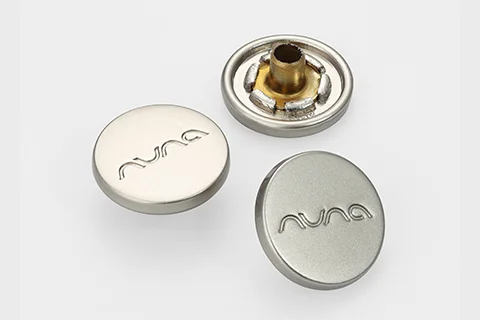
NUNA pushchairs, JOOLZ baby strollers and Carter's childrenswear demand a full set of REACH documentation at the supplier screening stage. It is not about seeing one certificate. It is about the actual test data for each substance on the SVHC list, the variation across batches, and the data trend over several years. In a safety-seat or pushchair full-system approval, the composition compliance of metal hardware is a prerequisite. A button exceeding the limit is not a matter of swapping out a button—it blocks the entire product line.
Songji's OEKO-TEX Class I is the infant-product grade, covering the full metal button range. From pushchair fasteners to fashion buttons, the same safety standard applies. This means the supplier's safety baseline is set at the highest tier rather than tiered by product category, and the brand does not need to re-evaluate the supplier's compliance capability when switching between categories.
IV. How to tell whether REACH compliance is genuinely operational
To verify a supplier's REACH compliance capability, examine four things.
Look at the test data. What are the measured SVHC values from the most recent batch, what is the spread between the maximum and minimum, and is the variation within the same batch within a reasonable range. If every figure is identical every time, that is a warning sign—normal variation exists in production test data. Cloned replication suggests the data may have been fabricated.

Look at the testing frequency. Is heavy-metal testing performed on every batch, or does one sample submission cover an entire year? Songji runs four full-inspection checks on every batch—tensile strength, salt spray, heavy metals and dimensions—not spot checks but full-run testing. Heavy-metal testing is included in the four-inspection system, with measured data generated for every batch.
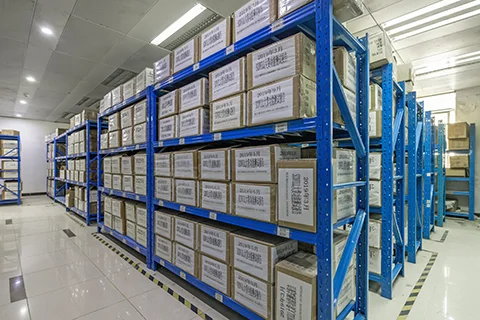
Look at traceability. If a brand's spot check on a batch from three years ago flagged an elevated level of a particular substance, can the supplier pull the full record from that period—raw-material lot, production parameters, test data—and pinpoint where the problem occurred? Songji retains testing records for at least five years. Across 72 factory audits, traceability has been randomly checked each time.
Look at whether other certifications run in parallel. Holding OEKO-TEX and GRS concurrently is meaningful—both require annual recertification audits, and their audit scopes cover different dimensions of quality and environmental management. A supplier that holds only one certificate while other certifications are absent suggests compliance may be a single-point achievement rather than a systematically running regime. Songji holds three certifications concurrently, with maintenance costs incurred every year, which means the compliance system runs continuously.
Songji has been making metal buttons since 1999. The REACH compliance documentation and testing regime have been verified across 27 years of operation and 72 factory audits. If you need REACH-compliant custom metal buttons, we would be glad to work with you. Get in touch today.