What should you actually check when evaluating a custom metal button manufacturer in China? International brands have already worked through this for you.
Over the past 10 years, Walmart, GAP, VF, Carhartt and Carter's have completed 72 factory audits at Songji between them. The items those brands check, broken down, form a ready-made sourcing checklist.、
This guide walks through that checklist in order, so by the end you know what to ask a factory, what to request and what to verify.
I. Certifications Come First for Metal Button Factories
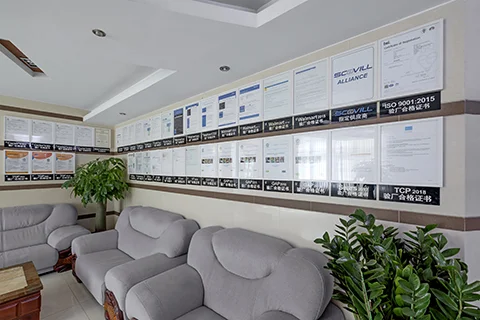
Certifications are the first thing an auditor looks at. Three certificates carry the most weight for a metal button factory: OEKO-TEX Standard 100, ISO 9001:2015 and GRS.
OEKO-TEX Class I — the baby-grade safety level, covering heavy metals and nickel release
ISO 9001:2015 — proof the quality management system runs consistently
GRS — traceability for recycled materials
A factory without all three cannot survive a brand audit, no matter how good its samples look. When you evaluate a manufacturer, ask for the certificates first, then check the expiry date and whether the product scope covers what you need.
II. Factory Size Behind Your Metal Buttons
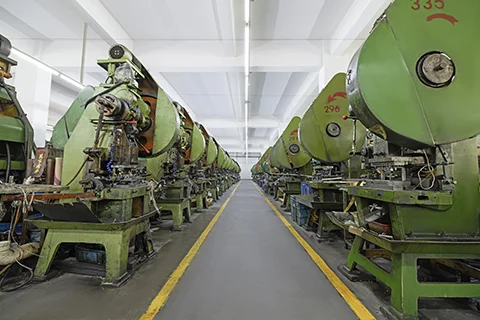
Factory size is not about being the biggest. It answers one question: can the factory actually take your order and deliver it on time?
Metal button orders ramp up fast and ship on tight deadlines. If a factory's capacity cannot keep up, even the best sample is useless.
Songji runs a 12,000-square-metre factory with nearly 700 machines, from high-speed automatic presses to CNC machining centres and mirror-spark machines, covering stamping through to surface treatment. When you evaluate a manufacturer, look at its equipment list and capacity figures rather than asking whether it can do the job. The machines do not lie.
III. Material Honesty in Custom Metal Buttons
Material honesty is the first test of a custom metal button factory. Copper, stainless steel, iron, aluminium and alloy carry very different costs, and the real risk is a factory plating zinc alloy to pass it off as solid copper.
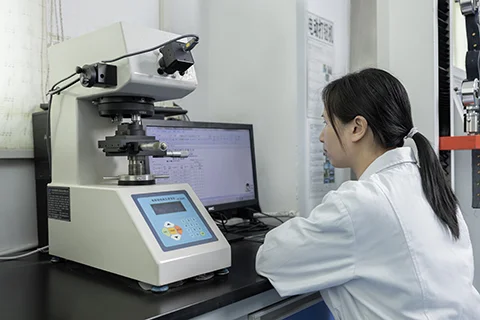
Songji uses 300 tonnes of copper and 60 tonnes of alloy every month, and every batch of raw material passes a spectrometer, a heavy metal tester and a Rockwell hardness tester before entering production.
When you evaluate a manufacturer, ask for material test data rather than a spoken promise. Material honesty is the foundation everything else is built on.
IV. Custom Skill Shows in Snap Fasteners
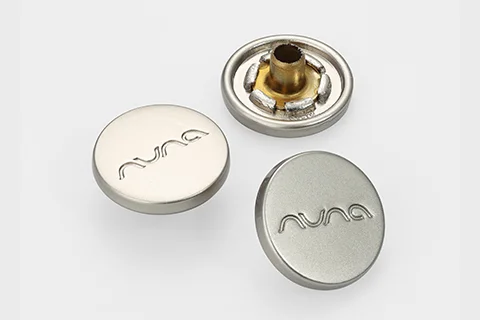
Custom capability shows most clearly in the logo on a snap fastener. Whether the lines are sharp, the depth consistent and the edges clean exposes a factory's tooling and surface treatment at a glance.
An ordinary factory cuts its moulds roughly and the logo comes out soft. Songji runs CNC machining centres and mirror-spark machines on its tooling, has developed more than 10,000 product styles and holds over 100 national patents, turning a design into a sample in three to five days.
PORTS' high-end women's wear metal buttons and Burberry's bag hardware are footnotes to this capability. When you evaluate a manufacturer, order one sample and you will know exactly where its custom skill stands.
V. Why Tolerance Matters for Jeans Buttons
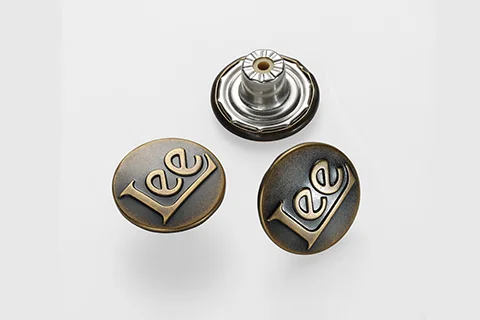
For jeans buttons and shank buttons, tolerance is the hard measure. A fraction off and the button is too tight or too loose in the buttonhole.
Songji holds general dimensional tolerance to ±0.05 mm and functional parts to ±0.025 mm, keeps the full-batch defect rate below 0.3%, and locks every step from raw material to finished product with more than 150 standardised quality control procedures.
When you evaluate a manufacturer, ask for tolerance figures and the defect rate. These two numbers are harder than any spoken promise, and holding them consistently matters far more than hitting them occasionally.
VI. Audit History of a Metal Button Supplier
Audit history is the last check and the hardest to fake. When a factory claims it supplies major brands, ask for proof: the audit records.
Songji has passed 72 factory audits from international brands over the past 10 years and keeps test records for at least five years, with every batch traceable to its raw materials and test reports.
Walmart focuses on labour rights, GAP on process and VF on standards. Passing all of them at once is itself a form of industry endorsement. When you evaluate a manufacturer, ask for the audit records and test archives; what cannot be faked is what deserves your trust.
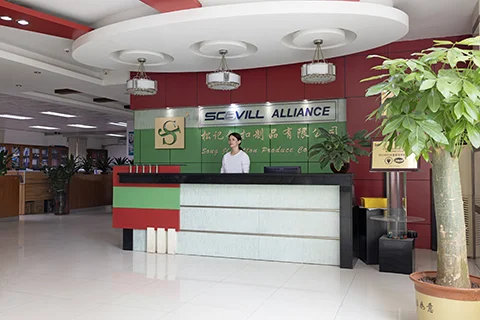
Songji is based in Guanlan, Longhua, Shenzhen, with a 12,000-square-metre factory and nearly 700 machines covering high-speed automatic presses, CNC machining centres and mirror-spark machines. It is a source factory that has focused on custom metal buttons and garment hardware for 27 years. The product line covers metal buttons, snap fasteners, jeans buttons, tack buttons, shank buttons, rivets, metal badges, hooks and belt buckles, in copper, stainless steel, iron, aluminium and alloy. The factory holds ISO 9001:2015, OEKO-TEX Standard 100 Class I and GRS certification, has passed 72 audits from international brands over the past 10 years, and keeps its full-batch defect rate below 0.3%.
Pull the six checks into one line: certifications, capacity, material, custom skill, tolerance and audit history. A factory that clears all six is one that can run alongside you for the long term. If you are evaluating metal button factories in China, we would be glad to talk. Want to learn more? Contact us.