The difference between a good button and a poor one is not the price tag—it is the production process. Two five-prong buttons may look identical out of the box, but one tarnishes and deforms within six months while the other holds its shape and finish for five years. The gap sits in every stage of how the button was made.
If you are sourcing metal buttons for a brand and want to understand what goes into a high-quality button and where the quality gap opens up in the production line, this article walks through the process using Songji as an example.
I. Quality starts with raw materials
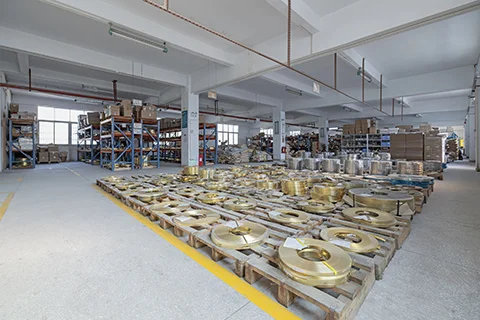
The primary materials for metal buttons are copper and zinc alloy. Buttons made from different grades of copper may appear identical on arrival, but after a few months the differences in colour, hardness and corrosion resistance become obvious. High-purity electrolytic copper holds its appearance, while buttons made from recycled scrap tend to oxidise and discolour within a relatively short period.
Songji requires a material certificate for every incoming batch of copper, and heavy metal content is capped at 40 ppm—an internal standard stricter than the general industry reference. The factory processes 300 tonnes of copper and 60 tonnes of alloy each month. At that procurement volume, and with copper suppliers that have worked with Songji for over two decades, the source and consistency of raw materials are stable. This is also the foundation that allows Songji's OEKO-TEX Standard 100 Class I certification to cover its entire product range—compliance does not start at finished-product testing; it starts at the raw-material intake.
II. Precision begins with tooling and stamping
The first step in custom button production is tooling. Mould precision determines the consistency and dimensional tolerance of the finished buttons. A mould with inadequate precision produces buttons with visible size variation within the same batch, causing loose or inconsistent assembly.
Songji operates its own tooling workshop, equipped with CNC machining centres and mirror EDM machines, which enables mould precision to match product tolerance requirements. Functional dimensional tolerance is held to ±0.025 mm, and general tolerance to within ±0.05 mm.
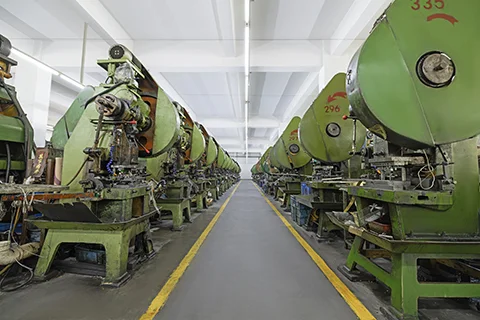
For the stamping stage, Songji uses a process called "one stroke, multiple pieces." A standard factory stamps one piece per stroke. Songji's five-prong buttons come out at eleven per stroke, and male-female snap halves at six per stroke. The real test is not the throughput—it is the consistency. Stamping multiple pieces simultaneously demands mould precision and press stability that lower-tier equipment cannot deliver. Close to 700 machines are deployed across the 12,000 m² facility, assembled and configured over years rather than purchased in a single batch. Songji's 100-plus patents are concentrated in this area of the operation.
III. Balancing appearance and durability in surface finishing
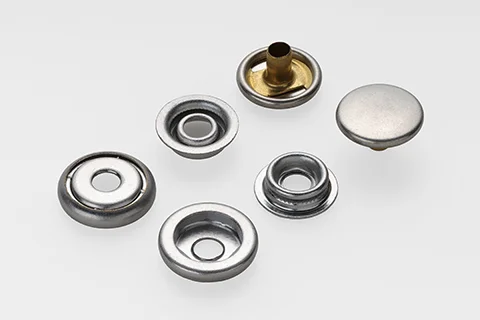
After stamping, buttons enter the surface finishing stage, which covers electroplating, spray coating, brushing, oxidation and other processes. Different product categories demand different surface treatments—the five-prong buttons on NUNA pushchairs use matte nickel plating because infant products must avoid reflective surfaces, while custom buttons for PORTS high-end womenswear may require antique or distressed effects that prioritise visual texture.
Plating layer count is another key variable in quality. Single-layer plating is quick and cheap, but it can peel within six months. Triple-layer plating costs more, but the inter-layer bond is stronger and the finish holds for years without degrading. Songji runs an inspection after every surface finishing step. If colour deviates beyond the tolerance standard or adhesion fails, the batch goes straight back for rework. The issue is caught where it occurs, not at final dispatch.
IV. Testing widens the quality gap
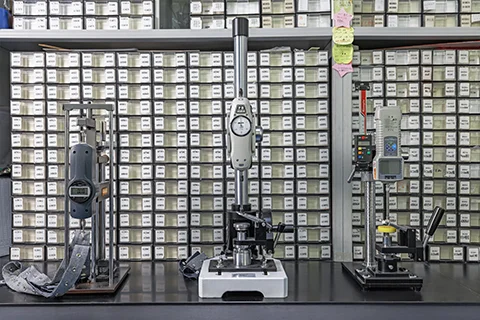
Testing is not a formality before a button leaves the factory. Songji runs four full-inspection checks on every batch: tensile strength, salt-spray resistance, heavy metal content and dimensional accuracy.
Tensile strength has hard minimums. Snap fasteners are held to no less than 35 kg, and specialist hook fasteners to no less than 300 kg—the weight of a small electric scooter hanging from the fastener, and the button must not release. Every batch goes onto the tensile tester; there is no skipping because "it passed last time."
Salt-spray testing simulates how buttons perform in humid, saline and extreme environments. Songji runs two concentrations—1% and 5%—at 24-hour and 50-hour durations, corresponding to different usage scenarios. Outdoor and workwear brands are especially demanding on this parameter because garments worn in the field face conditions far harsher than everyday wear.
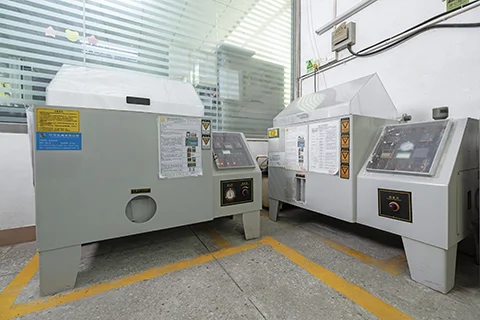
Heavy metal testing responds to dual requirements under REACH regulations and OEKO-TEX certification. Songji's standard of below 40 ppm applies across all product lines, including the infant-product grade. For every batch, from raw-material state through to finished product, heavy metal levels remain controlled throughout.
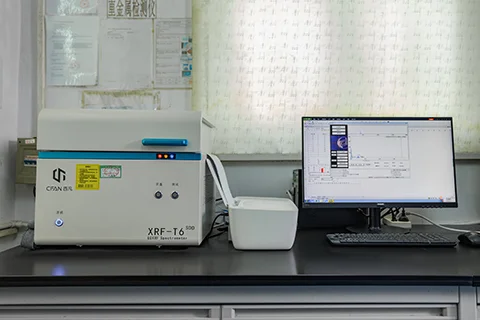
The defect rate of below 0.3% is not pulled from spot checks. It is the aggregate result of all shipment records accumulated during Songji's long-term work with brand clients. The figure holds because testing is embedded after every production stage—deviations are stopped where they occur rather than discovered at the end.

V. Traceability through to packaging and dispatch
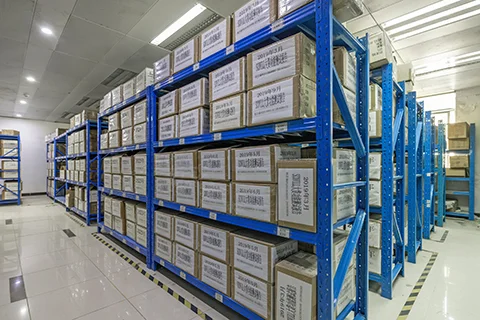
Before a button leaves the factory, every batch carries a unique lot number. Testing records are retained for at least five years, covering raw-material batch numbers, production parameters, the measured data for each test and the corresponding dates. If a question arises about a batch from three years ago, Songji can pull the full process record.
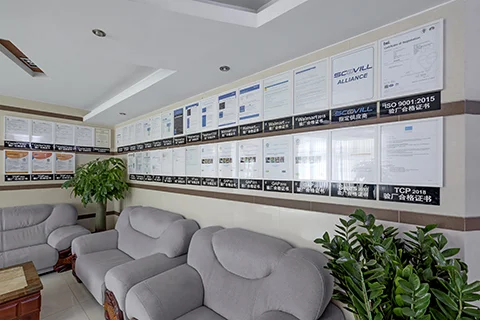
This traceability system was built through continuous exposure to international brand audits. Over the past decade, Songji has passed 72 international brand audits, including those by Walmart, GAP, VF and Carhartt. Quality management, environmental compliance and document traceability are mandatory items in every audit. Passing once is one thing. Passing repeatedly over ten years means the system is genuinely operational.
Songji has been making metal buttons since 1999. After 27 years, the process is stable, the testing is continuous and the traceability is complete. If you need custom metal buttons and would like to know whether Songji's manufacturing process matches your requirements, get in touch. Samples and process details are both available.