A shipment of jeans gets held at an EU customs checkpoint because the buttons tested above the lead limit. The whole batch sits at the dock, unable to clear. The brand traces the problem upstream and finds that the button supplier quietly switched to an unlicensed electroplating workshop to save cost. Stories like this play out across the garment industry every year. Metal buttons are small and used in large volumes, and when chemical compliance fails at any link in the supply chain, the cost is far more than replacing a single button.
Songji has been in the metal button trade for 27 years and has watched too many brands trip over compliance because of one button. Managing chemical compliance is less a quality-department task and more the baseline for an entire supply chain.
1. What REACH and OEKO-TEX Mean for Metal Button Compliance
The EU REACH regulation governs the registration, evaluation, authorisation and restriction of chemicals. Its Annex XVII restriction list directly targets textiles and garment accessories: lead limited to 0.05%, cadmium to 0.01%, nickel release capped at 0.2 micrograms per square centimetre per week for piercing items and 0.5 micrograms for prolonged skin contact, and 22 banned azo dyes restricted to 30 milligrams per kilogram. REACH is mandatory regulation. If a product enters the EU market, it must comply. There is no negotiation.
OEKO-TEX Standard 100 is voluntary certification, but its scope is wider. Beyond heavy metals and azo dyes, it tests for formaldehyde, phthalates, organotin compounds and polycyclic aromatic hydrocarbons, covering more than a thousand harmful substances in total. Class I aligns with infant-product safety standards, the strictest of all the classes. The US CPSIA specifically targets products for children under twelve, with separate limits on lead and phthalates. Different markets and product categories invoke different standards, but the core logic is the same: control harmful substances and ensure skin-contact safety.
Songji holds OEKO-TEX Standard 100 Class I certification and its products meet REACH requirements. This means the same batch of buttons does not need separate testing for each market. One set of standards covers multiple regions.
2. Why Lead, Nickel Release and Cadmium Are the Top Three Button Chemical Risks
Lead exceeding the limit is the most common compliance incident with metal buttons. The source is usually one of two things: copper alloy raw material containing lead impurities, with cheap copper sometimes hitting several times the legal limit, or lead-based brighteners and substandard plating solutions used during electroplating. Once the surface plating wears, the lead underneath is exposed.
Nickel release is easier to overlook, but it is a regulatory priority in the EU. Nickel electroplating is one of the most common surface treatments for metal buttons. If the plating process is not properly controlled, nickel ions leach out under sweat and cause allergic reactions on skin contact. REACH sets explicit nickel release limits, and OEKO-TEX includes it as a mandatory test item.
Cadmium and azo dyes are more hidden risks. Cadmium mainly comes from impurities in zinc alloy, while azo dyes appear in certain dyeing or spray-coating processes. The two share one trait: without active testing, a factory can hardly spot them by eye.
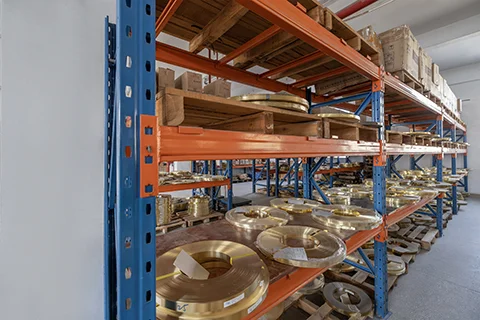
Songji sets its own heavy metal limit at no more than 40PPM, more than ten times stricter than the REACH figures of 500PPM for lead and 100PPM for cadmium. This amounts to an extra factory-side line drawn well above the regulatory floor. Screening starts at incoming materials, not at finished-goods inspection when problems have already slipped through.
3. How to Verify a Button Supplier's Testing and Compliance
One test report does not tell the full story. What matters is how that report was produced.
First, check who issued it. A report from an authorised third-party laboratory is not the same as a factory self-test. An OEKO-TEX certificate is valid for twelve months and becomes void if not renewed. Every certificate carries a unique number that can be verified on the OEKO-TEX website.
Second, check the frequency and coverage of testing. Does one submission cover a whole year, or does each shipment come with its own report? Chemical compliance is not a one-off event. If the electroplating batch or raw material batch changes, the test results can shift entirely. Songji runs a four-stage inspection system: incoming material checks, first-article approval, in-process spot checks and finished-goods full inspection. Every batch, from raw material to finished product, has a complete inspection record kept on file for at least five years. If a batch from three years ago had an issue, the corresponding raw material batch number, production parameters and test report can all be traced back.
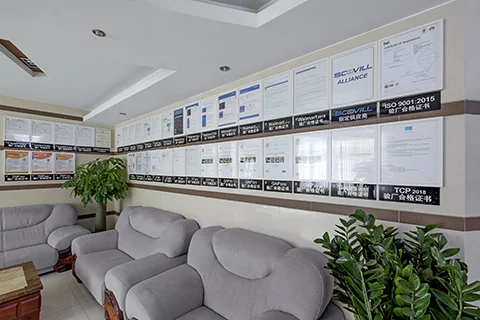
Third, check whether the factory has been audited on site by any brand. Third-party certification is a paperwork review. A brand audit is an on-the-ground verification. Over the past decade, Songji has passed seventy-two international brand audits, working with GAP, Walmart and Carter's among others, with chemical compliance and quality management as mandatory audit items. A brand's own compliance team walking the factory floor and checking items one by one carries more weight than any certificate.
4. Building a Garment Factory Compliance File System
The difficulty in managing chemical compliance is not knowing what to test. It is keeping things from going wrong over the long run when you are dealing with multiple suppliers, multiple batches and multiple standards. A garment factory might work with three to five button suppliers at once, each providing products for different brands, different markets and different regulations. If the documents are scattered across emails and messaging threads, finding anything after a problem surfaces is impossible.
The practical approach is to build a file for each supplier by number, with every incoming shipment matched to its test report, annotated with the supplier name, product model, testing standard, testing body, report validity period and batch number. Sort the standards into separate folders: REACH documents, OEKO-TEX documents, and client-specified standard documents, each kept independent to avoid confusion.
Two periodic tasks are also needed. First, a supplier credential expiry reminder. OEKO-TEX certificates and some brand audit reports have validity windows. Letting one expire and still sourcing from that supplier is a compliance gap. Second, a regulatory change check. The REACH restriction list updates every year and the SVHC candidate list already exceeds 240 substances. Newly added substances come with effective dates, transitional periods and scope definitions that need to be cross-checked one by one to confirm whether the buttons in use are affected.
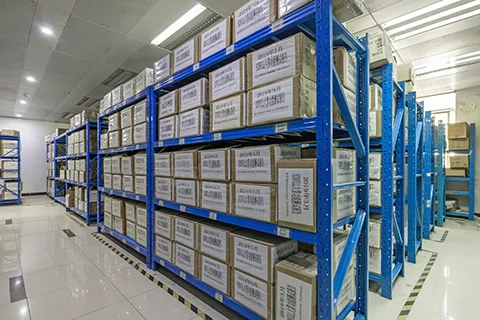
Inside Songji's quality system, incoming material inspection is the first gate. Every batch of copper and alloy arrives with a material certificate. Anything exceeding Songji's own heavy metal limit is rejected on the spot. Inspection data from all four stages is logged into the system, creating a traceable quality chain rather than one that relies on human memory and paper slips.
5. How Songji Runs Chemical Compliance Inside Daily Production
Songji does not run chemical compliance through a separate department. It is embedded in the production flow.
Raw materials enter the factory with batch-matched certificates and heavy metal test data. During production, the first piece after stamping goes through dimensional and visual checks. The first piece after electroplating and spray coating then passes surface adhesion testing and colour-matching. At the finished-goods stage, four parameters are fully inspected: tensile strength, salt spray resistance, heavy metal content and dimensions.
Salt spray testing here is not a pass-or-fail question but a quality-grading standard. Under the industry-standard ASTM B117 neutral salt spray test, with a 5% sodium chloride solution and a constant 35 degrees Celsius, 24 hours represents basic indoor-use quality, 48 hours is standard-grade, and 96 hours is high-grade. Songji runs its standard metal buttons to a 72-hour neutral salt spray benchmark, 50% longer than the 48-hour industry norm, ensuring the buttons stay free of rust with plating intact after exposure to humid coastal climates or frequent washing cycles. Custom high-end pieces made for outdoor workwear and extreme-use scenarios undergo an additional copper-accelerated acetic acid salt spray test, which speeds up corrosion eight times relative to the standard test. The more stable the plating, the less likely the underlying metal and chemicals are to leach out, which itself is a physical line of defence for chemical compliance.

Songji Buttons was founded in 1999 and has focused on the metal button field for twenty-seven years, operating a production base of over 12,000 square metres in Guanlan, Longhua, Shenzhen, with close to 700 pieces of production equipment. Its range covers snap fasteners, five-prong buttons, tack buttons, rivets, alloy plates and over ten thousand other styles. The factory holds OEKO-TEX Standard 100 Class I certification and ISO 9001 quality management certification, its products meet REACH requirements, it has passed seventy-two international brand audits over the past decade, and it supplies custom metal buttons to brands including GAP, LEE and Carter's. If you need buttons backed by chemical compliance assurance, we would love to work with you. Get in touch today.