Every buyer sourcing metal buttons has heard it: "Our buttons are lead-free." When you ask for a test report, what often comes back is a three-year-old lab submission with a single word—"pass"—and no measured values. Industrial metals do not reach absolute zero lead. The real question is whether the factory can prove the lead level stays below the limit your product category requires, on every batch, not just on a sample sent in once.
If you are sourcing metal buttons and need to verify whether lead content is genuinely under control, this article uses Songji as a reference to break down how to assess a supplier's lead-free claim.
I. "Lead-free" does not mean zero in industry
Every metal product contains trace impurities. Lead occurs as a companion element in copper ore, and it cannot be eliminated with absolute completeness during smelting. In industrial terms, "lead-free" actually means lead content falls below a regulatory or standard-defined limit.
Limits vary across markets—CPSC requirements for children's products, OEKO-TEX Class I infant-grade restrictions, REACH regulation limits—each sits at a different level. But one point holds regardless: a report that says "pass" without showing measured values offers little practical reference. Different clients work in different product categories, and the acceptable lead levels for pushchair fasteners are in an entirely different bracket from those for fashion buttons.
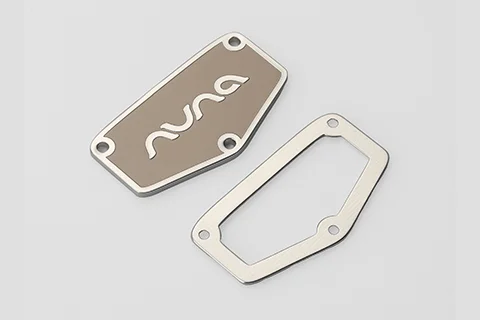
Songji keeps lead content below 40 ppm, a standard applied across the full metal button product range, from five-prong buttons to snap fasteners. This figure was not copied from the minimum statutory threshold. It was built from the lead-content requirements of the brands Songji serves—NUNA pushchairs and Carter's childrenswear use the same heavy-metal standard, because the compliance demands facing pushchair and infant-clothing products belong to the same grade.
II. Where lead enters the process
Lead in a button is not deliberately added. It comes in through the raw material.
Copper ore naturally contains lead impurities during smelting. With high-purity electrolytic copper, lead is controlled at the source. With recycled scrap—old copper wire, mixed copper alloys, unsorted batch material—lead levels can slip out of control.
Surface finishing is another entry point. Low-cost electroplating solutions and surface-coating materials may contain lead compounds used as stabilisers or pigments. Even if the copper base is clean, a lead-bearing plating layer will still cause the finished product to fail a compliance test.
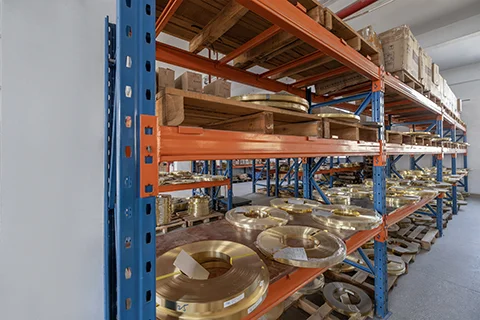
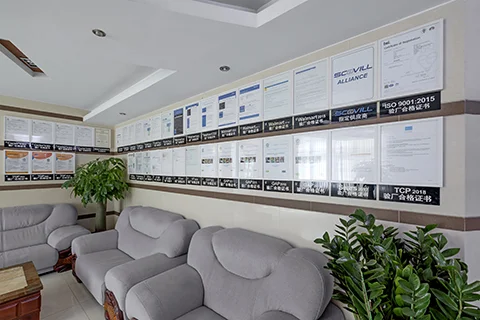
Songji controls both ends simultaneously. At the incoming-material stage, every batch of copper and alloy carries a material certificate, and anything exceeding heavy-metal limits is rejected outright—copper suppliers have worked with Songji for over two decades, so material provenance and batch consistency are stable. At the surface-finishing stage, every plating solution and coating is tested before use. Songji's OEKO-TEX Standard 100 Class I certification covers the full metal button range, which means lead is managed across the entire chain from raw material to finished product.
This level of control matters especially for pushchair brands. BMW child safety seats, NUNA pushchairs and JOOLZ baby strollers all use buttons produced under this standard. The compliance audits these brands face extend well beyond the button itself—in a safety-seat or pushchair full-system approval, the composition compliance of metal hardware is a prerequisite.
III. A single lab-submission report is not enough
When evaluating a supplier's lead-free capability, the question is not whether they have a report. The question is whether they can produce measured data for every batch.
A lab-submission report is validation at the sampling stage—a supplier picks the best few pieces from a batch, sends them to the lab, and unsurprisingly the result reads "pass." Whether the material and plating in the bulk order match what was submitted is a different matter entirely.
Songji runs four full-inspection checks on every batch: tensile strength, salt spray, heavy metals and dimensions. Heavy-metal testing is not spot-checked. Every batch is tested, and the data is archived by lot number and kept for at least five years. The defect rate of below 0.3% includes the heavy-metal dimension; it is not a figure calculated only from dimensional and tensile pass rates.
Across the 72 international brand audits Songji has passed over the past decade, heavy-metal test records have been a mandatory review item every time. Quality inspectors from Walmart, GAP, VF and Carhartt randomly specify a lot number and pull the corresponding test data. That the data can be retrieved and shows normal variation rather than cloned replication is the evidence that the testing is genuinely operational.
IV. Lead is not the only heavy metal to watch
Lead is the most frequently asked-about item in heavy-metal testing, but it is not the full picture.
Cadmium, nickel and hexavalent chromium are mandatory test items under both REACH regulation and OEKO-TEX certification. For infant-product brands, nickel release can sometimes be a higher concern than lead, because nickel allergy is a primary trigger of contact dermatitis, and an infant's skin barrier is not yet fully developed. On products such as NUNA pushchairs and JOOLZ baby strollers, where metal parts come into frequent contact with an infant's skin, the nickel-release limit is a substantive safety requirement.
Songji's 40 ppm standard applies to the full set of tested heavy metals, not lead alone. It aligns with the OEKO-TEX Class I test list—lead, cadmium, mercury, hexavalent chromium and nickel release, all running in parallel.
There is also a connection that is easy to overlook: heavy-metal content and salt-spray test results are linked. When a low-grade plating layer degrades in humid or saline conditions, the heavy metals in the alloy substrate begin to be exposed. Songji runs salt-spray tests at two concentrations—1% and 5%—at 24-hour and 50-hour durations, which is in substance also a hedge against long-term heavy-metal exposure risk. For pushchair and workwear brands, these two sets of results need to be read together. Reading them separately misses the interaction.

V. What to ask a supplier to verify lead control
Do not ask "are your buttons lead-free?" That question only ever gets one answer. Use a few specific questions instead.
When asking for a test report, request the measured data from the most recent production batch—how many pieces were sampled, what the lead-content value was for each piece, and which client that batch was delivered to. Do not settle for a certificate that simply reads "compliant." A complete test report shows measured values and corresponding limit references for each test item. If the supplier says the report contains client-confidential information, ask for anonymised data—but the values themselves must be provided.
Ask about testing frequency—every batch, or one sample submission covering a full year. If it is the latter, lead was under control at a single point in time, not continuously managed through production.
Ask about traceability. If a brand's spot check three years ago flagged elevated lead in a particular batch, can the supplier pull the raw-material batch records and finished-product test data from that period and pinpoint whether the problem originated at the raw-material stage or the surface-finishing stage?
Songji has been making metal buttons since 1999. Across 27 years, heavy-metal management moved from "pass on submission" to "under control in production." If you need custom metal buttons, we would be glad to work with you. Get in touch today.