If you are sourcing metal buttons for a shirt line, whether formal shirts, casual shirts or polos, this guide covers how to write a size specification that does not fall apart at the buttonhole stage, and where zinc alloy fits this category and where it does not.
I. Reading Metal Shirt Button Sizes in Ligne
Metal shirt button sizes are written in ligne, but ligne fixes diameter only. It says nothing about thickness, hole spacing or rim profile, and that gap is where most size failures begin.
One ligne is 0.635 mm. The four sizes that dominate shirts are 14L at 8.89 mm, 16L at 10.16 mm, 18L at 11.43 mm and 20L at 12.70 mm. Most published charts for metal shirt buttons round those to 9, 10, 11.5 and 12.5 mm. The rounding looks trivial until it reaches a garment. Two ligne is 1.27 mm, and a shirt placket buttonhole is cut from diameter plus thickness, so past about a millimetre of error the button either will not pass through or closes with the placket puckered.
Rounding is also inconsistent between suppliers. Twelve millimetres works out at 18.9L, so a 19L label is fair. Twenty-five millimetres works out at 39.4L, and a 39L label is already a quarter of a millimetre out. The same factory may round one way on one article and another way on the next, so comparison across suppliers is worse still. Write the specification in millimetres with a tolerance and keep ligne as a secondary reference.
A complete line carries four items: diameter in millimetres with tolerance, thickness, hole count with spacing, and rim profile, whether flat, narrow, wide or rolled. Our general tolerance is ±0.05 mm, which is our own internal figure rather than an industry norm. With those four settled, a factory can tell whether an existing die fits. With a ligne alone, it can only guess. Then there is the buttonhole itself, usually cut from diameter plus thickness, which makes the two a pair of parameters, and changing one on its own puts the hole wrong.
When a garment maker swaps a button this is the step most often skipped: the new part is 2L smaller, looks close enough, and the hole is suddenly oversized, so the placket sits loose and opens in a light wind. Measure the new part for diameter and thickness and recheck the hole before committing to the switch. That takes an hour; a placket that will not close costs a season.
II. Choosing Zinc Alloy for Metal Shirt Buttons
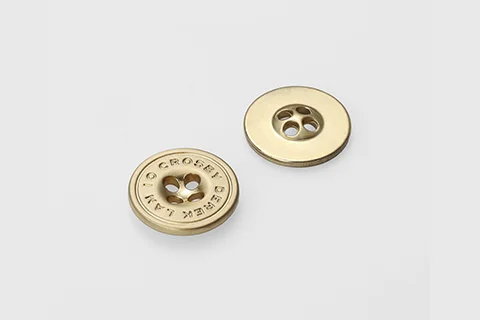
Zinc alloy is the default for this category, not because it is cheap, but because it holds a thin wall and a legible fine letter, and those are the two things a shirt button actually demands.
Die-cast zinc flows well enough to hold 0.8 to 1.0 mm walls as a dependable band, with 0.5 mm possible in local areas provided the gate, the venting and the die temperature are set for it. Aluminium die casting needs 1.5 to 2.0 mm before it behaves. A shirt button has to stay thin. Extra thickness presses into the cloth and shows as a ring on the other side, most visibly on a fine poplin placket, at the collar point and along the cuff opening.
The second advantage is that lettering and texture are cast in one pass. Depth comes out even, edges are clean, and there is no post-etching or engraving that could leave one letter deeper than the next. Brand lettering on shirt buttons is common, and on this point appearance matters more than cost.
Copper is the other route. It is ductile, can be stamped or turned, resists corrosion better than zinc alloy, and a share of shirt buttons are made in it. It does not hold thin walls or fine lettering as well as die casting does, and it costs more. Stainless steel resists corrosion best of the three, is harder again to letter and costs more still. Unless a buyer specifically needs long contact with perspiration or a tougher salt spray result, shirts rarely call for it.
The weak points of zinc alloy are worth stating plainly. It relies on plating for corrosion protection and cannot be used bare. Poor wall control leads to blistering that only appears a week or two after plating. It is not suited to carrying structural load, though a shirt button sees so little that this does not bite here. The conclusion is not that zinc alloy is the best metal, only that this category sits inside its strengths.
Plating splits by process. Shirt buttons are small parts and usually run barrel plating, where the work tumbles in a barrel: cost is low and output high, but the parts rub against each other and shield each other, so contact points and edges draw less current and carry a thinner deposit, with colour able to shift slightly.
Rack plating hangs each part on a jig and covers edges more evenly, costs more, and is normally kept for demanding articles or dark mirror finishes. Both are available. Which one applies depends on whether the buyer is protecting cost or edge durability, and it is worth settling at quotation, because the same drawing can produce two different parts.
Finishes in common use are bright nickel, pearl nickel, imitation gold, gunmetal and gold plating. Bright nickel is the cheapest and most common, pearl nickel reads matt and softer in the hand, imitation gold and gunmetal set the tone visually, and real gold sits at the top of the cost ladder.
Beyond colour, the finish has to sit with the cloth. The same imitation gold looks different against a white shirt and a beige oxford, so compare the two together. Zinc alloy shirt buttons sit inside a wider range of apparel hardware we supply, some of which is written up in our case files.
III. Controlling Wall Thickness on Metal Shirt Buttons
Wall thickness is where this part fails, and the failure does not appear on casting day. It surfaces a week or two after plating.
Thin walls are not the difficulty. Even walls are. Zinc solidifies fast, so a thin section sets while the thicker neighbour is still semi-liquid, and the boundary between them shrinks and traps gas. Gas sealed inside a casting stays invisible until plating locks it in, and then it lifts the deposit from underneath as a blister. Keep wall variation within 10 to 15 per cent and graduate the transitions rather than stepping them.
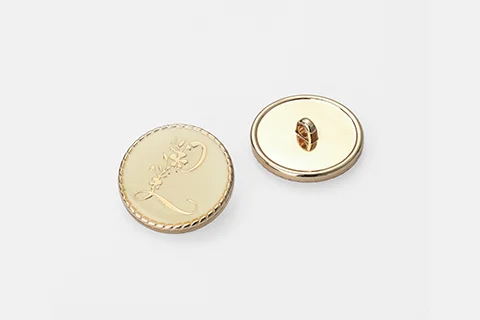
A shirt button usually runs a thin face, a thickened rolled rim and extra stock under the lettering. Three thicknesses in one small part have to meet gradually. An isolated heavy block will shrink, and it will also drag the thin wall beside it out of shape. The diameter can then measure correct while flatness does not, and the placket sits higher on one side than the other.
Holes are the next detail. Die-cast zinc holds a minimum hole of about 1.0 to 1.5 mm. Below that, the hole is cast as a locating dimple and drilled afterwards. Shirt button holes usually fall between 1.3 and 2.0 mm, inside the range that can be cast directly, so the wall comes out smooth and no second operation is needed. Push below 1 mm and the burr risk from drilling rises instead.
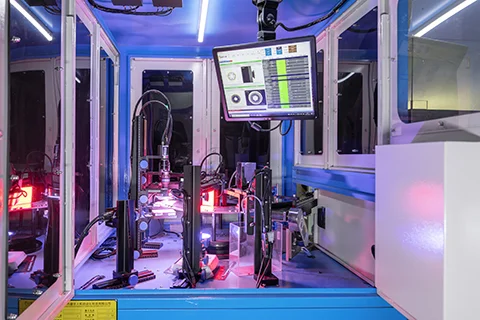
On the floor these points rest on three checks. The product drawing fixes wall thickness and transitions, the first article report confirms the physical part, and dimensional checks against the drawing plus in-process inspection hold the batch together. An appearance and dimension check runs before plating. Blistering cannot be found at that stage, but uneven walls, sink marks and distortion can, and stopping them before plating is far cheaper than sorting afterwards. Behind that discipline sit 72 factory audits for international brands over the past 10 years, including Walmart, GAP and VF.
IV. Specifying Hole Patterns on Metal Shirt Buttons
Hole pattern decides whether the fabric tears or the button holds, and it is the parameter almost nobody puts on an enquiry.
Two holes against four is not just a matter of appearance. Two suits small sizes, 14L to 16L in most cases, and sits lighter on thin cloth. Four spreads the load across four points and holds a placket main button more securely. Once the count is fixed, spacing starts to mean something.
Spacing set too tight crowds the stitches onto a small patch of cloth, concentrates stress, and tears the fabric while the button survives. Wider spacing spreads the load over more area, but a narrow rim will break away, so leave enough material between the edge and the hole wall. Spacing also has to meet the sewing room's own requirement, and retail programmes commonly specify 24 to 26 stitches for a four-hole and 14 to 16 for a two-hole. Without fixed spacing and hole diameter, a garment maker cannot lay out stitches or cost the operation.
Hole mouth treatment is another item that gets missed. A drilled hole leaves a burr, the burr cuts thread during sewing, the thread breaks after a few wears and the button comes off. The wearer assumes the button was weak when the hole mouth was never finished. Cast holes come out cleaner. Where drilling is needed, add a deburring step and state it on the drawing rather than agreeing it in conversation.
For a custom part, four parameters belong in custom development: hole count, hole diameter, hole spacing and hole mouth treatment. Give all four and the quotation comes back accurate, and the sewing room can plan its schedule without a second round of questions.
V. Testing Metal Shirt Buttons Through Repeated Washing
Washing is closer to how a metal shirt button really fails than salt spray is, because a shirt passes through a machine many times in its working life.
The daily life of a shirt is machine washing, spinning, tumble drying, ironing and the occasional dry clean. Failure therefore looks different from outdoor hardware. Plating wears thin through repeated abrasion, and edges and lettering recesses break through first. Detergent and softener residue collects in the lettering and in the holes. A dark button bleeds onto a white shirt and ruins a batch in a single cycle. None of this shows up in a salt spray cabinet.
BS 4162 is the standard buyers tend to cite, and it covers this ground: abrasion, strength in tension and impact, resistance to washing solutions, to dry-cleaning solvents, to ironing, to atmospheric corrosion, and to water including sea water and chlorinated water. One caution matters here. It is a set of methods, not a pass line. Saying a button passed BS 4162 means nothing until you know which clauses were run, what the acceptance criterion was, and whether the report cites clause numbers.
At Songji the routine items are washing and enzyme washing, and the laboratory carries both machines. Dry cleaning is available. Ironing is arranged against the customer's specification rather than run by default, so raise it at the sampling stage.
Salt spray runs at 1 per cent affected area over 24 hours on standard parts as our internal figure, and shirts seldom treat it as the main indicator. Every plating bath is sampled for third-party heavy metal testing, and the report goes into the batch file alongside a four-code trail that can trace a batch back to a specific bath.
Rust is not the only failure to look for. Watch for blistering and cloudiness in the plating, lettering that has gone soft, and colour that has moved into the fabric. The first two are appearance. The third ruins the garment and is the most expensive of the three.
Cycle count is not fixed and follows the customer's specification, whether three washes or more, and both the count and the pass criterion belong in the sampling stage. Set them once mass production has started and the only option left is testing retrospectively. Our ISO 9001, OEKO-TEX Class I and GRS certifications are all current.

VI. Ordering Custom Sizes of Metal Shirt Buttons
Ordering a custom size comes down to one question, whether an existing die can take the part. If it cannot, a die has to be cut. There is no third route.
Our metal sew-through buttons start at 12 mm on the standard side. The 10 to 11.5 mm band that shirts use most, 16L to 18L, sits below that and goes custom, and whether that means cutting a die depends on whether one of the same size already exists. That has to be confirmed article by article and cannot be promised as a blanket answer. It is also why the first section insists on millimetres: even deciding whether a size counts as standard requires measuring in millimetres.
Custom development at Songji needs seven inputs: diameter, thickness, hole count with spacing and diameter, rim profile, lettering or artwork file, colour as a plating code or a physical sample, and target market. Miss one and the first round of samples will most likely come back for rework. The die is a one-off investment, quoted against material and structural complexity, and it is not charged again on repeat orders. Sampling runs three to five days.
Minimum order follows the finish: 5,000 pieces for standard plating or spray painting, 3,000 for standard rack plating, and 3,000 for real gold. Below the minimum a plate fee applies. These are our own thresholds. Other suppliers differ widely, some starting at 10,000 pieces and others taking a few hundred, so ask against your own volume rather than a published number.
Packing and counting is where shirt button orders often come apart. The category is quoted by piece, by dozen of 144, or by thousand, packed loose, in dozens or on card, and shirts often ship with one or two spare buttons in the bag. The same five thousand pieces carries a different price and a different labour content loose or packed, so settle the unit, the packing and the spare button count together at quotation.
Where one article runs several colours, plate each colour separately and record separate batch numbers. Otherwise the trail breaks at the colour step and a problem cannot be traced back to its bath. Orders up to 500,000 pieces in regular finishes run at 14 days.
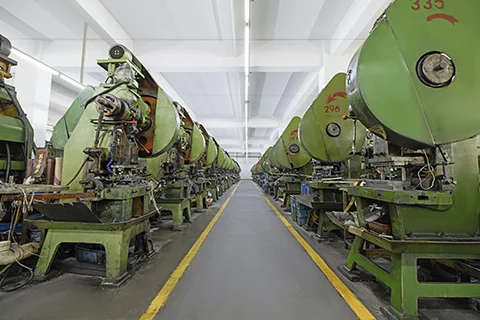
Songji has made metal buttons in Shenzhen since 1999, which makes 2026 our 27th year. The factory sits in Guanlan, Longhua, occupying 12,000 square metres with close to 700 machines, including high-speed presses, CNC and mirror EDM, and works in copper, stainless steel, iron, aluminium and zinc alloy. The range covers snap fasteners, jeans buttons, rivets, eyelets, prong snaps, trouser hooks, shank buttons, magnetic closures and metal plates, more than 10,000 styles with a hundred new ones a month, over 100 national patents, and more than 100 apparel brands using our parts.
Getting a shirt button made is not the hard part. Writing diameter, thickness and hole spacing so that they agree with each other, and with the buttonhole, is what lets a garment maker run the order once. If you have a specification to check, we are glad to talk it through. Want to learn more? Contact us.