If you are sourcing prong snap buttons for a baby line, bodysuits, sleepsuits and pyjamas all count, you probably already have an OEKO-TEX certificate and a few quotations in hand. This guide covers what those two things actually require at baby level, and which of the four parts is the one resting against the skin.
I. Mapping Safety Layers for Prong Snap Buttons
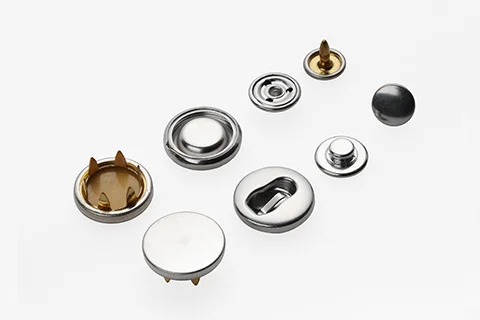
Prong snap buttons rarely fail on the face you look at first. In the four-part assembly the cap, the socket and the stud all carry plating on the visible side, while the back of the base part and the inner side of the prongs are left unplated. Those two bare surfaces are the ones against a baby's skin, which is why lead comes from the base metal grade while nickel comes from the plating, and why one test report cannot answer both.
Requirements arrive in three layers, and suppliers often answer all three in one sentence.
Regulation sets a ceiling. CPSIA and REACH define lines that must not be crossed, and a part above the line cannot be sold. Neither says anything about whether your batches stay consistent, or whether this month's run matches last month's.
Certification sets a threshold. Class I of OEKO-TEX Standard 100 covers finished articles, materials and accessories for 0 to 36 months, with tighter limits on the same substance than the adult classes carry. Passing it means the submitted sample sits inside those limits, and the scope is whatever the annex lists.
Customer specification usually goes further, and it is written differently. Carter's states publicly that it works to the AFIRM RSL as its chemical list and uses OEKO-TEX as the means of verification, and that from 2024, with certification coverage high across its supply base, it has dropped separate RSL testing.
For a supplier the practical meaning is that what gets submitted is not a customer-specific report but a Class I certificate whose scope includes the hardware, plus base metal testing that ties back to a batch.
Mixing the three layers is where a supplier gets caught. Ask whether a part meets CPSIA and the answer comes back as Class I. Ask for the lead figure and the answer comes back as 90 ppm, which is the total lead threshold rather than the internal line actually being run. The vaguer the answer, the more it looks as though something is being avoided.
II. Choosing Base Metals for Baby Prong Snaps
Baby prong snaps are made in brass or stainless steel, and at baby level brass dominates. The prong pierces the fabric and is then folded and locked, and that fold relies on the ductility of the material. Brass has enough of it, so the prong rarely cracks at the bend during setting.
The problem with brass is lead. Lead is not added, it comes in with the copper ingot as an impurity, and the level depends on the grade and on the batch, so two deliveries from the same supplier can differ. That is why lead evidence has to be given per batch, and a report from last year says nothing about this year's goods.
Brass does not rust, but its visible faces are still plated. Baby parts usually take a nickel underplate and then a colour, which can be nickel white, imitation gold, gunmetal or a painted finish. The inner side of the prongs and the back of the base part are not plated at all, and those rely on the alloy itself. This is why the base metal grade is not a place to economise. Plating covers only what can be seen, and the skin side depends entirely on the material.
Stainless steel resists corrosion best, and the cost sits in processing. Grade 304 contains 8 to 10 per cent nickel, so a customer requiring a nickel-free base metal cannot use it and needs a ferritic grade instead. Stainless is harder, so prong forming and tool wear both rise, and the unit price follows.
Zinc alloy does not suit this kind of prong. Die castings have low elongation, and the bend where the prong locks is exactly where a crack starts, so baby prong snaps almost never use it. Its strength is complex faces and fine lettering, which belongs on a cap.
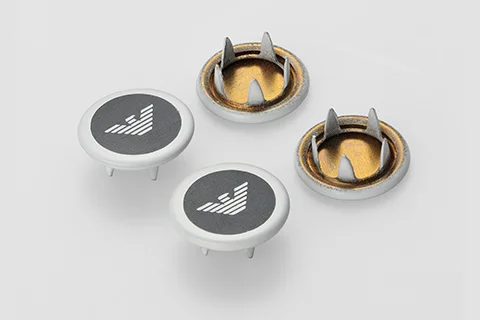
Three face styles cover most of the range: open ring, closed cap and pearl. Open ring shows the fabric through the ring and reads lightest. Closed cap gives a solid face that can take a logo or a painted colour. Pearl adds a pearl layer over the cap for positions that need decoration. All three carry the same pull-off requirement, and what separates them is appearance and how they behave when set, so settle the look first and the base metal second.
Baby accounts often hold material standards above apparel. We have made stroller and child seat hardware where both base metal and structure were held tighter than garment work, and the approach carries over.
III. Setting Prong Snap Buttons on Knitted Fabric
Prong snap buttons are held by fabric thickness first, not by how neatly the prong is finished. At Songji the product standard sets a thickness window per size: 0.25 to 0.64 mm for 12L and 13L, 0.38 to 0.89 mm for 14L and 15L, and up to 1.02 mm for 16L and above in open ring and closed cap. Pearl stops at 0.89 mm at every size.
Those windows are not arbitrary. Prong length is fixed, and during setting the prong has to pass through the total thickness of the fabric before it folds back. On fabric that is too thin, the fold grips a thin layer only and the part pulls out under load. On fabric that is too thick, the prong is not long enough, the surface looks flat after setting, and the back is not actually locked, so it works loose after two washes. Giving fabric weight and thickness when you specify is more useful than giving a ligne.
A comparison with the post snap makes the difference concrete. A post snap has a lower thickness limit of 0.38 mm, while a 12L or 13L prong snap reaches 0.25 mm. Single jersey for bodysuits and sleepsuits sits at the thin end of that band, below what a post snap will hold and inside what a prong snap will. Prong snaps dominate baby wear because of thickness, not because of habit.
On forces, our internal line is a pull-off strength of at least 10 kg in direct pull, about 98 N. Closing force is held to 2 kg at 12L, stays at 2 kg through 13L on open ring and closed cap, and moves to 3 kg from 14L upwards. Pearl moves to 3 kg from 13L already, so the same size carries a different acceptance line depending on the face.
Opening force is measured in side pull, 0.5 to 0.9 kg at the smaller sizes and 0.7 to 1.2 kg above that. Direction has to be stated, because prong snaps and post snaps are both tested in side pull while hand snaps are tested in direct pull, and two figures taken in different directions will always mislead when set side by side.
Size reporting carries one more trap. A 13L male and female pair measures 8.5 mm across and a 14L measures 9 mm, while 13 times 0.635 comes to 8.26. A ligne is a nominal figure and factories round to whole numbers, so placement drawings and hole spacing should be drawn from the actual diameter rather than converted from the ligne.
Tooling is the other variable at setting. Open ring, closed cap and pearl each need their own upper and lower die, and the die gap follows prong thickness. The wrong die leaves the prong short of its full fold, so the surface looks flat while the back is only half locked. Nothing on the line will flag it, and only first-off checks and patrol inspection catch it.
All of this is settled at sampling. The same batch of parts pressed into fabrics of different weights needs different pressure and die clearance, and without fixed parameters the tension across a production run drifts. First-off approval has to be done with the actual fabric, because a part tested on its own will not show any of this.

IV. Reading OEKO-TEX Class I for Metal Buttons
Metal buttons are not automatically inside an OEKO-TEX certificate. The standard treats them as non-textile accessories, which may be included in the same certificate when their composition is close to that of the main material, and which cannot be included unless they hold certification of their own.
So a garment that has passed Class I does not mean the button on it is in scope. When a certificate arrives, read the annex and see whether metal parts are listed, which article they refer to and which colour. That one question separates a supplier that manages the scope from one that forwards a PDF.
Class I covers 0 to 36 months, and that is where it differs most from the adult classes. Limits are tighter for the same substance, and samples have to be submitted in the form they will be sold in, because a loose part and an assembled one do not test the same way.
Four things are worth checking on any certificate: the number and the issuing body, the parts named in the annex, the validity date, and whether the test report for this delivery can be matched to a batch. The first two are hard to fake.
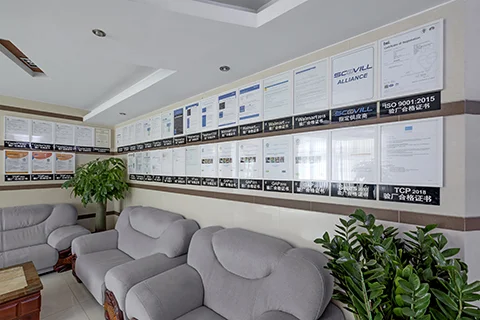
The last two are what gets missed in daily work, since a change of plating type, a change of base metal batch or a change of colour formulation all call for a retest, and a report that is still valid for goods that have already changed is more common than buyers expect. Our own ISO 9001:2015, OEKO-TEX Standard 100 Class I and GRS certifications are current, with the numbers listed.

V. Documenting Nickel and Lead on Prong Snaps
Nickel and lead on prong snaps sit in different places, so they need different evidence. Lead is in the base metal. Nickel is in the plating. A single report will not cover both.
The nickel limit is easy to apply to the wrong article. REACH Annex XVII sets 0.5 micrograms per square centimetre per week for articles in prolonged skin contact, and the 0.2 figure applies only to piercing parts such as earrings. A baby prong snap touches skin but does not pierce it, so 0.2 is the wrong number, and a supplier quoting it has usually carried a template over from another category.
One more layer needs saying plainly. Meeting the nickel release limit is not the same as containing no nickel. An iron base needs a nickel underplate to resist rust, so nickel sits in the coating. The accurate claim is that nickel release is held within the limit, which is testable, repeatable and checkable.
Lead has to be read at three levels. The REACH limit is 500 ppm, the total lead threshold under OEKO-TEX Class I is 90 ppm, and our own internal line is 60 ppm. These are three different things, and 60 is our capability level rather than an industry norm, so it has to be labelled with whose line it is. A buyer comparing it against another supplier's number without that label will draw the wrong conclusion.
How evidence is given matters more than how much of it there is. At Songji it runs from a spectrum reading and a third party report per base metal batch, with four reference numbers tying the job together: the customer order number, our internal order number, the purchase order and copper batch number, and the warehouse record. Any batch can be traced back to the specific plating bath it came from.
Files are kept for five years and a customer asking for the trail gets it within 24 hours. Over the past 10 years we have passed 72 factory audits for international brands, including Carter's, Walmart, GAP and VF.
VI. Sampling Custom Prong Snaps for Baby Wear
Sampling custom prong snaps goes wrong most often on one point, and it is the face that gets submitted. On the four-part assembly the surfaces against the skin are the back of the base part and the inner side of the prongs, and neither is plated, so what gets measured there is the base metal. Submit only the cap and you measure plating and a visible face, which is not the surface a baby touches. Send two sets instead, one assembled and one broken down to the skin side, and the report then matches the garment.
Four things have to be settled before a sample is signed off: fabric weight and thickness, face style, colour, and the regulation of the target market. Anything left until later turns into a die change or a retest.
Samples are ready in 3 to 5 days, and production follows once the sample is approved. The minimum order is 5,000 sets for regular plating or painting and 3,000 for regular rack plating, with a plate fee below that which is tied to the quantity of the order. Tooling is a one-off and is not charged again on a repeat order. These are our own thresholds, and other factories differ widely, some starting at 10,000 sets and some taking a few hundred, so the question is worth asking on your own volume.
Baby programmes normally carry one or two spare buttons per garment, and the packing list should state how they are paired. Bulk packing and set packing differ in labour, and saying which one you want at quotation stage saves an argument later. Loose parts rub against each other in a bag and the caps on closed cap and pearl styles pick up fine scratches, while set packing takes more time and holds appearance better. For a baby line where appearance matters, set packing is the safer choice and is worth listing on its own line of the quotation.
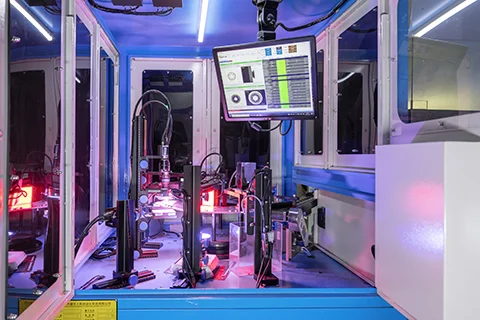
Songji has made metal buttons in Shenzhen since 1999, which makes 2026 our 27th year. The factory sits in Guanlan, Longhua, on 12,000 square metres with close to 700 machines. The range covers snap fasteners, prong snaps, jeans buttons, rivets, eyelets, trouser hooks, shank buttons, magnetic snaps and metal trims, in copper, stainless steel, iron, aluminium and zinc alloy. More than 100 apparel brands use our parts, along with stroller and child seat hardware, and custom development works back from fabric parameters rather than picking the nearest stock size. The defect rate sits below 0.3 per cent across more than 150 standardised quality checks.
What goes wrong on baby buttons is rarely the wrong style ordered. It is the skin side and the fabric thickness not being settled at sampling. Settle those two and what you save is rework.Want to learn more? Contact us.