A shank button carries a raised stem or loop on its back, which is where the sewing thread passes through to fix the button to the garment. Unlike a flat button, all the force falls on that single stem, so almost all of a shank button's durability rests on the shank itself.
That is the part to check first when sourcing custom metal shank buttons. Songji has made metal buttons and garment hardware for 27 years and knows shank button durability inside out.
If you are sourcing custom metal shank buttons for a clothing brand, this guide breaks down the technical specs that decide how long one will last.
I. Why the Shank Decides Shank Button Durability
The shank is the one point where a shank button lives or dies. The thread passes through it, and every pull and close the customer makes lands on that single spot.
When a shank button fails, it almost always fails at the shank. Cheap shank buttons show three common problems.
First, a rough or sharp edge on the shank slowly cuts through the sewing thread, so the button falls off out of nowhere.
Second, a weak weld between the shank and the face works loose under repeated force.
Third, a blurred, flat embossed pattern reveals rough tooling. The first two are hard failures that make a garment unwearable; the third is a finish problem that drags down its perceived quality. When you assess a shank button's durability, look at the shank first.
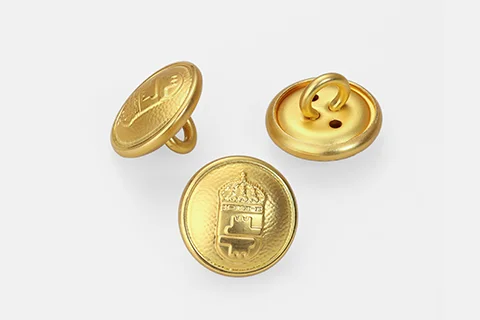
II. Copper and Alloy Shank Buttons Hold Up
After the shank, material is the next test. High-end shank buttons are made mainly from copper and alloy. Copper is ductile and warm to the touch, the common choice for suits and formal coats. Alloy keeps costs down and shapes easily, so it suits intricate, embossed styles.
Both can hold fine embossing and stand up to daily opening and closing. Cheap shank buttons, by contrast, use brittle low-grade alloy hidden under a plating. They pass at the sample stage, then fail in production: light, easy to break, with a coating that flakes on contact.
Songji makes shank buttons mainly from copper and alloy, using 300 tonnes of copper and 60 tonnes of alloy every month, and every batch of raw material passes a spectrometer, a heavy metal tester and a Rockwell hardness tester before it enters production. When you assess a factory, ask whether its material claims are backed by test data.
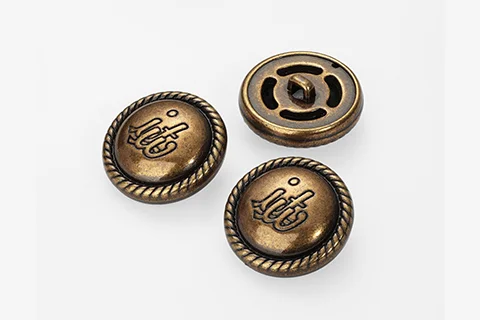
Half of a shank button's durability is material, half is plating. The plating decides whether the button resists corrosion or fades and rusts, and that comes down to the plating method.
Shank buttons are rack plated, with each button hung and plated individually rather than tumbled in a barrel like small parts. Rack plating gives a more even, thicker coating, protects the shank and embossing in particular, and holds up noticeably better against corrosion.
Salt spray testing tells you whether the coating is up to the job. Ordinary buttons are tested at 1% concentration for 24 hours, while shank buttons for luxury garments go to 5% for 50 hours, a stricter requirement. A button pulled and washed every day needs a coating that stays put, and that is the line between durable and fading. Ask a factory which salt spray level it passes and whether there is a test report behind it.
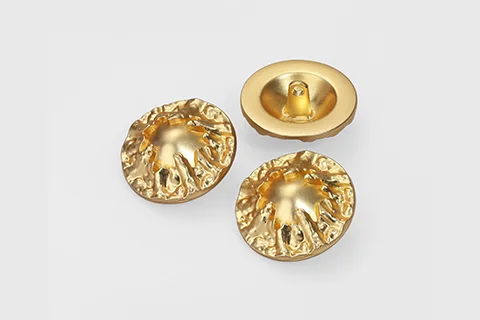
IV. Embossing Gives Shank Buttons Their Depth
High-end shank buttons are rarely plain; most carry a brand logo or a pattern. The depth of the embossing comes half from the tooling and half from the hand of the maker. If the mould lacks precision, the edges blur and the relief goes flat; if the worker lacks experience, the depth and sharpness of the pressing cannot hold.
These two things are exactly where an ordinary factory and a high-end one part ways. The most direct way to judge embossing is to look at the sample, or even under a magnifier. A good mould shows a sharp relief; a rough one shows a blur.
An experienced hand also watches the pressing on every batch so the production run matches the sample. That is the kind of craft a buyer can spot on a sample at a glance
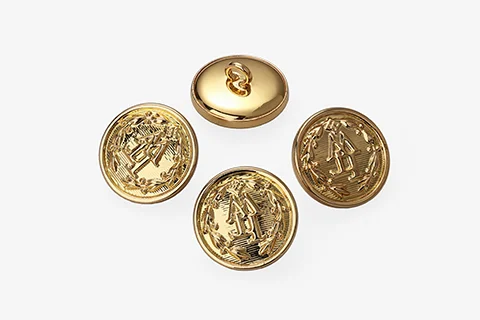
V. Shank Strength Stops Shank Buttons Falling Off
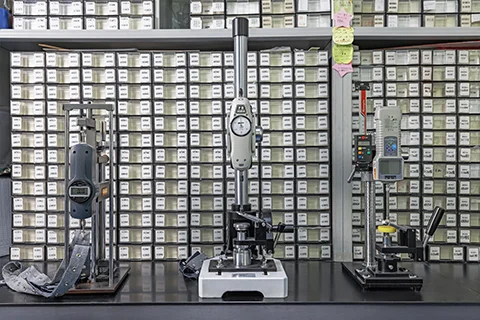
The final test of durability is strength. Shank strength is measured by the pull the stem can take before it comes away. Songji's shank buttons hold a shank pull of 45 pounds or more, clearly above the level common across the industry.
That gap comes down to one thing for the wearer: the button stays on. For a clothing brand, a fallen button is a far more serious complaint than a faded one. When a button drops off a customer's garment, the result ranges from embarrassment to the whole piece being judged poor quality, costing both a return and the brand's reputation.
A shank that is strong enough and does not cut the thread is what keeps a button firmly in place after repeated wearing and washing. That is why shank pull is a hard figure you cannot skip when assessing a shank button.
VI. Sourcing Durable Shank Buttons From China
Pull the points above into a checklist you can work through when sourcing durable shank buttons: does the shank cut the thread or is the edge smooth; is the material copper and alloy with test data; is it rack plated and which salt spray level does it pass; is the embossing sharp and the detail crisp; does the shank hold enough pull and hold it consistently; and is batch consistency backed by defect data.
Songji has made metal buttons and garment hardware since 1999, and shank buttons are one of its specialities. More than 150 standardised quality control procedures cover everything from raw material to finished product, keeping the full-batch defect rate below 0.3%. Its metal buttons hold OEKO-TEX Standard 100 Class I certification, with lead and other heavy metals controlled to within 40 PPM. Over the past 10 years it has passed 72 factory audits from brands including Walmart, GAP, VF, Carhartt and Carter's.For a buyer, those figures and records carry far more weight than a simple promise that "our buttons are strong".
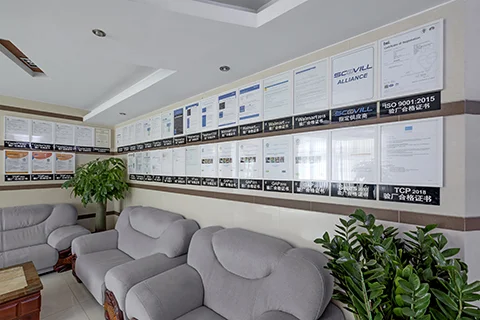
Songji is based in Guanlan, Longhua, Shenzhen, with a 12,000-square-metre factory and nearly 700 machines covering high-speed automatic presses, CNC machining centres and mirror-spark machines. It is a source factory that has focused on custom metal buttons and garment hardware for 27 years. The product line covers metal buttons, snap fasteners, jeans buttons, tack buttons, shank buttons, rivets, metal badges, hooks and belt buckles, in copper, stainless steel, iron, aluminium and alloy. The factory holds ISO 9001:2015, OEKO-TEX Standard 100 Class I and GRS certification, has passed 72 audits from international brands over the past 10 years, and keeps its full-batch defect rate below 0.3%.

If you are sourcing custom shank buttons for a clothing brand and want every button to hold up to repeated pulling without falling off, we would be glad to talk. Want to learn more? Contact us.