For metal buttons entering the European Union, the first hurdle is not price or workmanship but compliance. A single snap fastener or jeans button with a nickel release or heavy metal reading over the limit can see an entire shipment held at customs, or get a factory struck off a brand's supplier list at the audit stage. For a buyer, finding a factory in China that can make compliant metal buttons is easy; finding one that can prove its compliance and withstand an audit is the real task. Songji has made metal buttons and garment hardware for 27 years and knows exactly what European buyers check during an audit. If you are a sourcing manager buying compliant metal buttons for a European or global brand, this guide walks you through the key stages of an audit and tells you which documents to request and which figures to check.
I. Why REACH and OEKO-TEX Decide Whether Metal Buttons Clear Customs
Many buyers blur REACH and OEKO-TEX together, but they are quite different. REACH is a mandatory European Union regulation; a metal button that contains a restricted substance cannot be placed on the market, so it is the hard barrier at customs. OEKO-TEX is a voluntary safety certification, but its limits are often stricter than the law, which is why brands use it as a sign of trust in a factory. One handles compliance, the other handles confidence, and a buyer needs both. An ordinary factory may offer nothing more than a verbal promise, while a factory that truly passes an audit can produce test reports, certificates and traceable records. These three things are the real basis for deciding whether a factory is dependable.
II. REACH Compliance for Metal Buttons and Its Restricted Substances
REACH controls metal buttons in two ways. One is the SVHC Candidate List of substances of very high concern, which now stands at 253 entries after n-hexane and bisphenol AF were added in February 2026. A listed substance above 0.1% in an article triggers a duty to pass information to customers and to make a SCIP notification. The other is the Annex XVII restriction list, which is the hard ban: a substance over the limit simply cannot be placed on the market. For metal buttons the key entries are nickel release, which must stay below 0.5 micrograms per square centimetre per week for prolonged skin contact; lead, capped at 500 ppm in fashion accessories and trimmings; and cadmium, capped at 100 ppm in metal parts. These limits are specific, so what a buyer needs to do is confirm the factory holds a third-party test report for each one, rather than accept a simple claim of compliance.

III. What OEKO-TEX Standard 100 Class I Means for Metal Snap Fasteners
OEKO-TEX divides products into four classes, and Class I is the baby-product level, the strictest of all. A snap fastener sits against the skin for long periods, and on baby clothing especially, parents care most about whether it is safe. Songji's metal trimmings hold OEKO-TEX Standard 100 Class I certification, which means they meet baby-grade requirements for heavy metals, nickel release and azo dyes. Songji also holds ISO 9001:2015 quality management certification and GRS Global Recycled Standard certification. For a buyer, Class I is not an optional extra; it is the ticket that lets a snap fastener enter the premium and baby categories.
IV. Heavy Metal Control and Why 40 PPM Beats the Industry Norm
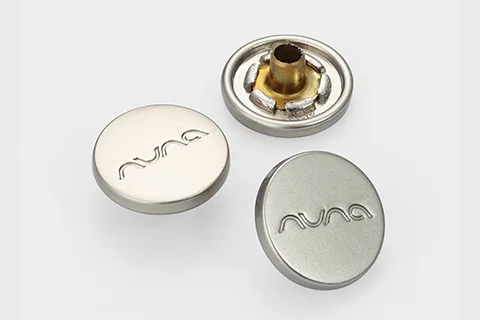
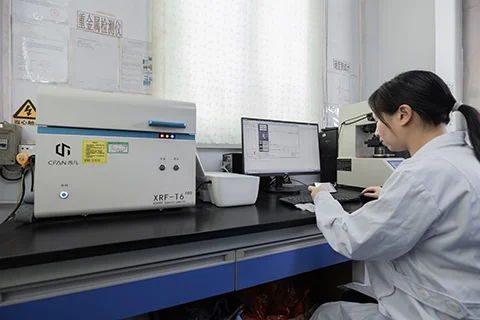
Lead in a metal button is a priority in European audits. REACH caps lead in fashion accessories and trimmings at 500 ppm, OEKO-TEX Class I caps total lead at 90 ppm, and Songji controls lead and other heavy metals to within 40 ppm, tighter than the Class I limit. To be clear, 40 ppm is a capability Songji can achieve, not a rejection threshold the factory sets for itself. Songji runs every batch of raw material through a spectrometer and a heavy metal tester, keeping heavy metals out of the line at the source. When you audit a factory, one question, "what is your lead reading and where is the test data?", quickly separates real control from a spoken promise.
V. The Documents an Auditor Asks for When Sourcing Jeans Buttons
An audit is about documents, not samples. When sourcing jeans buttons, an auditor will usually ask for these: a third-party REACH test report, an OEKO-TEX certificate, material proof for the raw materials, and traceability records that tie each test report to a specific batch. Many factories fail here because they cannot produce a complete document chain; the sample looks good but there is no test report, or the report does not match the production batch. Songji keeps test records for at least five years, and every batch can be traced back to its raw materials and test data. The habit a buyer should form is to spell out the document requirements at the first enquiry and ask for everything in one go.
VI. Traceability and Test Records for Compliant Shank Buttons and Rivets
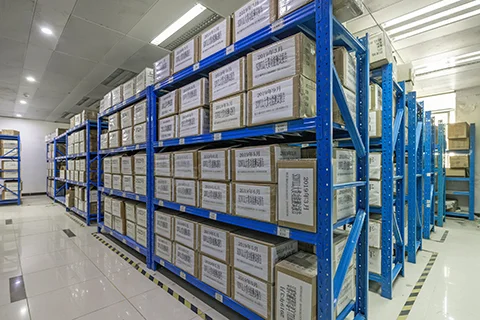
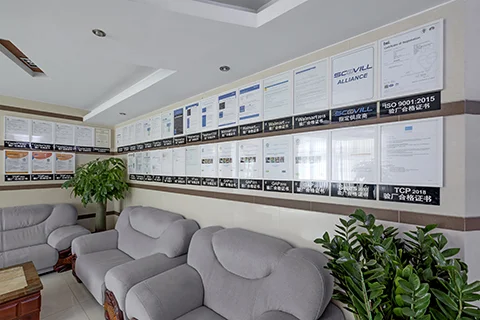
Compliance is not a one-off test but something that must be checkable every time. Shank buttons and rivets come in large volumes and many batches, and without a traceable quality system a factory can easily end up with a sample that complies and a production run that drifts. Songji runs more than 150 standardised quality control procedures covering everything from raw material to finished product, and keeps its full-batch defect rate below 0.3%. Over the past 10 years Songji has passed 72 factory audits from brands including Walmart, GAP, VF, Carhartt and Carter's. The standard those international brands demand for traceability is itself an industry benchmark. For a buyer, choosing a factory that has cleared 72 audits carries far less risk than choosing one that simply says there will be no problems.
VII. A Pre-Audit Checklist for Sourcing Compliant Metal Trimmings from China
Pull the points above into a checklist you can work through before auditing a factory: does it hold third-party test reports for nickel release, lead and cadmium under REACH Annex XVII; has its SVHC screening been updated to the latest 253 entries; is the OEKO-TEX certificate Class I; can it hold heavy metals to within 40 ppm; can test records be traced to a specific batch; and are the audit records real and verifiable. A factory that ticks every box is one that can pass an audit with you and stay with you for the long term. Songji has been making metal buttons and garment hardware since 1999, has served more than 100 brands, and is a source factory that will work through every compliance gate with you.
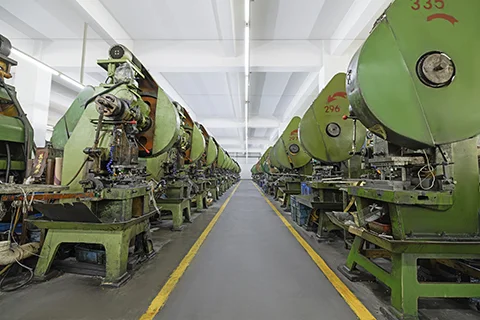
Songji is based in Guanlan, Longhua, Shenzhen, with a 12,000-square-metre factory and nearly 700 machines covering high-speed automatic presses, CNC machining centres and mirror-spark machines. The product line covers metal buttons, snap fasteners, jeans buttons, tack buttons, shank buttons, rivets, metal badges, hooks and belt buckles, in copper, stainless steel, iron, aluminium and alloy. The factory holds ISO 9001:2015, OEKO-TEX Standard 100 Class I and GRS certification, has passed 72 audits from international brands over the past 10 years, and keeps its full-batch defect rate below 0.3%.
If you are sourcing compliant metal buttons for a European or global brand and want every shipment to pass REACH and OEKO-TEX audits without a hitch, we would be glad to talk. Want to learn more? Contact us.