In the apparel, luggage, and baby stroller industries, the failure of metal buttons often begins in ways that are not immediately noticeable: a fine rust spot appears on the electroplated layer after the fifth wash, the fastening force of a five-claw button drops by more than half after thirty openings and closings, or excessive heavy metal residues cause an entire batch of garments to be detained by European customs. The root cause of these issues is rarely a single process error, but rather systemic problems within the supplier's quality control system.
For procurement professionals, understanding how metal button suppliers in China translate "quality" into quantifiable and traceable production behaviors is a prerequisite for mitigating supply chain risks and establishing long-term partnerships. This article, drawing on the nearly three decades of experience that Songji Button has accumulated through serving international brands, analyzes how leading Chinese OEM button manufacturers ensure button quality from five dimensions: material control, manufacturing precision, inspection systems, compliance certification, and customization collaboration.
Raw Material Batch Control and Traceability System
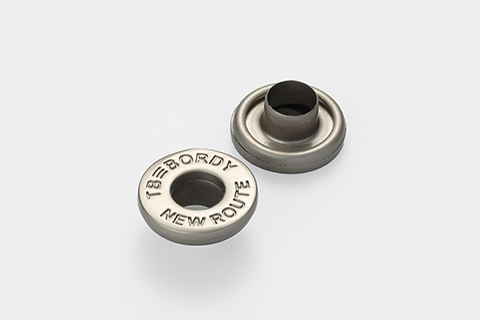
High-quality metal buttons do not begin at the stamping press, but with the inspection data recorded the moment raw materials arrive at the warehouse. Reputable metal button manufacturers in China implement batch labeling management for every shipment of copper, zinc alloy, or stainless steel coils. Each label specifies the material grade, production date, and supplier code. Before warehousing, materials must undergo composition screening using spectrometers to ensure that hazardous substances such as lead, cadmium, and mercury are controlled within the required limits.
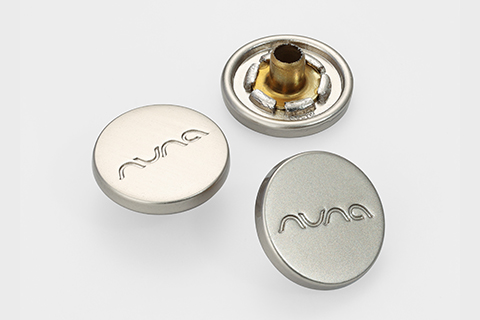
Songji Button’s acceptance standard requires that eco-friendly copper have a copper content of no less than 99.5%. Through the use of heavy metal detectors, Songji consistently maintains total lead content below 60ppm. This value is stricter than the常规 limit of 90ppm set by the EU REACH regulation and fully meets the zero-tolerance standards for materials in contact with infants, as required by brands such as Carter's (babywear) and NUNA (strollers), both of which are Songji’s long-term partners.
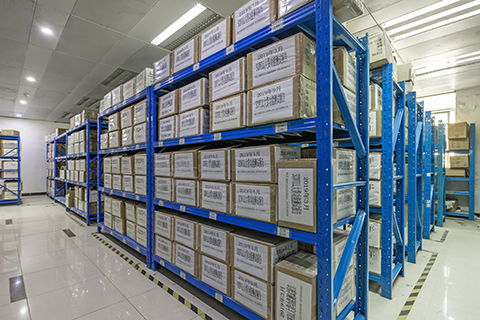
Inspection data for each batch is linked to its corresponding label. Should any abnormality be detected in the finished product, Songji's traceability system can precisely identify the problematic raw material batch and its production records within five years. This system enables Songji to provide full-chain traceability documentation—from raw material to finished button—when serving retail giants such as GAP and Walmart.
Precision Equipment and Tolerance Control Standards
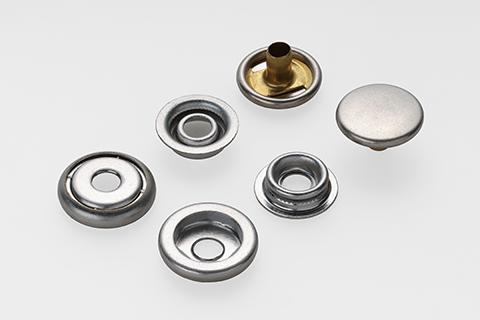
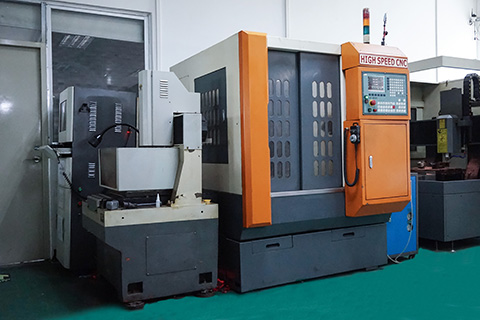
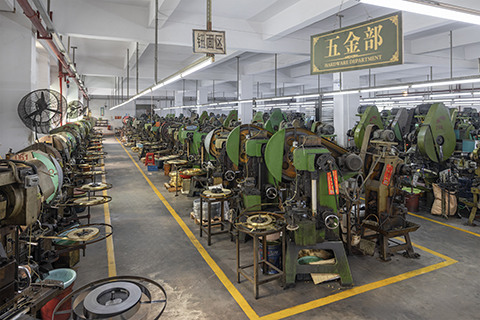
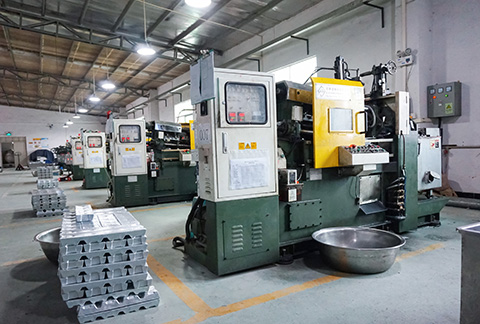
When order volumes scale from thousands to millions, the consistency of button quality is no longer determined by the skill of individual workers, but by the precision of equipment and the level of process standardization. Leading button suppliers in China have largely replaced manual feeding with fully automated high-speed precision stamping presses. Songji, for example, has developed its proprietary "One-Shot Multi-Cavity" process, which simultaneously forms 4 to 6 buttons per single stamping stroke. This innovation increases production efficiency by 6 to 10 times while reducing dimensional variation through a closed-loop pressure feedback system.
Songji is capable of controlling general dimensional tolerances within ±0.05mm, and tightening critical functional fit tolerances to ±0.025mm. This level of precision is equivalent to one-tenth of the thickness of two sheets of A4 paper, ensuring that every button—such as the antique brass I-shaped buttons customized for LEE vintage denim—maintains consistent fit between the button face and stud across a batch of 50,000 pieces.
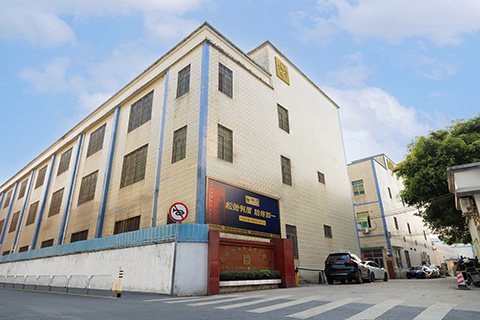
With nearly 700 sets of production equipment and a manufacturing base exceeding 12,000 square meters, combined with a monthly material consumption capacity of 300 tons of copper and 60 tons of alloys, Songji has established a safety stock mechanism for clients including Walmart and GAP. By pre-stocking inventory based on quarterly forecasts, Songji compresses emergency replenishment lead times to within 72 hours.
End-to-End Inspection and In-House Laboratory Validation
Preventing defective products from leaving the factory is the most fundamental responsibility a supplier owes to its brand partners. The quality control system of a genuine source factory for metal buttons should not be limited to final batch sampling; it must be embedded throughout the entire production chain, including mold development, stamping, surface finishing, and assembly.
Songji has implemented over 30 standardized inspection checkpoints across its production workflow:
First Article Inspection:
For new molds or new orders, the first-off samples undergo full dimensional inspection, tensile testing, and pre-production salt spray testing. Mass production is authorized only upon passing all criteria.
In-Process Patrol Inspection:
Hourly inspections target 15 categories of common defects, including face deformation and mouth cracking during stamping, as well as eccentric inner holes in spring cups and burrs on button stud edges during assembly.
Finished Product 100% Inspection:
Before shipment, electric button fastening machines simulate actual garment attachment conditions to eliminate products with insufficient fastening force.
Songji’s in-house laboratory is equipped with salt spray test chambers, tensiometers, color assessment cabinets, and enzyme wash testers. It can simulate 50 hours of continuous salt spray corrosion to verify coating adhesion. The tensile strength of standard five-claw buttons is required to exceed 100N.
When collaborating with Winner Garments, Songji was required to subject customized snap buttons to 50 cycles of industrial enzyme washing—a simulation equivalent to five years of garment life. Results showed no coating peeling, less than 5% degradation in fastening force, and a batch defect rate controlled below 0.3%.
Global Compliance Certification and Factory Audit Endorsements
For export-oriented brands, a supplier’s compliance credentials directly determine whether their products can access mainstream retail channels in Europe and North America. High-quality metal button suppliers in China must not only hold ISO9001 Quality Management System certification but also proactively obtain specialized certifications related to product safety and environmental sustainability.
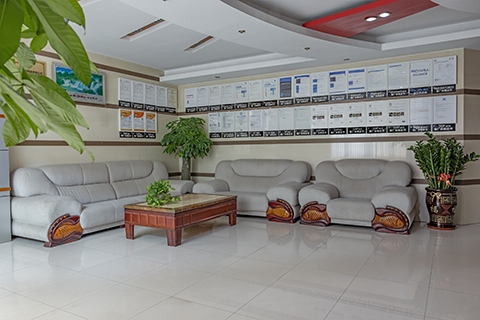
Songji is among the few button manufacturers in China to hold both OEKO-TEX® Standard 100 Class I certification (infant product level) and Global Recycled Standard (GRS) certification. GRS certification is held by only 10% to 20% of button manufacturers; it requires full-chain verification of recycled material input ratios, supply chain traceability, and social responsibility performance.

In addition, Songji has passed HIGG FEM (Facility Environmental Module) verification and obtained GAP TQP (Total Quality Partnership) supplier certification. These credentials demonstrate that Songji meets the stringent environmental, water safety, and occupational health standards required by leading global retailers.
Over the past 10 years, Songji has successfully passed 72 on-site factory audits conducted by eight international brands, including GAP, Walmart, LEE, and Carter’s. This record means that, on average, Songji undergoes a quality system audit from a brand client once every 45 days, each time with zero major non-conformities. For procurement professionals, such a supplier eliminates the need for months of due diligence—its compliance capability has already been rigorously validated by numerous renowned brand clients.
Customization Development and Design Capability
High-end customization represents an advanced test of a supplier’s quality control capabilities. When a brand needs to translate its conceptual aesthetic into specific button specifications, the supplier’s design interpretation skills and process execution ability directly determine the quality of the final delivered product.
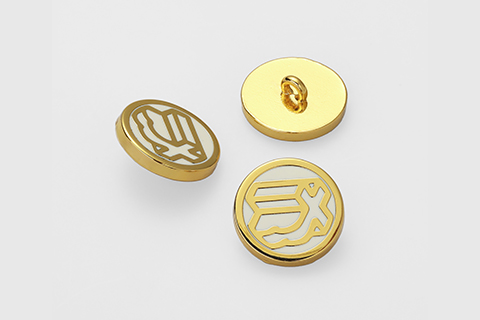
When the brand PORTS sought to embed its understated luxury identity into a matte copper snap button, Songji’s design team did not stop at replicating the appearance. Recognizing the tendency of delicate silk fabrics to snag, they optimized the contact edges on the button’s reverse side to a 0.2mm rounded corner. Using CNC micro-engraving, the brand pattern was applied with depth controlled to a tolerance of ±0.02mm.
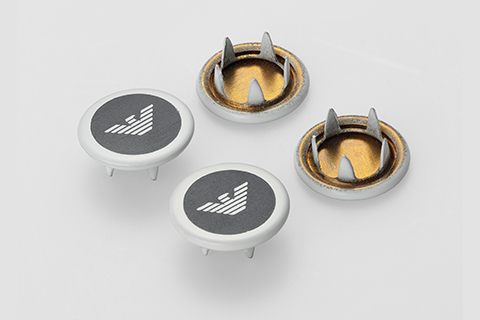
Customization projects of this nature typically involve new mold development, adjustments to electroplating processes, and three to five rounds of sample testing. Songji leverages a monthly R&D output of over 100 new designs and a portfolio of more than 100 national patents—including design patents for products such as the revolver-style hand-snap button and software copyrights for the fully automatic button feeding system. This capability ensures that brand product launch schedules are not delayed by supply chain lead times.
Songji’s client roster includes luxury brands such as Armani, Prada, Burberry, and DIESEL—a strong testament to its proven capability in customized button collaboration.
Four Dimensions for Evaluating Suppliers
Procurement professionals can assess and screen metal button suppliers in China using the following four verifiable dimensions:
1. Verify Certification Documents
Request original scanned copies of certifications such as OEKO-TEX® Standard 100, GRS, and ISO9001, and verify the issuing body and validity period. For suppliers claiming to have served international brands, request factory audit reports or proof of collaboration. Songji, for example, can provide TQP quality certification documents issued by brands such as GAP and Walmart.
2. Inspect Equipment Inventory
During on-site visits or video factory audits, pay close attention to the brands and models of stamping equipment and the configuration of testing instruments. Fully automated high-speed precision presses, spectrometers, and salt spray test chambers are standard assets of genuine source factories, while trading companies are typically unable to demonstrate such fixed assets.
3. Review Tolerance Specifications
Ask suppliers for specific details on dimensional tolerance control for orders. Suppliers capable of providing First Article Inspection Reports and Process Capability Index (Cpk) data generally possess mature process control capabilities.
4. Traceability Retention Period
Verify whether the supplier has a batch traceability system and the retention period for inspection reports. Songji archives binding records for each production batch—including raw material batch numbers, production timestamps, inspector IDs, and test data—for more than five years. In the event of end-product quality disputes, this capability is critical for clarifying responsibility and enabling rapid response, thereby supporting the brand’s after-sales management.
Conclusion
Quality control at China’s premium metal button suppliers is not reliant on the personal experience of a single inspector. It is a systematic framework built upon precision equipment parameters, quantifiable inspection standards, traceable production data, and globally recognized compliance credentials.
If you are seeking a Chinese source factory for metal buttons that can translate quality commitments into measurable specifications and finished product deliverables, Songji Button offers integrated OEM/ODM services covering mold development, full-process quality control, and international certification support. Contact us today to discuss a metal button quality solution tailored to your product positioning.