For buyers, product developers, and supply chain managers in industries requiring metal buttons—such as apparel, luggage, and baby strollers—the selection of metal buttons extends beyond matching styles and prices. As global brands increasingly prioritize sustainability and European and American markets impose stringent requirements for eco-friendly attributes, whether suppliers hold authoritative certifications has become a key threshold for high-quality, demanding brands when selecting partners.
Among numerous certifications, the Global Recycled Standard (GRS) and OEKO-TEX® Standard 100 warrant particular attention. The former verifies the use of recycled materials and ensures full traceability throughout the supply chain, while the latter guarantees buttons are safe for skin contact. This article will dissect the “value” and significance of these certifications, and explain how to select a Chinese metal button manufacturer with genuine environmental and quality capabilities based on verifiable qualification data.
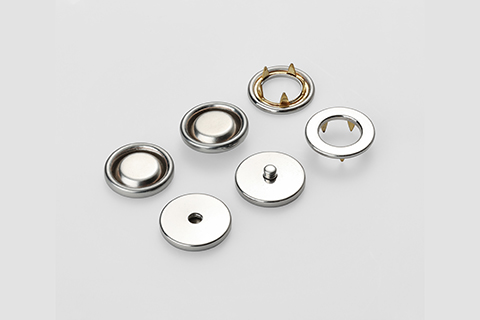
What is GRS Certification? Why is it important for metal buttons?
GRS (Global Recycled Standard) is an international, end-to-end voluntary certification standard. Originally developed by the Textile Exchange, it has become one of the world's most recognized certifications for recycled materials. It not only focuses on the recycled content in products but also imposes stringent requirements on supply chain traceability, environmental protection standards, social responsibility, and chemical restrictions.
For metal button suppliers, holding a GRS certification means every step—from recycled metal sourcing to the final product—has undergone third-party verification, ensuring recycling isn't just lip service. Manufacturers obtaining this certification must meet strict environmental management requirements during production, including wastewater treatment and energy usage.
Due to the stringent requirements of GRS certification, only a small percentage of button manufacturers hold this certification. Industry data indicates that approximately 10% to 20% of button producers possess this accreditation. This implies that Chinese metal button suppliers capable of providing GRS-certified metal buttons typically demonstrate superior supply chain management capabilities and international service experience.
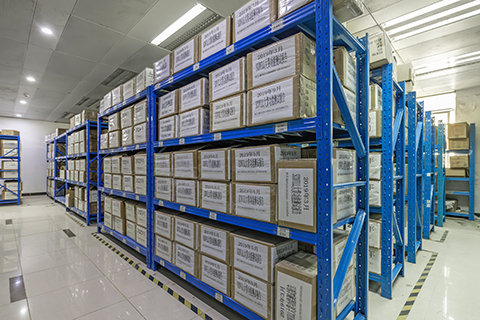
OEKO-TEX® Standard 100 Certification: The First Line of Safety Defense
While GRS certification focuses on “environmentally responsible material sourcing,” OEKO-TEX® Standard 100 certification centers on “product safety for human health.” Developed by the German Hohenstein Institute, it stands as one of the world's most authoritative standards for testing textiles against harmful substances.
The certification's value lies in its comprehensiveness and rigor:
Coverage of all components: Testing is required for every part of the product, including fabrics, threads, and of course accessories like metal buttons and zippers. A button bearing the OEKO-TEX® label has undergone strict screening for harmful substances in its metal components, plating layers, and even packaging materials.
Over 1,000 Test Items: The scope encompasses legally banned substances like azo dyes and carcinogenic dyes, as well as chemicals not legally restricted but potentially harmful to health, such as heavy metals, formaldehyde, phthalates (plasticizers), PFAS (perfluorinated compounds), and bisphenol A.

Tiered Control System: Certification is divided into four levels based on product skin contact. Level 1 (infant product level) imposes the strictest requirements for products used by infants and children aged 3 and under. Achieving this level indicates the buttons have passed the most rigorous testing for heavy metal release, edge smoothness, and other metrics.
For buyers, selecting metal buttons certified to OEKO-TEX® Standard 100 Class 1 mitigates market access risks stemming from hazardous substance exceedances at the source.
How Do GRS and OEKO-TEX Certifications Work Together?
For international brands pursuing sustainability, GRS and OEKO-TEX certifications are not mutually exclusive but serve as complementary safeguards.
GRS Certification: Demonstrates to the market and consumers that the brand utilizes recycled materials, reduces virgin resource consumption, and fulfills environmental commitments.
OEKO-TEX Certification: Assures consumers that even with recycled materials, products remain safe and harmless, free from new harmful substances introduced during the recycling process.
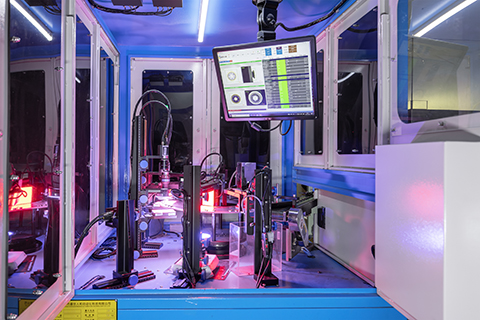
Chinese metal button manufacturers capable of providing both certifications typically possess the robust capabilities required to serve top international brands. Take Shenzhen Songji Button as an example: not only is it one of the few manufacturers in the industry holding both OEKO-TEX® Standard 100 Class 1 certification and Global Recycled Standard (GRS) certification, but it has also passed a series of international audits including HIGG FEM Environmental Performance Verification and ISO9001 Quality Management System certification. Over the past decade, it has successfully passed 72 on-site audits by eight international brands including GAP, Walmart, LEE, and Carter's. This high frequency of third-party verification strongly validates the credibility of Songji's multiple certifications.
What specific data should be examined when selecting a certified button supplier?
When evaluating a Chinese metal button manufacturer claiming certifications, verify the following three dimensions beyond merely viewing certificate photos:
1. Verify Certification Level and Scope
OEKO-TEX® Certification: Confirm the certificate level is Product Class 1 (suitable for infant and child products). Additionally, review the product description on the certificate to ensure it explicitly covers “metal buttons” or “metal accessories.”
GRS Certification: Examine the recycled material content percentage (e.g., “≥50%” or “≥20%”) and the scope of certification on the certificate to confirm coverage for your required product type.
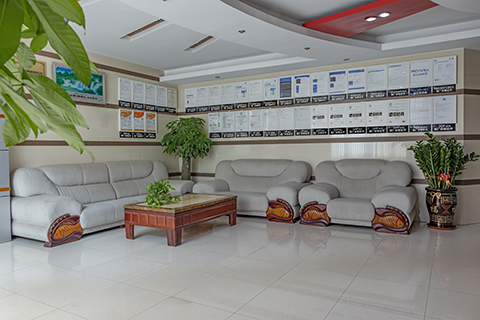
2. Validate Key Testing Data
A professional supplier should provide testing reports corresponding to the certifications. Focus on three specific data points: heavy metal content, nickel release levels, and specific chemical substances.
For example: Is total lead content controlled below 60ppm? Songji strictly enforces this limit, exceeding the EU REACH standard of 90ppm. For buttons in direct skin contact, nickel release must comply with EU standards. Specific chemicals like phthalates and organotin compounds should be “not detected” or below thresholds.
3. Assessing Production Process Compliance
The value of certification lies in the “process.” Inquire whether suppliers have established a raw material batch traceability system. Songji implements batch identification management for every metal material lot, linking test data to labels. Production information for batch products is retained for at least five years, enabling precise traceability.
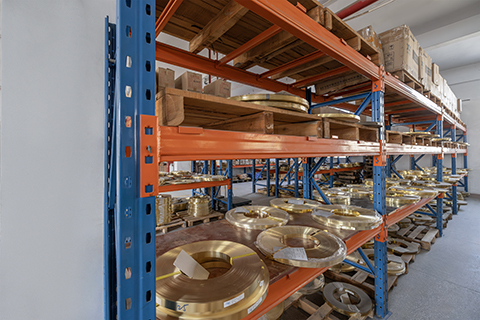
For example, does the production process utilize cyanide-free electroplating? Songji data shows this process reduces VOC emissions by 68% compared to traditional methods and achieves 85% wastewater recycling rates.
Case Study: How Certification Translates to Tangible Value
Theoretical certification credentials ultimately depend on the clients and brands a supplier has partnered with. Take Songji Buttons as an example: in the infant and children's industry, Songji customizes metal buttons for the premium stroller brand NUNA. Leveraging OEKO-TEX® Standard 100 Class 1 certification, Songji ensures products comply with the EU EN 71 child safety standard, featuring extremely low heavy metal content. This enables direct export to over 20 countries worldwide.
In apparel, Songji supplies custom buttons for premium womenswear brands like PORTS and Ying'er. GRS certification meets brands' sustainable material procurement needs, while ISO9001 ensures consistent quality across million-unit orders.
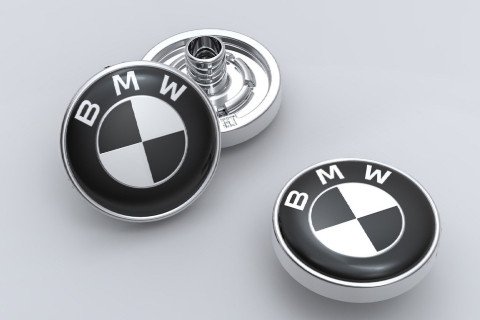
In the automotive sector, Songji develops connectors for BMW child safety seats. These components not only pass 300kg tensile strength tests and 72-hour salt spray tests but also meet stringent environmental compliance standards through rigorous automotive brand audits.
These collaborations span luxury goods, infant/child products, outdoor gear, and automotive—industries with exacting safety and environmental requirements—demonstrating the critical value of certifications within real-world supply chains.
Conclusion
Selecting metal buttons certified under GRS and OEKO-TEX® Standard 100 is no longer merely a “bonus feature” for environmentally conscious brands—it has become an essential baseline requirement in international supply chains. Understanding the specific metrics behind these certifications holds greater practical significance than merely examining the certificates themselves.
Chinese metal button manufacturers like Songji Button, with nearly three decades of industry expertise, provide customized button solutions for over 500 global brands including Armani, Burberry, LEE, NUNA, and BMW child safety seats.
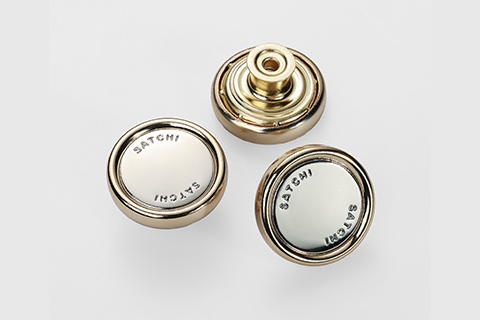
Selecting a metal button supplier that ensures safety and quality from raw materials to finished products is crucial for brands aiming to stand out in the global marketplace. This article explores the value of GRS and OEKO-TEX® Standard 100 certifications and how to identify truly capable partners. If you're seeking a Chinese source manufacturer for GRS-certified metal buttons, contact Songji Buttons. They offer integrated OEM/ODM button customization services. Reach out today!