Jeans buttons and rivets are the smallest hardware on a pair of jeans, yet the ones a customer notices first. They must survive repeated washing, abrasion and sunlight, and they must carry the finish a shopper sees on the shelf. All of that comes down to surface treatment. Two jeans buttons can share the same metal blank, but one fades and peels after three washes while the other still looks new after two years; the difference is not the metal, it is the finish on top.
Songji has made jeans buttons, rivets and garment hardware for 27 years and has watched finishes make or break a denim order.
If you are sourcing custom logo jeans buttons and rivets for a denim or workwear line, this guide walks you through the finishing processes that decide how a button wears, how it ages and how it reads to your customer.
I. Why Jeans Button Finishes Matter
A finish decides three things at once: abrasion resistance, colour retention and feel. Denim is the hardest category on hardware, and its washes (enzyme wash, stone wash, abrasion) attack a finish again and again; a weak finish fades, dulls and even peels fast.
There is a useful industry rule of thumb. A standard nickel-chrome plating holds its colour for roughly 6 to 12 months, while true gold plating lasts two years or more. For a buyer, a finish is not decoration; it maps directly onto wear life and return rate.
Many cheap jeans buttons fail at exactly this layer. The metal blanks are nearly identical, but the few dozen micrometres on top make all the difference.
II. Plating, Painting or PVD for Rivets
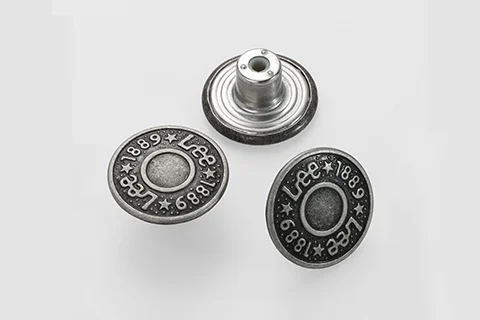
Surface treatment has three main routes: electroplating, spray painting and vacuum plating (PVD). Electroplating is the workhorse; it uses an electric current to deposit metal ions onto the surface, giving strong metallic feel at moderate cost, in colours from antique brass and gunmetal to bright silver.
Plating splits into two methods. Barrel plating is cheap and suits small, low-visibility parts like rivets, eyelets and prong snaps. Rack plating produces a mirror-bright surface and suits large, face-showing parts like alloy caps and belt buckles.
Spray painting takes a different path: it offers rich colours (pink, beige, rubber-finish matt) but wears less well than plating, so it is better for decorative parts.
Vacuum plating (PVD) is the luxury route. It builds a coating around 15 micrometres thick that withstands a 5% salt-spray test for 50 hours, but it costs roughly RMB 10 to 20 (about US$1.4 to US$2.8) per button, more than ten times standard plating, so it is reserved for high-end custom work.
III. Antique Brass, Matte and Gunmetal Buttons
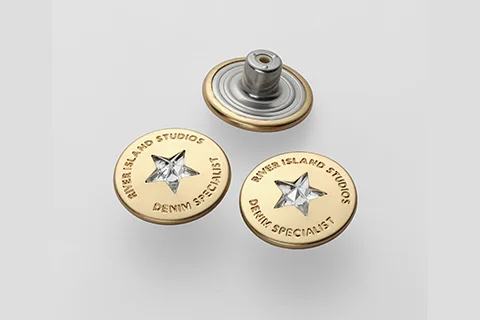
The most distinctive denim finishes sit in the antique family: antique brass, antique silver, antique bronze, gunmetal, black nickel and matt. Behind these names are two entirely different processes.
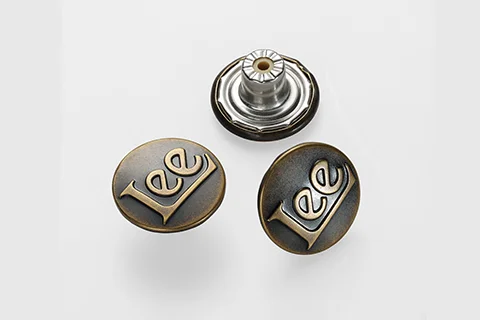
Chemical antiquing reacts an agent with the metal surface so recessed engraving builds an oxide layer while raised areas keep their base colour. The depth that results is what gives an embossed logo its three-dimensional look; almost all relief logos depend on it.
Physical antiquing uses sandblasting, barrel polishing or abrasion to wear the plating off raised spots, producing a worn look with more stable colour batches, but it cannot create the graduated light and shade inside engraving grooves.
This split matters when you buy vintage styles: choose chemical antiquing for a logo with relief depth, and physical antiquing for a smooth, hard-wearing, colour-stable surface.
IV. Nickel-Free Plating for Denim Hardware
Iron is a contradiction for jeans buttons and rivets: it is strong, ductile and cheap, but it hits two hard walls.
The first is nickel-free plating. Iron contains nickel and cannot be nickel-free plated, and the EU caps nickel release at 0.5 micrograms per square centimetre per week, which rules iron out of Western orders.
The second is the needle detector. Needle detectors work on magnetic induction and only respond to ferromagnetic metals, so an iron button inside a finished garment triggers the alarm, and garments exported to Japan, Europe or the US must nearly always pass this check.
So once an order heads to Japan or the West, iron-based denim hardware is excluded and the mainstream materials are copper, alloy and stainless steel. These two walls are more concrete than a vague "eco-friendly" claim, and they explain why a serious factory asks your target market before recommending a material.
V. Testing Fade on Washed Jeans
Do not accept a supplier's spoken promise that a finish will not fade; ask for test data. The core test is salt spray, which shows whether the coating resists corrosion: standard buttons are tested at 1% concentration for 24 hours, luxury garment trims at 5% for 50 hours, and the tougher the condition the more solid the coating.
Beyond salt spray, look at wash, enzyme wash and perspiration tests, because denim hardware most often fails on wash fade and perspiration dulling.
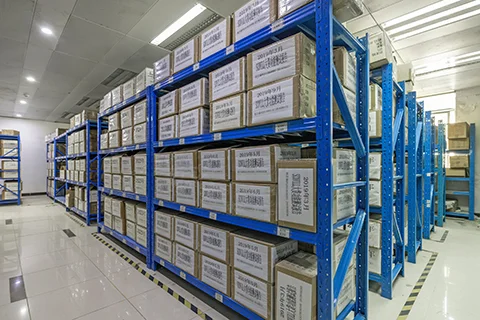
Judging a sample is simple too: the plating should be even with no bubbles, it should not flake when scratched with a fingernail, and the back should show no burrs after setting. A mature factory keeps each batch's test reports for at least five years and can pull them out to support your own spot checks.
VI. Matching Finishes to Your Denim Brand
There is no absolute best finish, only the right one for a brand. For heritage denim, antique brass or antique silver with chemical antiquing brings the character out. For streetwear and modern workwear, low-key colours like matt black and gunmetal win. For a premium line, only the mirror finish of vacuum plating matches the price point.
Once the finish is chosen, look at the structure: jeans buttons come in five constructions (rubber core, single prong, double prong, swivel and rubber foot), and rivets in four (dome, reverse dome, perforated socket and capped). Structure and finish are chosen together.
Songji has supplied jeans buttons and rivets to denim and workwear brands like LEE, GAP and Carhartt for years, with production experience from antique finishes to nickel-free plating, and that track record is what makes a factory able to take on a denim order.
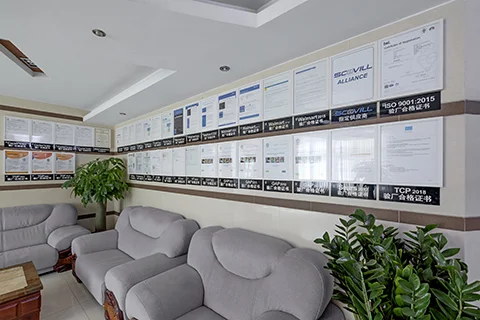
Songji has made metal buttons and garment hardware for 27 years, with a 12,000-square-metre factory in Shenzhen and nearly 700 machines. Its line covers jeans buttons, rivets, snap fasteners, prong snaps, shank buttons and eyelets across copper, stainless steel, iron, aluminium and alloy, with finishes spanning barrel plating, rack plating, spray painting and vacuum plating in dozens of colours. The factory holds OEKO-TEX Standard 100 Class I, ISO 9001:2015 and GRS certification, has passed 72 audits from international brands over the past 10 years, and keeps its defect rate below 0.3%. If you are sourcing a jeans button that both wears well and reads premium, we would be glad to talk.
Want to learn more? Contact us.