A metal button is the smallest part of a garment, and the easiest one to get wrong. It has to survive repeated washing, friction and pulling, while staying exact on brand logos, plating finish and dimensional tolerance.
For a brand or buyer sourcing metal buttons, the real question is rarely "who quotes the lowest price" but "where is this factory, and what kind of supply chain sits behind it". Location decides the tolerance you can get, the lead time you can expect and how complete your compliance paperwork will be.
If you are a brand or buyer sourcing custom metal buttons for an apparel line, this guide walks you through why more and more brands are placing their orders in Shenzhen.
I. Why Metal Button Location Matters
The quality and lead time of a metal button are, to a large degree, set by where it is made. A single button moves through copper material, tooling, stamping, plating and testing, and every one of those steps leans on the supporting capability nearby.
China is the world's largest supplier of garment accessories, and its fasteners and buttons account for a large share of global output. Even so, different production regions inside China play very different roles. Some regions specialise in high-volume, low-cost mass production, while others focus on high-precision, complex custom work.
For a buyer, choosing the wrong region means late deliveries and unstable quality at best, and a whole shipment failing audit and compliance at worst.
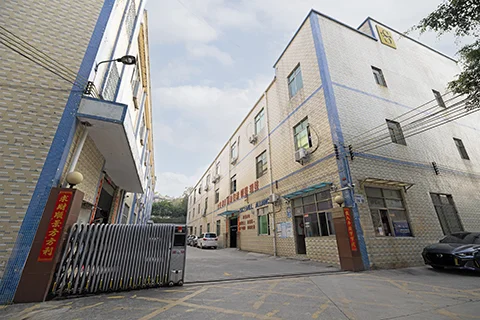
II. Shenzhen Versus Wenzhou Metal Buttons
The two most concentrated metal button regions in China are Shenzhen in the Pearl River Delta and Wenzhou in Zhejiang, but their division of labour is completely different. Wenzhou is known as the "button capital", producing a large share of the country's output and winning on scale, standardisation and mid-to-low-end volume, with a clear price advantage.
Shenzhen and the Pearl River Delta take the other path, focusing on alloy materials, complex designs and high-end precision custom work, serving brand orders with stricter demands on tolerance, finish and compliance. The roots of this path go back to the 1980s and 1990s, when Hong Kong's garment hardware industry moved into the mainland and a group of Hong Kong-backed button factories set up in Shenzhen, bringing precision tooling and plating know-how with them.
The two are not simply good or bad; they fit different needs. If your order is high-volume, simple and price-driven, Wenzhou's scale suits you. If your order needs a custom logo, precise tolerance and strict factory audits, Shenzhen's precision manufacturing is the match.
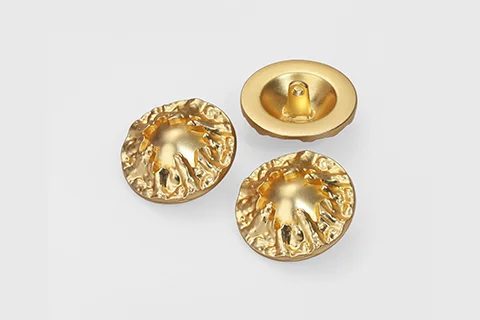
III. The Hidden Cost of Cheap Metal Buttons
The easiest trap in metal button sourcing is watching only the unit price and missing the hidden costs. Behind the quoted price of one button sit several much bigger bills: rework, cancelled orders, delayed delivery and failed compliance.
When tolerance is off, buttons jam or skew during assembly and the whole batch is reworked. When plating or heavy metals fall short, the shipment fails audit and a full container is sent back. When delivery slips, your garment production line stalls with it. Added up, these hidden costs far outweigh the few cents saved on the unit price.
A seasoned buyer does not ask "how much is this one button", but "how much does this order cost in the end, and will it ship on time". Shenzhen factories keep winning brand orders not because they are the cheapest, but because they eliminate those hidden costs of tolerance, compliance and lead time before they happen.
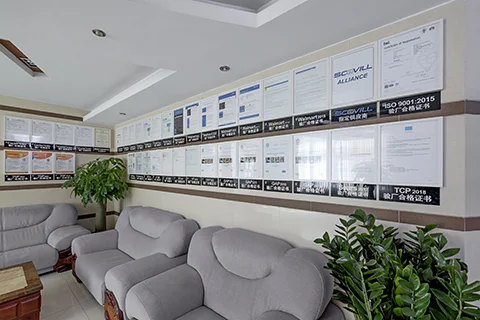
IV. A Cluster That Cuts Button Lead Times
The real barrier behind Shenzhen's metal buttons is the short-distance, fully equipped supply chain. Tooling, copper material, stamping, plating, testing and logistics all close the loop within a few dozen kilometres in the Pearl River Delta, with no cross-province turnaround. That means faster sampling and replenishment: once the tooling is ready, samples arrive in days, and urgent reorders are answered quickly.
Songji has been rooted in this supply chain for years. Through its "one die, multiple pieces" stamping process, it produces four to six buttons in a single strike, several times the output of single-piece stamping, and at full capacity consumes about 300 tonnes of copper and 60 tonnes of alloy a month. That production density is what keeps lead times steady.
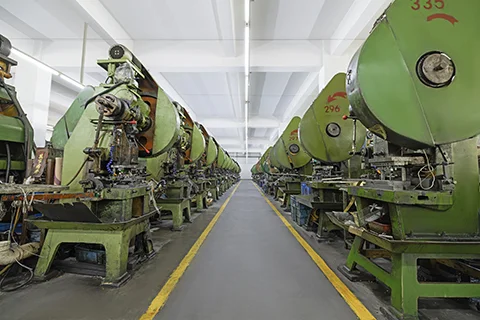
V. Shenzhen Compliance for Metal Buttons
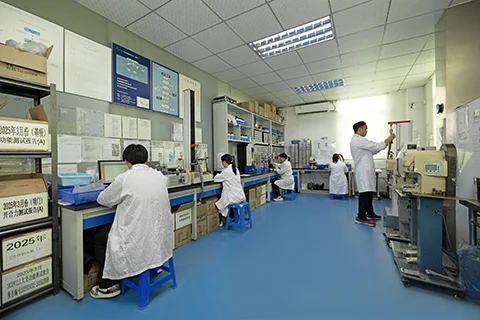
High-end brands look beyond the button itself to a full set of compliance and testing capability. Metal button factories in Shenzhen are generally able to work to standards such as OEKO-TEX and REACH, run salt-spray, tensile and heavy-metal itemised tests, and keep test reports batch by batch.
Songji keeps the heavy metals in its metal buttons within 40 ppm, a step tighter than the 90 ppm limit of OEKO-TEX Class I for babies. Its salt-spray testing is tiered: standard buttons are tested at 1% concentration for 24 hours, while luxury garment accessories go through 5% concentration for 50 hours. Test records are kept batch by batch for at least five years.
These are not optional extras. They are the exact indicators an auditor checks, line by line, during a brand audit.
VI. Questions for a Metal Button Supplier
Wherever a supplier sits, a few things must be asked through to the end. First, whether tolerance holds steady: ±0.05 millimetres for standard parts and ±0.025 millimetres for functional parts is the dividing line of precision manufacturing. Second, whether the compliance paperwork is complete: can OEKO-TEX, REACH and heavy-metal itemised reports be provided batch by batch. Third, capacity and lead time: how fast is sampling, how fast is replenishment, and can the factory absorb a peak-season surge of orders. Fourth, the audit record: which brands has it passed in recent years.
Ask these questions clearly, and the answer to whether a region is worth it comes out on its own.
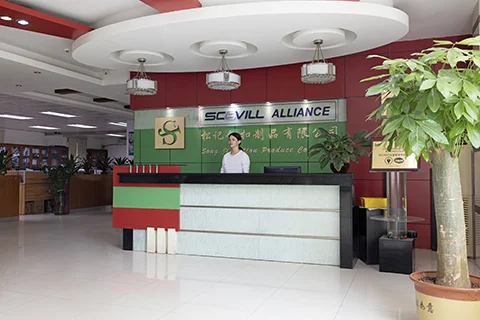
Songji has made metal buttons and garment hardware for 27 years, with a 12,000-square-metre factory in Shenzhen and nearly 700 machines. Its product line covers metal buttons, snap fasteners, prong snaps, jeans buttons, shank buttons, rivets and eyelets, in copper, stainless steel, iron, aluminium and alloy, with more than 10,000 styles. The factory holds OEKO-TEX Standard 100 Class I, ISO 9001:2015 and GRS certification, has passed 72 audits from international brands over the past 10 years, and supplies metal buttons and accessories to Western apparel brands such as Walmart, GAP and LEE, as well as upstream supply-chain customers such as Prym and Morito Scovill, keeping its defect rate below 0.3%. If you are looking for a metal button factory that truly understands precision manufacturing, we would be glad to talk.
Want to learn more? Contact us.