For apparel brand buyers, product developers, and supply chain managers, metal buttons may be small but play a crucial role in determining the texture, durability, and brand identity of finished garments. A high-quality metal button must meet multiple standards simultaneously: safety compliance, robust durability, and suitability for specific applications.
So, faced with numerous Chinese metal button manufacturers in the market, how should buyers select appropriate button materials based on apparel categories? How can they evaluate suppliers' craftsmanship capabilities and quality control systems? This article provides a comprehensive metal button procurement guide for apparel brands, covering material properties, manufacturing techniques, selection criteria, and customization services.
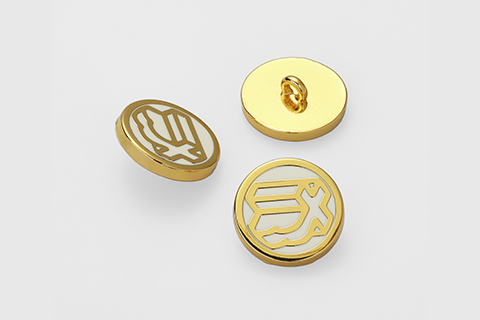
Common Materials and Applications for Apparel Metal Buttons
Metal buttons made from different materials exhibit significant differences in appearance, texture, physical properties, and cost. Purchasers must comprehensively consider the target audience, wearing scenarios, and washing requirements of the actual garments.
Copper-based materials, with their excellent ductility and warm texture, serve as the benchmark choice for high-end apparel metal buttons. Typically containing ≥99.5% copper, they achieve a dense structure through precision stamping, making them particularly suitable for specialized apparel segments demanding meticulous details, such as suits and coats. Premium copper alloy buttons meet OEKO-TEX Standard 100 Class 1 certification, with heavy metal content far below industry standards. For instance, Shenzhen Songji Buttons' custom copper buttons for luxury brands like Armani and PORTS feature a subtle electroplated finish that seamlessly complements fabrics.
Zinc alloy offers high cost-effectiveness, low melting point, and excellent formability, making it the mainstream choice for mass-market apparel. It easily achieves complex shapes and intricate textures, while surface treatments can simulate the appearance of copper, silver, gold, and other metals.
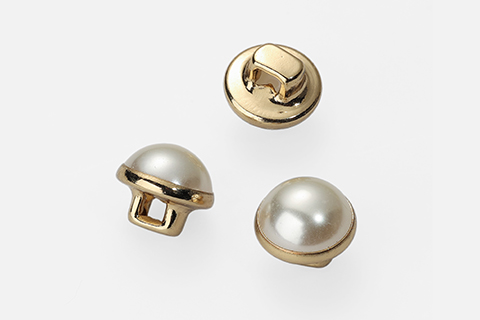
Stainless steel is renowned for its exceptional corrosion resistance and structural strength, making it ideal for specialized apparel like outdoor wear and workwear. Common 304 stainless steel buttons withstand rain and sweat erosion, easily passing 48-hour salt spray tests. Songji's custom buttons for CARHARTT outdoor workwear use high-purity 304 stainless steel, passing 72-hour salt spray tests and 50 enzyme wash cycles without rust or plating failure.
Titanium alloy, as a premium functional material, is increasingly adopted in professional outdoor and luxury apparel. Weighing only 60% of steel yet offering equivalent strength, it significantly reduces overall garment weight.
Craftsmanship equally defines a button's texture
Different finishing techniques impart distinct visual and tactile experiences. Electroplating, for instance, can impart metallic buttons with varied finishes like gold, silver, or nickel. Professional Chinese metal button suppliers employ cyanide-free electroplating, ensuring uniform, durable coatings while minimizing environmental impact. Songji has accumulated extensive expertise in electroplating. Its proprietary process reduces VOC emissions by 68% compared to traditional methods and achieves an 85% wastewater recycling rate.
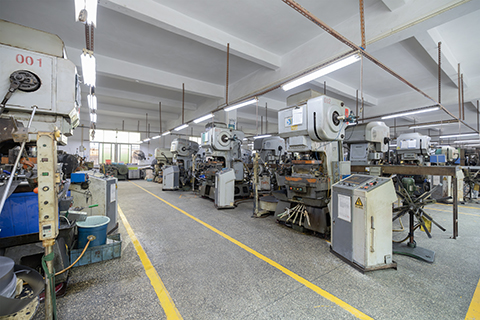
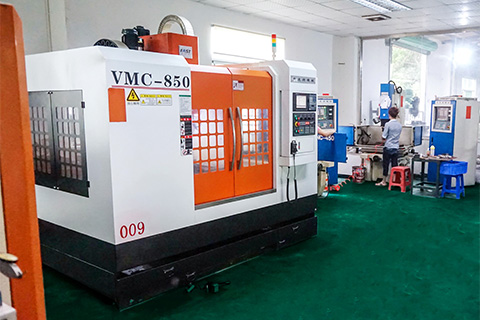
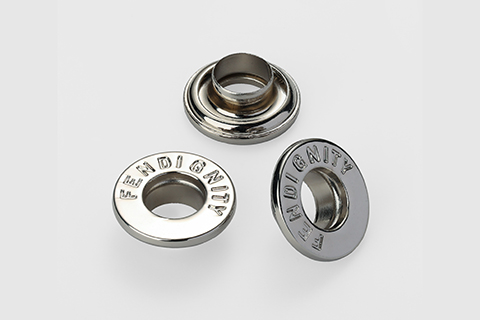
Surface treatments encompass polishing, brushing, sandblasting, and antiquing. For instance, when crafting custom metal snap fasteners for Ying'er Fashion Group's high-end womenswear, Songji precisely adjusts claw angles and lengths via CNC machining centers to accommodate varying fabric thicknesses. This ensures snag resistance while maintaining button stability.
Regarding production capacity and precision, Songji's proprietary “multi-button stamping” process simultaneously forms 4 to 6 buttons per press cycle, boosting hourly output by 6 to 10 times. Its closed-loop pressure feedback system maintains general dimensional tolerances within ±0.05mm, while critical functional tolerances are controlled to ±0.025mm.
Metal Button Customization Capabilities
When apparel brands seek to translate unique design concepts into tangible button products, a supplier's customization capabilities become pivotal.
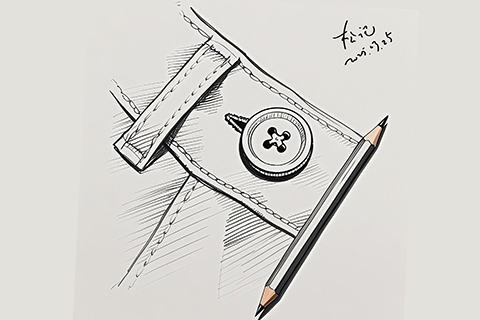
In-depth communication and requirements research form the foundation of customization. Professional Chinese metal button manufacturers proactively engage with brands to thoroughly understand their design philosophies, target demographics, and functional specifications. When collaborating with brands, Songji leverages extensive industry expertise to recommend suitable materials based on fabric characteristics and suggest appropriate surface treatments according to washing requirements, ensuring precise control over button details and direction from the outset.
Personalized design capability embodies the essence of customization services. Songji maintains a professional design team that stays abreast of global trends, developing over 100 new styles monthly. With more than 100 national patents accumulated, the company was recognized as a National High-Tech Enterprise in 2016. A professional button manufacturer maintains an independent design team capable of refining brand sketches or concepts into detailed proposals and sample renderings. They thoroughly consider button dimensions, shapes, and overall garment coordination to translate creative ideas into quantifiable, actionable specifications.
Conclusion
Selecting materials and customizing services for metal buttons in apparel requires a comprehensive evaluation of specific needs, application scenarios, quality standards, and supplier capabilities. From everyday commuter wear to outdoor apparel, from high-end suits to infant and children's clothing, each garment category demands distinct material and craftsmanship combinations for buttons.
As a leading Chinese metal button manufacturer, Songji Buttons has built a comprehensive product system spanning copper, zinc alloy, stainless steel, and more through nearly three decades of industry expertise. Backed by over 30 verifiable quality control processes, ±0.025mm tolerance control, 60ppm lead limits, and 72 factory audit certifications, we provide customized metal button solutions for global brands including Armani, Burberry, LEE, CARHARTT, Carter's, NUNA, and over 500 global brands.
If you're seeking a supplier for metal buttons in apparel, contact Songji Buttons. They offer diverse metal button designs and provide custom button services. Reach out to them today!