If you are sourcing metal buttons for a baby line, bodysuits, sleepsuits and pyjamas all count, and you already hold a Class I certificate or have just been sent one as a PDF, this guide walks you through what implementation means at the factory end and which stages can quietly take a batch outside the scope.
I. Tracing Where Metal Buttons Pick Up Substances
OEKO-TEX issues its certificate for a material and a process rather than for a factory, and that single point governs how metal buttons are produced for a baby line. Metal buttons sit in this system as non-textile accessories, and the certificate can reach every component in a finished article, fabric, thread, interlining, print, label, zip, and hardware such as buttons and rivets, provided those components are named in the annex. The standard is explicit on what follows: any batch made with different materials, recipes or processes than the certified one has no right to carry that certificate until the institute confirms coverage. What the certificate answers is chemical safety, and it says nothing about how firmly a small part is attached or how a fabric burns, both of which a baby programme handles under separate requirements.
So implementation does not begin with a sample submission. It begins with locating where a batch can drift, and there are roughly five places: base metal grade and batch, plating system and bath chemistry, additives introduced at assembly, packaging materials, and subcontracted stages. Each one leaves a different kind of evidence, and folding all five into a single sentence about holding a certificate is where the answer stops being useful. Of the five, the two that move without anyone noticing are the plating bath and the packaging, because neither appears on a base metal declaration.
Reading a certificate against your part comes down to four things: product category, material composition, processed state, and the components named in the annex. Processed state carries weight here, because an unplated casting and a plated part of the same alloy do not count as the same article. If any one of them does not match, the certificate was not issued for this part, and it cannot show that the piece tested and the piece you buy are the same article.
The habit across the industry is to treat certification as an annual sample submission. The sample passes and the next eleven months run as before. The difficulty is that the goods in those months are not necessarily the same copper or the same bath as the sample. The certificate has not expired, the goods are outside its scope, and on paper the two states read the same.
II. Controlling Copper Batches for OEKO-TEX Metal Buttons
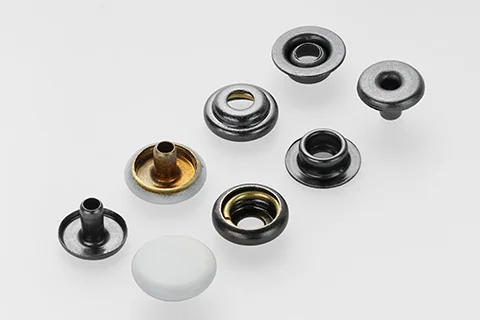
Metal buttons in copper carry lead that is never added, because it arrives with the ingot. Lead remains in copper as a companion impurity from smelting, and the level can differ between deliveries of the same grade, which is why two lots that look identical can test a distance apart. Stainless steel carries a different risk profile, since nickel and chromium form part of the alloy rather than being applied later, and zinc alloy raises its own grade questions, so a lead figure taken on one base metal does not carry across to another grade. Holding a supplier responsible for lead therefore means holding them responsible for the incoming batch.
At Songji the sequence has two steps: incoming copper is read on a spectrometer for composition, and third party reports are filed by batch. A spectrometer settles whether the grade is the one ordered, and a trace element such as lead is better read from the third party report, which is why both steps exist rather than one. The copper batch number goes into the system alongside the customer order number, our internal order number and the purchase order, so any finished batch can be walked back to a specific copper lot and plating bath. What a buyer receives is a chain rather than a single sheet.
Three lead figures need keeping apart, and the first is REACH Annex XVII at 500 ppm, the legal floor below which goods may enter the market. The second is the total lead threshold under Class I at 90 ppm, the certification gate, and the third is our internal line of 60 ppm, which is what we can hold rather than an industry norm. Compress the three into "we meet OEKO-TEX" and a buyer comparing quotations will reach the wrong conclusion, because the other figure may be 90 ppm or may refer to something else entirely. Total lead and extractable lead are also separate measures, with a tighter line applying to the extractable one, so reading 90 ppm and treating every lead question as answered is a common misreading.
A third party report answers for the sample submitted, not for a period of time. A pass on one copper lot says nothing about the next, which is why a report only carries meaning once it is tied to a batch number.
III. Keeping Plating Chemistry Inside Metal Button Limits
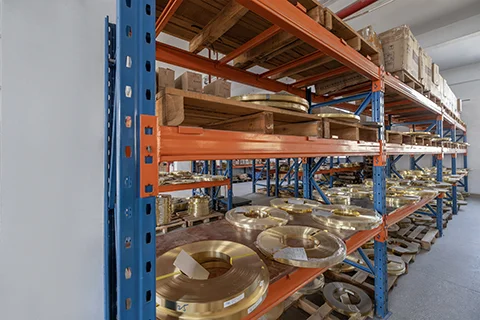
Plating is the second drift point in metal button production and the easiest to overlook, because a base metal declaration does not show it. Change the plating type, or change colour within the same type, and the base metal is untouched while the report still looks valid. A colour change is the usual case, since it reaches the factory as a finishing decision rather than a material one.
Nickel needs stating plainly. An iron base cannot hold plating or resist rust without a nickel underplate, so a nickel free iron part is not a real option, and the accurate claim is that nickel release is held within the limit. REACH Annex XVII sets 0.5 micrograms per square centimetre per week for articles in prolonged skin contact, while the 0.2 figure applies to piercing parts only, so quoting it for a baby button applies the wrong category. Wear exposes nickel again once the coating thins, which is why thickness and adhesion are not cosmetic, and our vacuum plating runs three layers or more with the film held at 15 μm ±1 to push back the point at which wear reaches the base metal.
Hexavalent chromium is prohibited in zinc plating and passivation, and baby programmes are checked harder than adult ones. This is less a question of capability than of whether it has entered the bath, so bath testing is the control that counts rather than a visual check of the part. Changing colour inside one plating type also changes the additives in that bath, which means an unchanged plating type does not mean unchanged chemistry, and a colour change needs coverage confirmed again.
On evidence, bath chemistry goes to a third party for heavy metal testing, with reports filed by batch and issued per batch on request. What a buyer should ask is not whether testing happened but how the sample was drawn and whether the report can be matched to a batch. Our ISO 9001:2015, OEKO-TEX Standard 100 Class I and GRS certifications are current, with the numbers listed.

IV. Assembling and Packing Metal Buttons Within Scope
Assembly introduces risk into metal button production in a different way. Snap fasteners, jeans buttons, eyelets and rivets are set by press and interlock without adhesive, so the substance source is mainly lubricant on tooling and equipment. The quantity is small, but cleaning that falls short carries it onto the face. Die cast alloy parts follow the same logic, with release agent as the carrier.
Packaging is the least examined stage of the five, and recycled board is alkaline, so held against a zinc coating in humid conditions it produces white rust, which appears more often inside a sea container than in a warehouse. White rust is the zinc doing its job and is read differently from red rust, where the base metal has begun to oxidise, so it is worth knowing which one a report is describing. Printing ink, carton tape and desiccant can all carry restricted substances. Changing packaging supplier after certification counts as a change under the standard, so it belongs on the change list rather than in a purchasing decision.
The move on packaging is to ask for declarations, with board, ink, tape and desiccant each carrying a composition statement or conformity declaration, filed alongside the change record. Declarations should be refreshed when the packaging batch changes, not once at the start of a programme.
Baby programmes usually call for one or two spare buttons per garment, and bulk packing and set packing differ in labour. Set packing protects the face better, bulk packing saves time but lets parts rub against each other, which shows most on covered and pearl faces. This belongs in the quotation rather than in a discussion before shipment, and in the hardware programmes for baby wear that we run it is a recurring source of argument, almost always because it was left unstated at quotation.
V. Managing Change Control for OEKO-TEX Metal Buttons
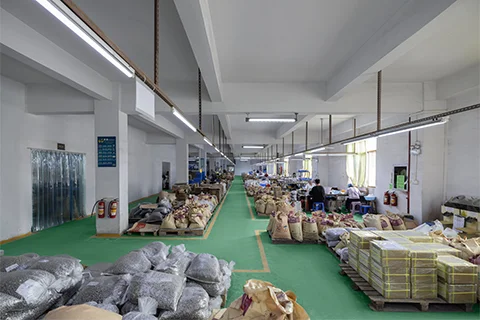
An OEKO-TEX certificate for metal buttons runs for one year and is then renewed. Renewal usually carries a reduced test programme, provided materials, chemicals and processes are unchanged. That proviso is why change control matters more than renewal itself, since reduced testing saves time while an unmanaged change costs a whole batch. One timing question deserves raising early, a certificate that expires while a run is still in production, because the answer turns on when the goods were made rather than when they ship.
Two rule changes from June 2026 affect the supplier side directly. For renewal, upstream certificates are accepted only from the direct supplier, with documents passed on from a second tier no longer counting, and a transition running to June 2027. Applied to metal buttons, buyers will begin asking for direct documents from the copper and plating chemistry tier rather than the umbrella certificate. The restricted substances list has also moved out of the standard document into a separate file updated each year, so a list checked last year is not this year's list.
A change should be raised with the institute before it happens, not covered by a report afterwards. The triggers are few: a different base metal grade, a different plating type, a different colour, a different packaging supplier, a different subcontracted stage. Once any of them moves, the batch cannot carry the certificate until coverage is confirmed in writing. Writing this into a production route works better than writing it into a policy, because a route stops an order and a policy does not, and the person who notices is the one holding the paperwork rather than the one who signed it.
Records are kept by batch for five years, and traceability documents go out within 24 hours of a request. Over the past 10 years Songji has passed 72 factory audits for international brands, including Carter's, Walmart, GAP and VF. An audit shows the system is running, and it cannot stand in for the test report on the batch in front of you.
VI. Auditing an OEKO-TEX Metal Button Supply Chain
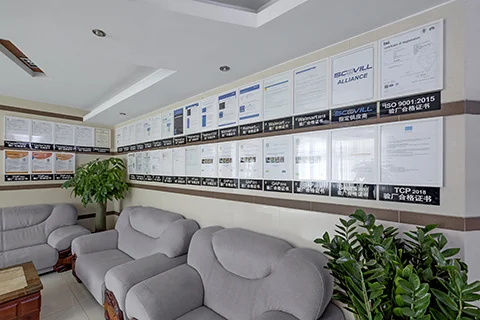
Auditing a metal button supplier's OEKO-TEX capability by reading the certificate achieves little, since a certificate is a file that can be forwarded. The usual mistake is to check the logo and the expiry date and stop there, when the annex is the part that decides whether the item in your hand is covered at all. What matters sits behind it at batch level, and five questions cover it.
First, the certificate number, issuing institute and validity date, and whether the annex names the component. Second, whether the base metal report for these goods matches the batch number, this batch rather than the one before. Third, when the bath was last tested, by whom, and where the report sits.
Fourth, what the last change was and how the institute replied. Fifth, how long records are kept and how quickly they can be produced. None of the five requires new material, only that what already exists is arranged by batch. A supplier who cannot answer usually holds the documents and has not filed them that way, and an answer that arrives as a folder rather than a batch number is the one to look at again.

Songji has made metal buttons in Shenzhen since 1999, which makes 2026 our 27th year. The factory sits in Guanlan, Longhua, on 12,000 square metres with close to 700 machines, including high speed presses, CNC and mirror EDM, working copper, stainless steel, iron, aluminium and zinc alloy. The range runs from snap fasteners, jeans buttons, rivets, eyelets and prong snaps to trouser hooks, shank buttons, magnetic snaps, metal plates and luxury closures, more than 10,000 styles with around a hundred added each month, over 100 national patents, and more than 100 apparel brands using our parts. ISO 9001:2015, OEKO-TEX Standard 100 Class I and GRS are current, and the defect rate sits below 0.3 per cent across more than 150 standardised quality checks. Custom development works back from incoming material parameters rather than picking the nearest stock size.
If you are sourcing metal buttons for a baby line and need batch reports and material statements to go with them, we can supply both.Want to learn more? Contact us.