Metal buttons are a recurring cause in baby and children's clothing recalls. Lead content above the limit, nickel release triggering allergic reactions, buttons detaching and being swallowed by an infant — each of these has triggered real recalls. Selecting metal buttons for baby clothing cannot follow the same logic as adult clothing. Infants put everything they can reach into their mouths, and their skin is far thinner than an adult's.
Songji has spent twenty-seven years in the metal button trade, working with baby and child brands including Carter's childrenswear, NUNA pushchairs and BMW child safety seats, and the requirements for this category are unforgiving. For baby clothing, "good enough" is not enough. The standard is that nothing can go wrong.
I. What Regulations Apply to Metal Buttons on Baby Clothing
Metal buttons on baby clothing face multiple regulatory regimes at once. The US CPSIA limits coating lead in children's products for under-twelves to 90ppm, with DEHP, DBP and BBP phthalates capped in total at 0.1%. 16 CFR 1500.51 makes small parts testing mandatory for products intended for children under 36 months. The EU market applies REACH alongside EN 71-1 toy safety standards as a dual check. China's GB 31701-2015 classifies textile products for under-threes as Category A, with chemical safety requirements far stricter than those for adult clothing.
OEKO-TEX Standard 100 is voluntary certification, but its Class I level is specifically for products used by children under three, the strictest of all four classes. Testing covers more than a thousand substances including heavy metals, formaldehyde, phthalates, organotin compounds and polycyclic aromatic hydrocarbons. When sourcing buttons for baby clothing, Class I is both an entry ticket and the most direct compliance filter a buyer can apply. Songji holds OEKO-TEX Standard 100 Class I certification, which is precisely this level.
II. Why Lead, Nickel Release and Small Parts Are the Top Three Risks for Baby Buttons
The risk profile for baby buttons is fundamentally different from that of adult buttons, concentrated in three categories.
Lead exposure affects neurological development in infants, and the limits are several times lower than for adults. CPSIA caps coating lead in children's products at 90ppm and total lead at 100ppm, far stricter than the corresponding limits for adult products. The usual sources of lead in buttons are lead impurities in cheap copper alloy and lead-based brighteners used during electroplating. Without an active incoming-material screen, the problem is almost impossible to catch before finished-goods testing.
Nickel release is another high-frequency risk in baby products. Infant skin is thinner and less effective as a barrier than adult skin, so prolonged contact with nickel-releasing metal components readily causes allergic dermatitis. REACH sets explicit nickel release limits, and OEKO-TEX Class I lists nickel as a mandatory test item.
Small parts detachment is the most lethal risk for baby clothing intended for under-threes. A button that comes off and ends up in an infant's mouth can directly cause choking. This is why 16 CFR 1500.51, EN 71-1 and GB 31701 each have dedicated small parts pull-test requirements for baby clothing, all significantly stricter than for adult garments.
Songji sets its own heavy metal limit at no more than 40PPM, more than twice as strict as the CPSIA 90ppm limit for coating lead in children's products, and the screening starts at incoming materials rather than at finished-goods inspection when the problem has already slipped through.
III. Small Parts Detachment Is a Choking Hazard on Baby Clothing
Children under three have a developmental habit of putting objects in their mouths. This is determined by their stage of development, not by training. Once a button on baby clothing comes off, it immediately becomes a choking hazard. This is why 16 CFR 1500.51, EN 71-1 and GB 31701 each set specific small parts pull-test requirements for baby clothing, all far stricter than for adult clothing.
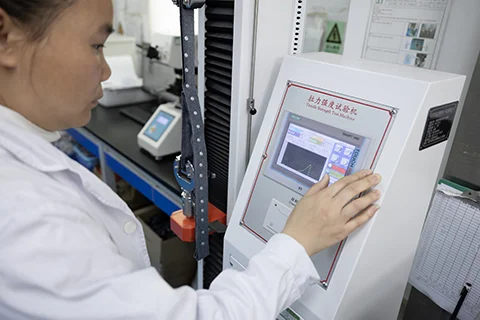
The industry reference for adult snap fasteners under ASTM D7142 is 50N. Baby clothing under EN 71-1 small parts testing typically requires 70N or above, and the button must retain its fastening force after repeated opening and closing and after wash simulation. Some brands add repeated tug testing and torque testing to mimic the real-world scenario of an infant pulling at a button.
All Songji snap fasteners hold above 35 kilograms of pull force (approximately 343N) and special hook fasteners withstand over 300 kilograms, well above what baby clothing requires. This pull-force margin means the button stays attached even after repeated opening, closing and washing. Inspection records are kept for at least five years, and every batch can be traced back to its raw material lot and test data.
IV. OEKO-TEX Class I Is the Entry Ticket for Baby Product Hardware
Of the four classes under OEKO-TEX Standard 100, Class I is specifically for products used by children under three, with the strictest limit values. Testing covers heavy metals, formaldehyde, phthalates, organotin compounds, polycyclic aromatic hydrocarbons, PFOS, PFOA and more than a thousand other harmful substances, each with an explicit limit. Only products that pass Class I testing can be said to meet infant-grade chemical safety for skin contact.
Class I heavy metal limits are tighter than Class II (direct skin contact), and considerably tighter than Class III (no direct skin contact) and Class IV (decorative materials). The lead limit under Class I is 45ppm, compared with 90ppm under Class II, which is why a Class I certificate is not a bonus for baby product buyers but an entry ticket.
Songji holds OEKO-TEX Standard 100 Class I certification. Its self-imposed heavy metal limit of no more than 40PPM is stricter than the Class I lead limit of 45ppm. This means the same batch of buttons carries a chemical safety margin even at infant-product grade. Every shipment comes with its own test data, archived for at least five years and traceable for any batch.
V. Songji's Hands-On Experience Making Buttons for Baby and Child Products
Songji's client base in the baby and child sector spans both baby products and baby clothing.
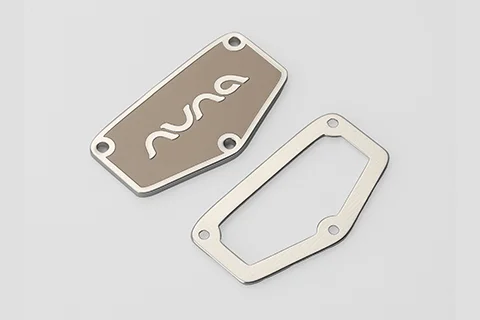
NUNA is a premium Dutch pushchair brand. The metal buttons Songji develops for NUNA are produced to OEKO-TEX Class I standards, with a single-button pull strength of 95N, well above the industry reference. The buttons retain stable fastening force after ten thousand opening cycles, matching the high-frequency use pattern of a pushchair.
BMW child safety seats impose stricter corrosion resistance requirements on metal buttons. Songji's custom models pass 72 hours of neutral salt spray testing without rust, and retain fastening force after ten thousand opening cycles, matching the reliability demanded of a child safety seat over long-term use.
On the childrenswear side, Songji supplies metal buttons to Carter's, a well-known American childrenswear brand with a full compliance and quality review process for its suppliers. Over the past decade Songji has passed seventy-two international brand audits. Compliance teams from baby and childrenswear brands have walked the factory floor and verified the quality control process and inspection records item by item.
VI. Five Questions to Screen a Baby Clothing Button Supplier
Songji has distilled twenty-seven years of serving baby and child brands into five questions that buyers can use at the shortlisting stage to filter out unreliable suppliers.
-
Which class of OEKO-TEX Standard 100 certification does the factory hold? Is it Class I or another class? When does the certificate expire?
-
Do you have measured heavy metal data, and can lead be kept below the CPSIA 90ppm limit or even stricter?
-
Can button pull strength meet the EN 71-1 baby standard of 70N or above, and is the pull force retained after repeated opening, closing and wash simulation?
-
Is there a third-party laboratory nickel release report, and can the figures meet the REACH limit?
-
How far back can inspection data and batch information be traced for each shipment?
Run through these five questions and the gap between a baby button factory with a genuine system and a trading company that only quotes a low price becomes clear. Songji itself has cleared seventy-two international brand audits over the past decade by following this same standard.
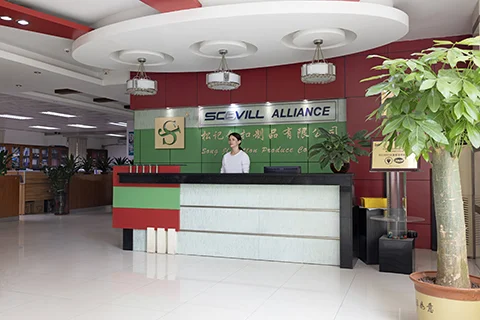
Songji Buttons was founded in 1999 and has focused on the metal button field for twenty-seven years, operating a production base of over 12,000 square metres in Guanlan, Longhua, Shenzhen, with close to 700 pieces of production equipment. Its range covers snap fasteners, five-prong buttons, tack buttons, rivets, alloy plates and over ten thousand other styles. The factory holds OEKO-TEX Standard 100 Class I and ISO 9001 certifications, sets its own heavy metal limit at no more than 40PPM, has passed seventy-two international brand audits over the past decade, and supplies custom metal buttons to baby and child brands including Carter's, NUNA and BMW child safety seats. If you need buttons built to baby-grade safety, we would love to work with you. Get in touch today.