When most buyers tally the cost of importing metal buttons in bulk, they add up three columns — unit price, sea freight and tariffs. Those three are visible and easy to calculate, but the costs that really eat into margin are the ones that never make it onto the spreadsheet: an entire batch rejected by the brand because of colour variation on the hardware, buttons held at customs for 2 weeks over lead content, 3 rounds of prototyping delay that missed the delivery window, oxidation spots on plating discovered when the container arrived after a month at sea. Each of these hidden costs is dozens of times larger than a few cents saved on the unit price, yet they rarely appear on anyone's cost estimate at the RFQ stage.
At Songji, we have spent 27 years in this trade, and plenty of the clients we work with came to us after switching from trading companies. Their reason was never a cheaper unit price. It was that the total cost felt out of control.
I. The Two Ledgers of Metal Button Imports: Visible and Hidden Costs
Visible costs are settled at the quoting stage. The unit price of a snap fastener multiplied by the order quantity, plus container freight and destination-port duties and VAT — a clean number. This ledger is straightforward but rarely tells the full story.
The hidden ledger is harder to write. One shipment of jeans used copper alloy buttons that were over the lead limit. The cargo reached Rotterdam and was held at customs for 2 weeks, unable to clear. On the brand's side, the retail launch date was locked in. Every day off the shelf was a day of lost sales. In the end, an air-freight replacement was rushed to another market at more than 10 times the sea freight cost, plus the brand's claim and the cancellation of next season's order. The per-button saving that started the whole chain vanished into a rounding error.
More than a few of Songji's clients moved to us from trading companies. Their motive was never saving a few cents per button. It was that when something went wrong, there was nobody to hold accountable, no original test data to pull, and no way to know which electroplating workshop had actually handled their buttons. Import cost control is less about the digits on a quotation and more about whether the supplier can lay the ledger open when something breaks.
II. Why Poor Batch Consistency Drives the Biggest Hidden Metal Button Cost
Batch consistency in hardware is the biggest driver of hidden costs, and it has one defining trait — you cannot see it at inspection.
The sample was approved. The bulk shipment arrives and the colour is half a shade off. Full return. The tensile strength cleared the inspection report, but once the buttons went onto the production line and were stitched into finished garments, they started detaching in batches. Consumer complaints flooded back to the brand. Plating that developed oxidation spots after a month at sea triggered a brand claim worth 10 times the button order value, sometimes more.
Where Songji puts the money is not on the surface. The factory uses a single-die multi-cavity stamping process — 6 cavities for snap fastener pairs, 11 for prong rings — so products from the same die and same run are naturally more consistent in dimension and form. Among close to 700 machines, the fully automated high-speed presses and automatic packaging lines are not there to save labour. They are there to eliminate the batch-level variation that comes with manual handling. A monthly throughput of 300 tonnes of copper and 60 tonnes of alloy means the upstream metal suppliers are stable, bulk-scale channels, not shifting sources every time the order volume changes.
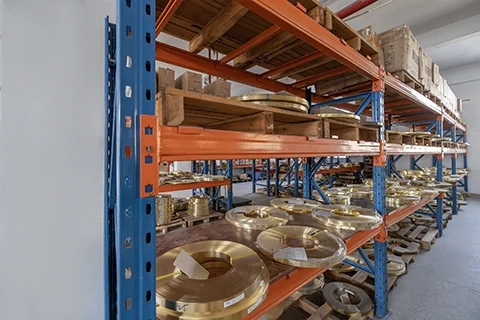
What these process investments produce can be summarised in one figure: a long-term defect rate held below 0.3%. Over the past 10 years, Songji has passed 72 international brand audits, with compliance teams from GAP, Walmart and Carter's walking the factory floor and checking items one by one.
An audit is not a formality. Quality management systems and document traceability are mandatory items. And the fact that global brands keep reordering is the most direct external validation of consistency — if every batch had issues, nobody would reorder.
III. The Real Cost of Chemical Non-Compliance on Metal Buttons
One shipment of jeans had its buttons test above the lead limit at an EU customs checkpoint. The whole batch sat at the dock, unable to clear. The brand traced the problem upstream and found the button supplier had quietly switched to a cheaper electroplating workshop. Incidents like this repeat across the industry every year. The buttons themselves carry a modest product value, but once the launch window closes — discount clearance, brand claims, next season's order cancelled — the total loss is dozens of times the button procurement cost.
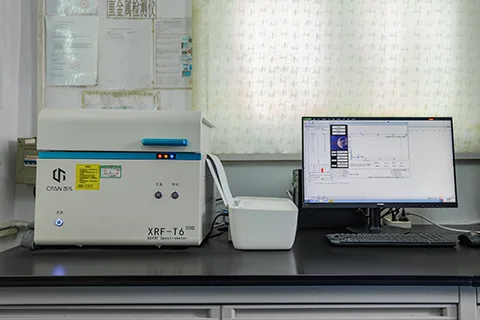
Our approach to chemical compliance is to screen at the gate, not at the exit. Songji products meet EU REACH requirements. Our self-imposed heavy metal limit is no more than 40PPM. OEKO-TEX Class I sets the lead limit at 45PPM, so our standard is tighter still than the benchmark for infant-grade products.The OEKO-TEX Standard 100 Class I certification we hold corresponds to infant-grade safety, the strictest of all four classes. HIGG FEM environmental performance assessment and GAP-TQP supplier quality certification complete the compliance picture from the environmental and supply chain management angles.
Every shipment goes out with its own test data, archived for at least 5 years. If a batch ever flags a problem, we can trace back which raw material lot was used, which electroplating workshop handled it, and what the test results were at the time. Every cent spent upfront on compliance is an insurance premium against losses that can be orders of magnitude larger later.
IV. Slow Custom Metal Button Turnaround Costs More Than the Unit Price
A baby clothing item has a fixed launch window from design drawing to mass production, yet it is far too common for buyers to get stuck at the button stage. Three rounds of prototyping revisions eat up 2 or 3 weeks. Tooling development takes another week. By the time the buttons are ready, the brand's confirmation window has already closed. The result is not a few extra days of waiting. It is the launch window being missed entirely — the style gets cut and every upfront development cost is written off.
Songji can compress prototyping to 3 to 5 working days. From a design drawing or a physical sample, tooling development, first-sample confirmation and surface finish selection all happen within a single factory site, without being parcelled out across multiple suppliers. The factory holds more than 100 national patents, launches hundreds of new designs each month, and spans over 10,000 styles covering snap fasteners, prong rings, tack buttons, rivets and alloy plates.
When we developed metal buttons for LEE, we used symmetrical patterning and rounded edges to create a distinctive brand signature. For GAP, we matched zinc alloy with a range of surface finishing styles. The core value is the same in both cases — the timeline from receiving a drawing to starting mass production is compressed to the shortest possible path, and a shorter development cycle is itself a cost reduction.
V. Transit Damage Is an Invisible Cost Drain on Metal Hardware Imports
Metal buttons spend a month at sea. Temperature swings, humidity and vibration — each of these tests the plating and surface treatment. When the container is opened at the destination port and the buttons show oxidation spots, paint chipping from mutual impact, or plating scratches, every percentage point of loss directly raises the landed cost. Some buyers skimp on packaging to save a few dollars, using simple poly bags or loose cartons, and end up with transit damage that costs far more than the packaging would have.
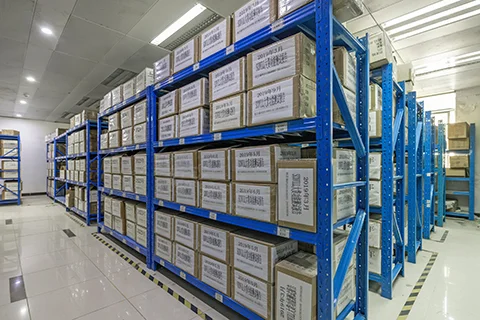
We do two things at the shipping stage — batch labelling and individual protective packaging. Every shipment is packed by order number, style code and batch code in partitioned bundles, with single-item protective layers that prevent the metal parts from colliding during transit. The packaging and labelling are not for show. They are so that the shipment can go straight onto the production line on arrival — no secondary sorting, no unpack-and-recheck, and no moment of "the goods are here but we have no idea which batch goes with which order."
VI. Five Questions to Screen a Metal Button Supplier That Controls Your Total Cost
Songji has distilled 27 years of serving international brands into 5 questions. Run through them at the shortlisting stage and you will know whether a supplier is accountable for your total cost or only accountable for quoting a price.
-
Is the factory's defect rate written into a company standard, or is it a verbal promise? Can they produce long-run data rather than one polished submission report?
-
Which international brands have audited the factory, and how long have those brands been reordering? A single audit can be crammed for. Years of repeat audits and repeat orders cannot be faked.
-
Is the raw material sourced through stable upstream channels or through scattered spot purchases? Do material certificates exist for every batch?
-
How long from receiving a drawing to the first sample? Are tooling, first-sample sign-off and surface finishing all done at one site?
-
How are outgoing shipments labelled and packaged? Is there recorded data on transit damage rates?
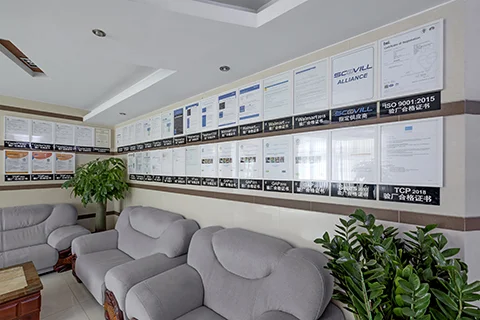
Run through these 5 questions and the gap between a factory that genuinely controls your total cost and a trading company that only quotes a low price becomes obvious. Songji has cleared 72 international brand audits over the past 10 years by operating to this very same standard.
Songji Buttons was founded in 1999 and has focused on metal buttons for 27 years, with a 12,000 m² production base in Shenzhen and close to 700 machines, running a single-die multi-cavity stamping process and an automated production system. If you need metal button products with a total cost you can control, we would love to work with you. Get in touch today.