Denim buttons are small accessories found on the waistband, fly and pocket edges of jeans, yet they directly affect how well the pants hold together and look. For clothing brands, finding a China jeans buttons manufacturer that controls heavy metal content and delivers on schedule is a key step in building a reliable supply chain. This article walks through what to look for in a denim button supplier—materials, testing standards and real brand partnerships.
I. Choosing Between Zinc Alloy and Pure Copper
The two most common materials for denim fly buttons are zinc alloy and solid copper. They look similar but perform quite differently.
Zinc alloy is easy to shape and efficient to die-cast, making it a strong fit for large-scale, standardised production. Zinc alloy denim buttons can be electroplated in various colours—raw copper, gunmetal black, bright nickel—to match different denim styles. With a melting point between 380 and 420°C, zinc alloy also consumes less energy during production compared to pure copper, which adds up to a real cost advantage at scale.
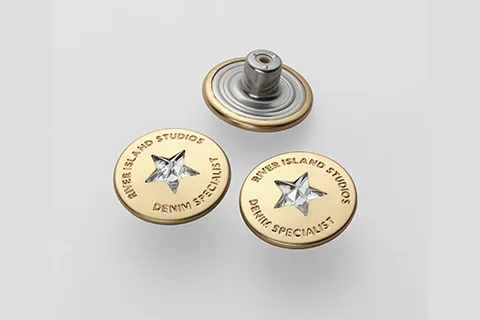
Pure copper buttons, on the other hand, last longer. Copper resists corrosion and holds its plating well through repeated wearing and washing, so cracks and peeling are far less likely. For high-end denim brands, pure copper is usually the better call.
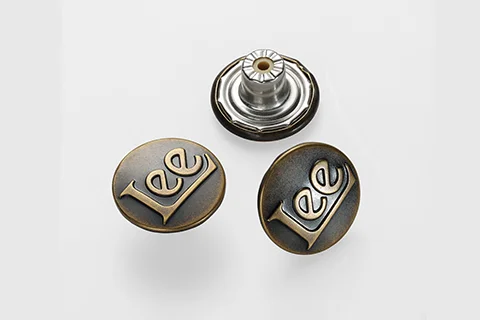
Experienced China jeans buttons manufacturers recommend base materials based on the brand's positioning and the target market's environmental requirements. If a product needs to meet EU standards, the nickel release levels of zinc alloy must comply with REACH regulations. As a Shenzhen jeans buttons manufacturer with nearly 30 years of experience, Songji operates both zinc alloy and pure copper production lines. Brands can confirm the base material choice with the factory before placing an order.
II. Which Three Tests Must Denim Buttons Pass?
Denim buttons look simple, but they face a demanding set of quality tests. Three metrics matter most: tensile strength, salt spray corrosion resistance and heavy metal content.
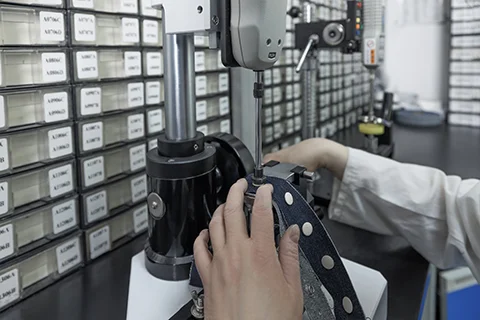
The tensile test checks how firmly a four-piece buckle stays attached to the garment. Standard requirements set the minimum tensile strength for snap fasteners at 35 kg—meaning the button must hold under that much pulling force before detaching. Some brands set their own internal bar at 40 kg or higher. Songji starts its standard at 35 kg and can produce higher-strength specifications for clients that need them.
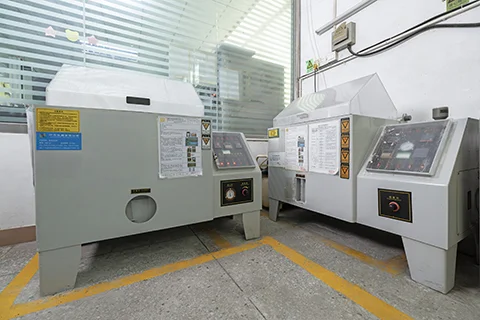
Salt spray testing measures how well buttons resist corrosion in humid conditions. The domestic industry standard is continuous spraying at 5% salt concentration for 24 hours. Songji adds a 50-hour test on top of this, which gives a much clearer picture of how the product holds up through extended real-world use. Buttons that pass the 50-hour test show noticeably better coating durability.
Heavy metal content is a compliance threshold across international markets. The EU's REACH regulation and the US CPSC both set limits on heavy metal levels in button coatings and base materials, and China's GB 28480 standard has its own requirements. Manufacturers that include heavy metal testing as part of their standard outgoing inspection—not just when a client asks for it—demonstrate a more proactive approach to quality.
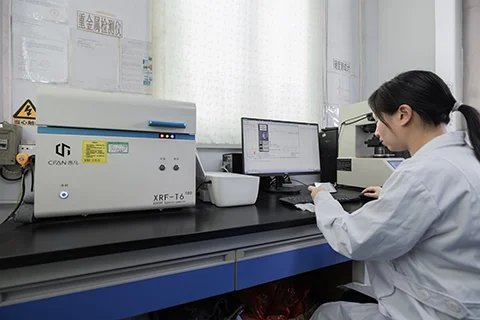
Songji's inspection process covers four stages: incoming material checks, first-article approval, in-process spot checks and full inspection of finished goods, with records kept at each step. This kind of traceability is what international brands look for when auditing a factory.
III. Certifications and Audit Records
For brands placing large annual orders, a factory's certifications and audit history directly shape whether they move forward with a partnership.
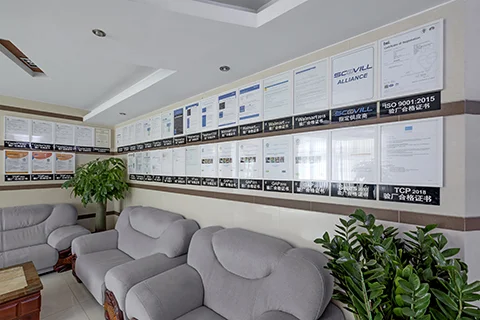
OEKO-TEX Standard 100 is one of the most widely recognised environmental certifications in the textile accessories field. It covers the full supply chain from raw materials to finished product, requiring testing for harmful substances, with infant and children's products meeting Class I standards. A denim button manufacturer with OEKO-TEX certification has already passed independent third-party testing—so brands can source with confidence without batch-by-batch lab checks.
ISO 9001 certification focuses on production process management. Factories with this credential keep written records at every stage—order confirmation, sample approval, mass production and final inspection. This level of process documentation is a practical indicator of whether a supplier can handle long-term, high-volume collaboration.
Factory international brand audits are another useful data point. The more audits a factory has passed across different brands and standards, the more its quality systems and responsiveness have been validated. Songji has completed 72 international brand audits over the past eleven years, working with GAP, Walmart and Carter's, among others. That track record speaks for itself.
IV. Partner Brand Case Studies
The clearest signal of a denim button factory's real capabilities is the brands it already works with.
LEE is one of the most established names in denim, founded in Kansas City in 1889. LEE's classic cuts and denim expertise set the benchmark in the industry. Supplying buttons to a brand like LEE tests a factory's consistency and its ability to handle new product development under demanding standards. Songji's engagement with LEE—from initial sample approval through to bulk delivery—was managed entirely to the brand's requirements. That partnership illustrates what Songji can deliver in the premium denim segment.
Beyond LEE, Songji also supplies denim and workwear buttons to VF and Carter's. Each of these brands runs its own supplier audit process. Passing those audits and maintaining ongoing relationships is proof of consistent capability.
V. Minimum Order Quantities and New Product Prototyping
Chinese denim button factories vary widely in minimum order quantities and how well they support new product development. Knowing what to expect upfront saves time during the quotation stage.
Standard off-the-shelf products usually carry lower minimum orders and work well for reordering established styles. Custom products require new tooling, so mould costs typically scale with the order volume. Songji's customisation services cover three areas: logo customisation, shape customisation and surface treatment customisation. Brands can pick a single option or combine several to match their design needs.
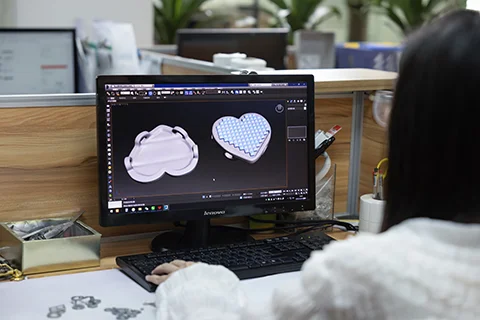
New product prototyping is where you can gauge a factory's commitment. Factories willing to iterate on samples and work through revisions during the prototyping phase tend to stay reliable once mass production begins. If a manufacturer drags its feet or cuts corners during sampling, that pattern usually continues into the production run.
Songji's prototyping process covers four steps: requirements discussion, proposal confirmation, sample production and sample approval. A dedicated contact person manages the whole process, providing clear updates at each stage. First-time clients typically get one to two rounds of sample adjustments at no charge; additional revisions are billed at actual labour cost, which is standard across the industry.
VI. What to Check Before Reaching Out to a Supplier
Based on the points above, here are a few things you can verify before sending a formal enquiry.
Materials and processes must match your target market. If your product needs to meet specific market compliance requirements, check whether the supplier understands the heavy metal standards for those markets. Requirements differ across regions, and factories with direct compliance experience tend to be more familiar with the specifics.
Quality systems need solid record-keeping. The three tests covered earlier—tensile strength, salt spray resistance and heavy metal content—carry more weight if the factory can show third-party test reports from within the last year. Recent reports indicate ongoing quality control, not a one-off effort.
Response speed matters. How quickly a factory gets back to your enquiry and sends a formal quotation reflects how its internal processes are organised. Faster responses typically mean smoother handling of orders and delivery timelines down the line.
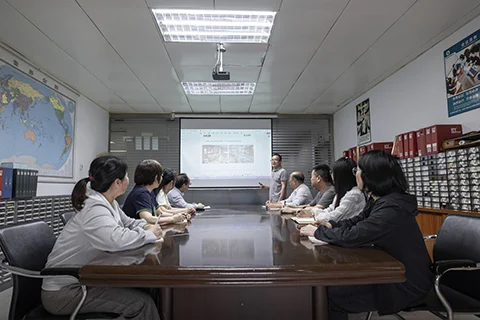
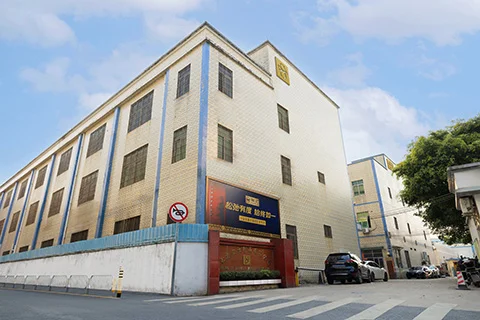
Shenzhen Songji Button Products Co., Ltd. was established in 1999 and operates from a 12,000 m² facility in Longhua, Shenzhen. The company produces metal buttons and hardware accessories including denim buttons, snap fasteners, workwear buttons and five-prong buttons. Songji holds ISO 9001 and OEKO-TEX Standard 100 Class I certifications, and has completed 72 international brand audits over the past eleven years, serving over 100 global brands including LEE, GAP, VF and Carter's. With nearly 700 production machines and a monthly capacity of 300 tonnes of copper and 60 tonnes of alloy, Songji is equipped for stable, high-volume delivery.
Need custom denim buttons or workwear hardware? Get in touch to discuss your requirements.