Between 8% and 19% of European adults are allergic to nickel, and a single metal button that fails its nickel release test can become a complaint, a return or a cancelled order. Yet most buyers read a metal button test report by looking for one word — PASS — and skip the numbers that actually matter. Songji has made metal buttons and garment hardware for 27 years, and in that time we have watched too many orders placed on reports that were never really read. If you are sourcing metal buttons and want to know how to read a metal button test report, this guide walks you through the two figures most likely to trip you up: nickel release and pull strength.
I. Why a Metal Button Test Report Can Mislead
A "PASS" only means one sample passed one test, by one method, at one point in time. It does not mean every batch will be the same, and it does not mean the method on the report matches your target market.
The same nickel test can come back several times apart depending on whether it follows EN 1811 or a simulated-sweat method, and the same pull-strength test shifts with where the clamp sits and whether the pull is vertical or sideways. A buyer who reads only the verdict is betting the whole order on the least informative word on the page.

II. What a Nickel Release Test Actually Measures
A nickel release test does not measure how much nickel is inside a button. It measures how much nickel leaks out of the surface when the metal sits against skin, usually over a simulated week of sweat contact. The two are not the same thing.
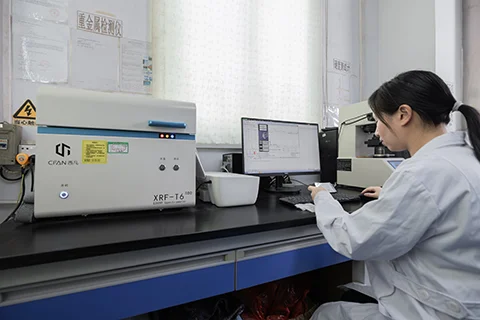
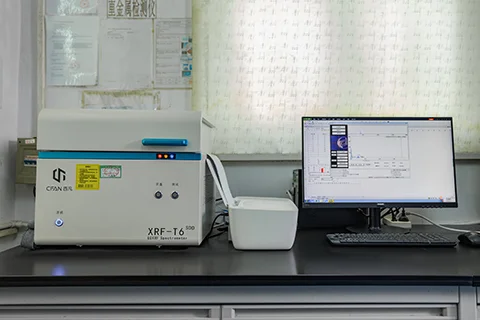
That gap is why most buyers get "nickel-free" wrong. Nickel-free metal buttons are not buttons with zero nickel in the material; they are buttons whose release stays inside the legal limit. When skin against a button turns itchy, the customer's first thought is not "I am allergic" but "there is something wrong with this button". For a brand, that is exactly the complaint a report should prevent. The way to stop it is to test nickel release the moment raw material enters the plant — on a spectrometer and a heavy-metal analyser — before a single button is stamped.
III. The Nickel Release Limit Under EN 1811
The nickel release limit under EN 1811 is 0.5 micrograms per square centimetre per week for metal parts in prolonged skin contact, the same hard line carried by REACH Annex 17. Sweden has pushed its nickel allergy rate down to 8.3% precisely because it was among the first countries to regulate nickel — proof that the number can be controlled when suppliers and brands hold the line.
A credible EN 1811 nickel release test states the method, the unit and the result, then shows it landed within 0.5. A report that only says "nickel-free" with no number is not a test result, it is a claim. Songji keeps heavy metals in its metal buttons within 40 ppm, tighter than the 90 ppm limit of OEKO-TEX Class I, and hands over a nickel release report batch by batch rather than asking a buyer to take a spoken promise.
IV. Pull Strength for Snap Fasteners and Other Buttons
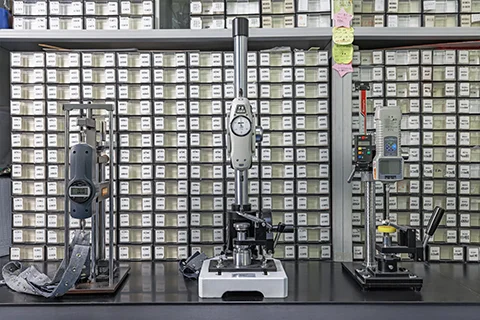
Pull strength for snap fasteners is the force needed to pull the stud and socket apart, measured perpendicular to the fabric. It is the pull strength test that tells you whether a button will pop open in use or stay shut.
The direction matters more than most buyers realise. Snap fasteners and prong snaps are closure parts, tested by pulling apart; jeans buttons and shank buttons are fixed parts, whose load runs along the fabric as a shear force. There is one more twist most reports hide: in snap fastener testing, the same button gives different figures depending on whether it is pulled sideways or straight. A reliable pull strength test names the method and the direction, instead of quoting whichever number looks higher.
V. Common Gaps in Metal Button Test Reports
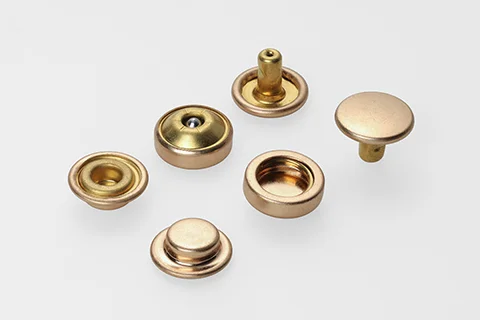
The first gap is partial testing. A snap fastener has a cap, a socket, a stud and a post, but some reports test only the cap's nickel release and skip the rest. The second is an expired or mismatched report, a batch that has changed while last year's paper still circulates. The third is missing heavy metals and azo dyes: a report with only nickel and pull strength will still fail Europe on either missing item. The fourth is the wrong method, such as an EN 1811 item tested with an electroplater's in-house method.
These are not rare slips; they are the four places a weak supplier saves money. Keeping test records for at least five years per batch is what makes a report point back to the exact batch in front of a buyer.
VI. What to Ask About a Metal Button Test Report
First, which standard and method does the report use, and does it match your target market. Second, is the nickel release measured to EN 1811 and within 0.5 micrograms, not a vague "nickel-free". Third, does the pull strength test state the fastener type and test direction. Fourth, does the report match the batch in front of you, with heavy metals and azo dyes not left out.
Ask these four and you can judge a metal button test report on your own, without taking anyone's word for it.
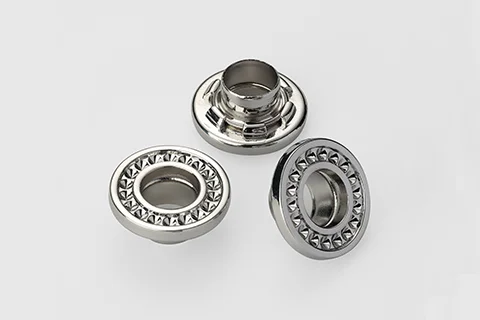
Songji is based in Guanlan, Longhua, Shenzhen, with a 12,000-square-metre factory and nearly 700 machines covering high-speed automatic presses, CNC machining centres and mirror-spark machines. It is a source factory that has focused on custom metal buttons and garment hardware for 27 years. The product line covers metal buttons, snap fasteners, jeans buttons, tack buttons, shank buttons, rivets, metal badges, hooks and belt buckles, in copper, stainless steel, iron, aluminium and alloy. The factory holds ISO 9001:2015, OEKO-TEX Standard 100 Class I and GRS certification, has passed 72 audits from international brands over the past 10 years, and keeps its full-batch defect rate below 0.3%.
If you are sourcing metal buttons for a brand and want a supplier whose reports stand up to a real audit, we would be glad to talk. Want to learn more? Contact us.