If you are sourcing wholesale metal buttons for a womenswear, denim or childrenswear line and cannot settle between a factory and a wholesale channel, this guide puts two quotations side by side. The difference between the two channels is not price but how much can be verified: a wholesale stall sells stock and leaves you nothing to check, while a factory sells scheduling capacity and every element lands on a document, a batch number and a report. Two quotations can differ by two and a half times because they are rarely describing the same product. This guide comes from Songji, a metal button factory in Shenzhen that has been quoting and shipping these orders since 1999, so the cost structure described below is the one we work with every day.
I. Defining Factory Direct and Wholesale Button Supply
Wholesale metal buttons in China run through three layers, and flattening them into one produces the lazy conclusion that a factory is always cheaper. A wholesale market sells stock: the goods sit in a stall, you can take them the same day, split a few hundred pieces, and the price is that colour, size and plating finish are fixed. A factory sells scheduling capacity: a line belongs to your order for a stretch of time, and the price is a minimum order quantity and a lead time.
A trader sells the ability to bundle, combining several small orders into one large one for a factory, and the price is that process detail passes through another hand.
Wenzhou's Qiaotou town is the name nobody in this trade can avoid. Public reporting in September 2026 put its annual output above 100 billion buttons, roughly 70 per cent of national production and about 40 per cent of the global total. The figure needs separating: Qiaotou is strong in resin, ABS and shell buttons and in plastic decorative trims, while the metal button cluster sits in Guangdong, around Shenzhen, Dongguan and Foshan. Reading the metal button trade through Qiaotou's output points you in the wrong direction, and the comparison that matters is between a Guangdong factory and a wholesale stall anywhere else.
The distinction changes what you do next. A stall flying a factory direct banner is usually a trader itself, taking goods from a Guangdong or Zhejiang factory and carrying the stock and the repacking.
That is not deception, it is the business model. Trouble starts when you want to change a plating colour, adjust the length of a prong or ask for a batch test report, and the stall cannot answer without going back to the factory, at which point the response time becomes your lead time. Set factory direct vs wholesale metal buttons side by side and the difference lands in that response capacity, not on the label.
II. Comparing Metal Button Quotes Like for Like
The same 15 mm round snap fastener quoted at RMB 0.35 by one supplier and RMB 0.9 by another, a gap of two and a half times. The instinct is to read the second as profiteering or the first as cutting corners. More often the two quotations are not the same object.
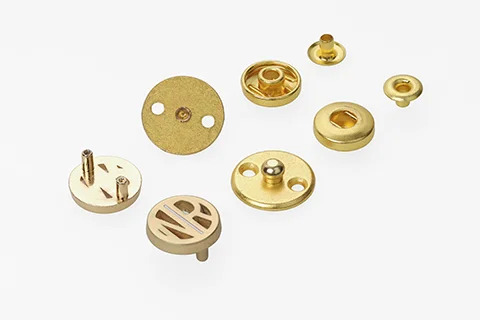
Four things have to line up before any comparison means anything: base material grade, plating process, tolerance and testing requirement. A snap fastener, a jeans button and a shank button fail for different reasons and are quoted on different bases, so a bundle of mixed metal buttons and garment trims cannot be benchmarked as one lot.
Base material alone is a hard difference. Iron is cheapest, its elongation and tensile strength trail copper and stainless steel, and it has to be plated against rust. H65 brass costs more and gives better corrosion resistance and formability, surviving 20 to 30 bends without cracking. Stainless does not rust on its own, though the visible face is still plated for colour and the hidden prongs and underside are left bare. A gold-coloured snap quoted in iron and the same shape quoted in brass are not competing offers.
Plating is usually the largest of the four and the easiest to leave vague, because a colour name says nothing about how it was put down. Two gold snaps can differ tenfold on process and both still be called gold. Ask for the plating type, the thickness in microns and the salt spray band, and put all three in the specification rather than accepting that it matches the sample. Vacuum plating at around 15 microns clearing salt spray at 5 per cent for 50 hours is the band we work to internally, which is our own acceptance line rather than a market threshold.
Tolerance decides whether the part assembles. General parts hold ±0.05 mm and functional parts ±0.025 mm, which is our machining capability and varies from supplier to supplier. Let the male and female halves of a snap drift apart on tolerance and the opening force wanders, showing up on the garment as one side tight and the other slack. A quotation without a tolerance is not a quotation.
Testing decides how inspection cost is absorbed. Whether there is third-party data, which items it covers, whether it is per batch or per year, With a single report running from a few hundred to a few thousand RMB. Spread over 5,000 sets it disappears; spread over 500 it becomes part of the unit price.
The only way to turn metal button price per piece into a comparable number is to make every supplier quote against one specification sheet. List base material, plating type, plating thickness, tolerance and test items on a single page, ask for item-by-item confirmation, and refuse a bare figure in return. Anyone answering that it is all fine, or the same as the sample, does not need a second look.
III. Counting Costs Behind the Metal Button Price
Plate fees hang off the minimum order. Our policy is to charge one only below MOQ, waive it at MOQ and never repeat it on a repeat order. Ordinary plating and ordinary spray painting start at 5,000 sets with RMB 80 below that; ordinary rack plating starts at 3,000 sets with RMB 120 below; real gold rack plating starts at 3,000 sets with RMB 500 below. That is Songji's own policy, and thresholds differ between factories, but the structure is the same and every one of them is tied to quantity.
A calculation makes it plain. On 3,000 sets of rack-plated snaps the RMB 120 plate fee adds RMB 0.04 per set. Cut the order to 1,000 and the same RMB 120 becomes RMB 0.12. The unit price has not moved and the real cost has risen by RMB 0.08 a set, which on a RMB 0.5 button is 16 per cent. The metal button MOQ in China bites exactly here, through amortisation rather than a supplier inventing a surcharge.
Tooling is one-off and not repeated on a repeat order, and the figure is assessed per job on material and structural complexity, copper, alloy and shank styles each landing differently, with no standard price list. Buyers lose money here less often through the amount than through never asking who owns the tool. A tool that lives at the factory has to be cut again if you move supplier, and that money is gone.
The trade convention is that the customer pays, owns the tool and leaves the physical tool at the factory for production without separate shipment, and that sentence belongs in the contract. Buyers moving into custom button development for the first time are the ones most likely to skip it.
Lead time stability depends on how smoothly the plating stage runs. On regular orders below 500,000 sets in standard finishes we quote 14 days, and that figure already carries the plating turnaround. Plating sourced fresh each time queues for a bath slot in peak season, while a standing arrangement books the slot in advance, and the difference shows most sharply before and after Chinese New Year and in the autumn build-up.
Freight follows domestic convention: delivery to a logistics point nominated by the customer once the order passes RMB 5,000, not to the door. Export orders quote on a different basis with freight and clearance outside it. Add every line back in before comparing unit prices, and a gap of 2.5 times can narrow to 1.2 times, or reverse.
IV. Matching Button Volume to a Supply Channel
Four variables decide it: order volume, number of styles, degree of customisation and time pressure.
Below 500 sets, stock wanted, colour flexibility accepted, a wholesale stall or a trader fits better and a factory will not take it. Between 500 and 3,000 sets with customisation, a trader bundling the order or a factory's small-lot policy both work. Above 5,000 sets in a single style, factory direct metal buttons give you price and process control together. Many styles at low volume each but a large total still points to a factory, with combined scheduling negotiated so several styles run inside one production window.
Where factory direct fails deserves saying too. Stock replenishment, emergency orders, dozens of colours at tiny quantities each, delivery inside three days: wholesale channels handle these better, because a factory's scheduling cycle makes speed impossible.
The real constraint on wholesale metal buttons in small quantity is not willingness but process economics. Plating is a bath process with a minimum load, and a bath holding 200 pieces costs almost what a bath holding 2,000 costs. That is why a custom order under 500 sets is expensive everywhere, and it is fixed cost rather than a middleman's markup. Once that is clear you know what to argue about on a small order: not the price, which has nowhere to go, but the scheduling slot and whether your run can share a bath with someone else's.
V. Checking Who Actually Makes the Buttons
Getting custom metal buttons no middleman in between is verified not by a factory tour but by asking for a set of documents.
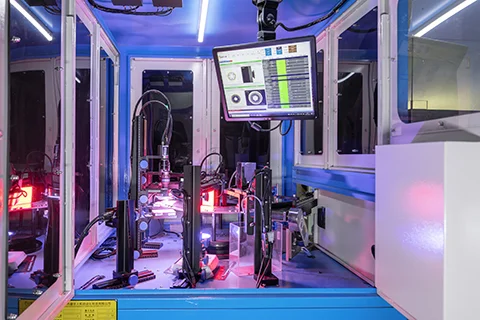
Start with the plating stage. It is the most expensive and most failure-prone part of a metal button, and the easiest to fudge at acceptance. Whether the colour is right and the deposit thick enough cannot be seen, and salt spray and coating thickness are what speak. Our practice is to send a sample from every plating bath for third-party heavy metal testing with the report filed against that batch, and to audit the plating stage and its production records on a surprise basis, with anything below requirement going no further.
All of that is verifiable in three questions: whether the plating bath is sent for third-party testing, whether the reports can be seen, and whether the plating shop's discharge permit will be handed over as a copy. Plating is a heavy-pollution process and the operator must hold a permit, with the environmental approval naming the plating types allowed, since gold, nickel, black nickel and gunmetal sit under different scopes. Few factories produce all three.
Then the document chain. An order should run as one unbroken line from arrival to dispatch: the customer PO maps to an internal order number, the internal order number splits into sub-orders such as A1 and A2 at stamping, the sub-order maps to a raw material batch number, and that batch number maps to a purchase order and a warehouse requisition.
Every node carries an inspection record. Incoming material has an SGS report, an incoming inspection report and a spectrograph report. Stamping has a first-article confirmation, patrol inspection and batch inspection. Assembly repeats first-article, patrol and batch. Packing carries a finished-goods spectrograph re-check, a function test and a needle detection record, closing with the shipment sample signed off.
The chain earns its keep in fault finding. A problem in a consignment can be traced back to which copper melt, which stamping run, which plating bath and which first-article sign-off, rather than a promise to improve next time.
Our files are kept five years, and if a customer needs anything we hand over the complete traceability pack within 24 hours. That claim doubles as an audit question: pick any order number from two years ago and see whether the supplier can pull the whole chain within a day. The ones that can are the ones actually making the goods. The channel question resolves itself at this point: a stall cannot produce this chain, and neither can a trader that never held the goods.
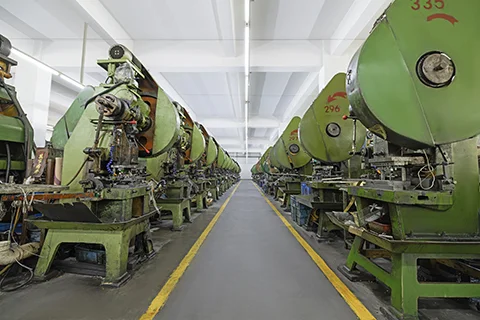
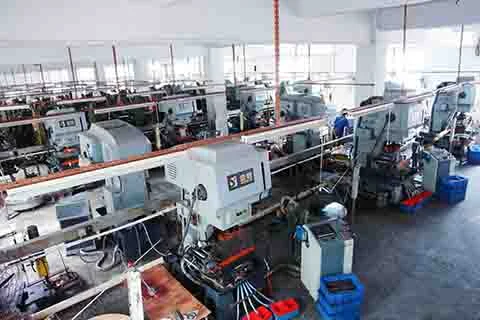
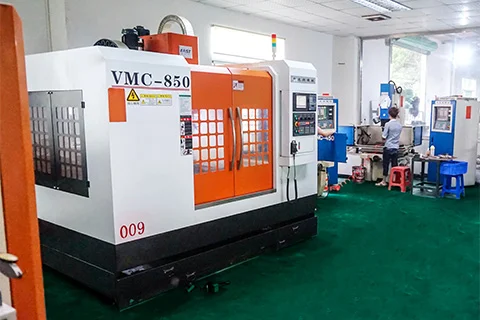
Plant and equipment still count. At close to 700 machines across 12,000 sq m, one walk through the floor tells you whether the brochure is real, and an equipment list beats a catalogue because model numbers can be looked up.
How a factory answers an engineering question separates them further. Ask three: the male-to-female fit tolerance on this part, the pieces this tool punches per stroke, and the plating thickness in microns. A trader cannot answer, or will check with the factory. A factory's engineer gives numbers and asks where you are using it, because those three decide how the part behaves on the line, and none of them can be read off a catalogue page.
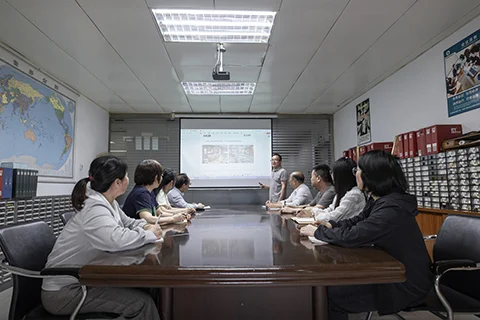
Surprise audits come last because they are the easiest to wave through verbally. Turn up unannounced and walk in; agreeing is not the same as doing. Over the past decade we have been through 72 brand audits, including Walmart, GAP and VF, and that factory audit record can be asked for.
VI. Deciding on a Metal Button Sourcing Channel
Five questions, and the answer tends to surface on its own.
What is the real quantity on this order, and will it repeat within twelve months, since repeat expectation is what buys a concession on the first run. How many colours and sizes, because colour count drives plating bath runs and bath runs drive cost, and a five-colour order does not share a cost structure with a two-colour one.
Are there testing requirements, and is the report per batch or per year, which decides how inspection cost spreads into the unit price. Can the lead time absorb 14 days or more, and if not, factory direct is largely out. Can you produce a specification sheet naming base material, plating type, plating thickness, tolerance and test items, because if you can, half the suppliers will drop out, and that is the filter doing its job.
Most buyers find the pattern easier to see across a run of metal button projects than argued in the abstract, which is why the five questions are worth writing down before the first quotation arrives.
Songji has been making metal buttons in Guanlan, Longhua, Shenzhen since 1999, 27 years now, on a 12,000 sq m plant with close to 700 machines covering copper, stainless steel, iron, aluminium and zinc alloy. The range runs across snap fasteners, jeans buttons, prong snaps, shank buttons, rivets, eyelets, trouser hooks, magnetic closures and metal badges, with more than 10,000 styles and a hundred new ones a month, backed by over 100 national patents. ISO 9001 and OEKO-TEX certification sit alongside GRS, HIGG FEM, GAP-TQP and an intellectual property management system. We have been through 72 brand audits in ten years, serve more than 100 brands and supply Prym and Morito Scovill. Batch test files are kept five years, the defect rate is held below 0.3 per cent, and sampling takes three to five days.
There is no single right channel, only a fit. The volume you need, the depth of customisation and the speed you want decide which layer of supplier suits you, not which layer is cheaper. If you have a live order and want the two cost structures put side by side, you are welcome to get in touch.Want to learn more? Contact us.