If you are sourcing metal buttons, snap fasteners, jeans buttons or rivets for a children's line sold in the United States, this guide walks you through what the Consumer Product Safety Commission actually requires of the hardware, and where the requirement stops. Much of what circulates in this trade about children's buttons is either out of date or attributed to the wrong rule. One clause in the federal small parts regulation exempts children's clothing and buttons outright, yet recalls for detached snaps keep happening, and the two facts sit together without contradiction once you see which rule each one belongs to.
Wherever a figure here is attributed to Songji, it is our own internal control line, not an industry-wide threshold. What you are actually buying against is set by your brand's specification sheet and by US federal law, and treating a factory's self-imposed standard as the legal floor is the most expensive mistake in this category.
I. Classifying Children's Metal Hardware Under CPSIA
The rule follows the child, not the component, and that one principle governs how all children's apparel metal hardware is classified. CPSIA covers products designed or intended primarily for children aged 12 and under, and intent is read from labelling, marketing, packaging and how consumers recognise the item, not from what the factory declares on an invoice. A garment labelled 6-9M is a children's product whatever the trim inside it happens to be.
Hardware rarely stands alone as a product. It arrives fitted to a garment, and its legal identity is a component part of that garment, which means the lead limits, the accessibility assessment and the testing obligation all travel with the finished piece. The same prong snap behaves differently depending on where it lands: on a baby bodysuit it is an apparel component, while on a plush toy it falls under ASTM F963 and its soluble element migration limits. We ran into that boundary on a Carter's infant project where one prong snap served both a garment and its matching soft toy, and the customer needed two separate reports because the classification, and therefore the test method, was not the same. The workable habit is to settle the end use at development stage, before a report comes back showing the wrong standard was run.
One more layer is easy to miss. CPSIA governs chemical content and part of the physical requirement, while fabric flammability sits under 16 CFR 1610, with children's sleepwear adding 16 CFR 1615 and 1616 on top. Metal hardware takes no part in a burn test, but it has to be present when the garment is submitted, because a fitting changes how the fabric burns and a test run on a stripped sample tells you nothing about the finished item.
II. Reading the Lead Limit on Metal Buttons
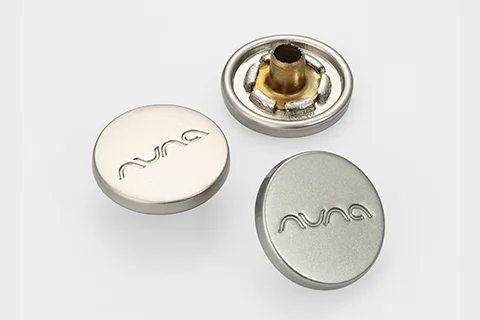
CPSIA Section 101 sets two numbers, and the CPSIA lead limit for metal buttons is the pair buyers confuse most often. No accessible component part of a children's product may exceed 100 ppm total lead in the substrate, and paint or similar surface coating may not exceed 90 ppm. The first is measured on the metal itself, the second on the plating, paint or ink sitting on top of it, and the two fail for entirely different reasons.
For metal buttons the argument is almost always about substrate. 16 CFR 1500.87(b) states plainly that paint, coatings or electroplating may not be considered a barrier that renders lead in the substrate inaccessible to a child. Plating cannot rescue a bad alloy, however good it looks. Free-machining brass and leaded copper alloys are the highest-risk substrates in this category, because lead is present in the copper as a machining aid and removing it costs machinability first and money second.
Stainless steel carries a policy advantage here. 16 CFR 1500.91 lists materials the Commission has determined will not exceed the 100 ppm limit, so they need no third-party lead testing to support a certificate, and specified stainless steel is on that list alongside textiles, precious metals, wood and paper. A stainless part saves one round of testing on lead alone. Copper alloys are not on the list and must be tested batch by batch for as long as the programme runs.
Songji's internal line on lead sits at 60 ppm, which is our own requirement rather than a market value. We hold it there because infant customers tend to write acceptance criteria tighter than the regulation, and a 100 ppm legal ceiling leaves a factory too little room once batch variation appears.
Plastic parts answer to a different rule. 16 CFR 1307 caps eight phthalates at 0.1% in accessible plasticised components, which reaches plastic-cored snaps, moulded backing discs and injected decorative parts. It does not touch the metal body of a metal buttons and snap fasteners programme, but any style using a plastic spring or plastic base has to be screened separately, and a metal report cannot stand in for it.
III. Testing Snap Fasteners Beyond the Federal Minimum
The CPSC small parts exemption for children's clothing is real, and it is also the most misquoted clause in this industry, which matters because the misreading drives real spending. 16 CFR 1501 is the method for identifying toys and other articles intended for children under three that present choking hazards because of small parts, and from that title people conclude that children's buttons must pass small parts testing and a pull test. The exemption clause at 1501.3(d) reads otherwise: children's clothing and accessories, such as shoe lace holders and buttons, are exempt from the regulation. A pull figure of 90 newtons held for ten seconds, which appears in a great many sourcing documents, is not a 1501 requirement, and the number cannot be located in 1501 or in 1500.51 through 1500.53 either.
Exemption is not the same as safety. The Commission holds a catch-all power under CPSA Section 15, which allows action against a product that presents a substantial product hazard, judged on whether a defect, a missing marking or a failure to meet a standard could create a substantial risk of injury. A snap that comes off a baby's jeans and fits in a small mouth travels that route, and no small parts exemption stands in the way.
In August 2023 The Children's Place recalled about 97,400 baby and toddler stretch jeans because the metal snaps could detach and pose a choking hazard, recall number 23-257. The run covered sizes 6-9M to 5T and sold at roughly USD 25. The firm had one report of a snap detaching, no injuries were recorded, and the goods were made in Kenya. In May 2022 Winter Water Factory recalled about 46,500 infant jumpsuits, rompers, snap suits, dresses and bibs because the snaps could detach and expose sharp prongs, creating both a choking and a laceration risk, recall number 22-130. Neither case turned on lead. Both turned on a fitting that separated during normal use, and the origin of the first is worth noting: a snap that detaches is a design and validation failure, not a country-of-origin one.
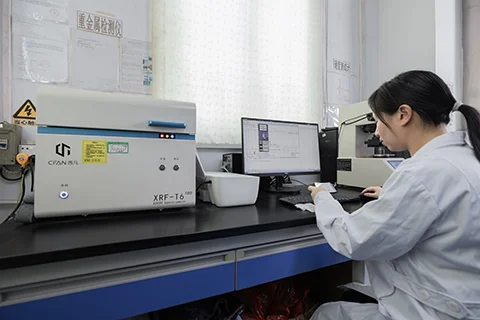
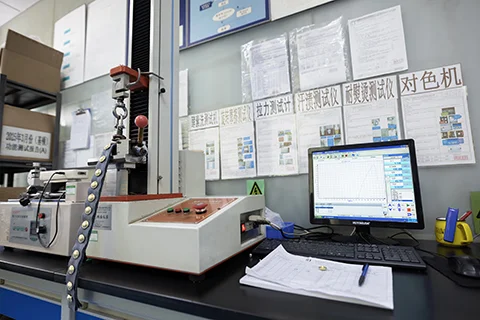
What actually governs the line, then, is the brand protocol. Specification sheets from mainstream US childrenswear labels carry a snap fastener pull test and a torque test as standard, usually set at the magnitudes in 16 CFR 1500.51 to 1500.53, which is 10 pounds of tension for children 18 months and under, 15 pounds for 18 to 96 months, and 2 to 4 inch-pounds of torque. Fifteen pounds is about 67 newtons. Those methods were written for small parts determination, and once a brand borrows them for trim approval, they become the pull figure suppliers are measured against.
Our own destruction tests on infant snap fasteners run at roughly 200 N for the S-spring type, and about 160 N in an angled pull and 270 N in a direct pull for the round spring type, which are factory figures rather than a market standard. A fastener that clears 67 N will not necessarily survive a toddler working at it, and a pull perpendicular to the fabric and a pull across it were never the same measurement, so agree the direction and the fixture before comparing numbers. Buyers assessing children's apparel hardware projects usually find that this one question separates a factory with a test bench from one with a catalogue.
IV. Separating Brand Protocols from Legal Requirements
The commonest buyer error is carrying one report across every customer. A line that says compliant with CPSIA confirms the legal items were run, it says nothing about the brand items, and the brand items are what get a shipment rejected. The gap matters most on a custom metal trims programme, where the specification is written around one brand's requirements and the supplier has been approved against them.
The certificate itself is a good illustration. A Children's Product Certificate can only be issued by the domestic manufacturer or the importer of record, and an overseas trim factory or garment factory has no standing to issue one. On a children's product certificate for apparel trims, what a factory can hand over is third-party test data from a CPSC-accepted laboratory, material declarations and batch records. 16 CFR 1110 sets out the seven elements a certificate must carry, and the laboratory's name, address and acceptance number have to match the report exactly, because a single mismatch is enough for customs or a marketplace review to reject the filing outright.
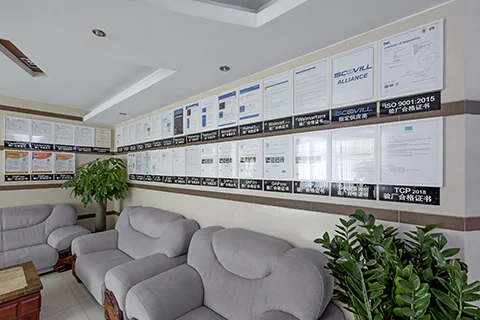
The second gap opens at audit. Songji has passed 72 international brand audits over the past 10 years, and the emphasis differs sharply between them: GAP examines process documentation, VF examines consistency of execution against standard, and Carter's goes deepest on infant parts, checking records for edge rounding and skin-sensitivity testing batch by batch. None of that appears in CPSIA, and all of it decides whether goods enter the warehouse. The full factory audit record is the part of a supplier's file that a buyer should read before the test report.
A practical test of whether a supplier understands childrenswear is three questions. Which product type will this part be fitted to, which markets will the garment be sold in, and can the test report for the last batch of the same part be produced right now. A supplier that cannot answer the third has no batch archive, and the filing stage later will expose it.
V. Building Traceability into Metal Trims Production
CPSIA Section 103 sets the tracking label requirements for children's clothing and for every other children's product, and the mark has to be permanent, carrying the manufacturer or importer, the production location, the production date and the batch or run number. Buyers routinely mistake this for information that lives on a certificate, when the mark itself has to sit on the product or its packaging and survive normal use without falling off or becoming illegible.
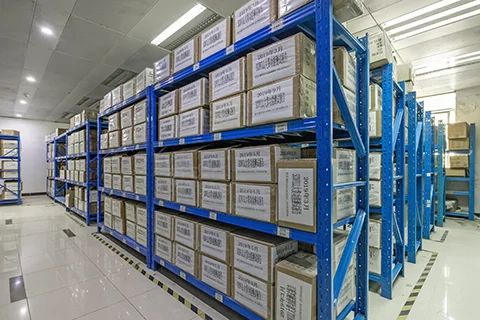
Metal hardware occupies an awkward position in that chain. A snap is too small to carry a tracking label of its own, so the workable arrangement binds the hardware batch number to the garment's tracking label, producing a route from a finished garment batch back to the production batch of the trims. 16 CFR 1107 requires manufacturers to keep test records and records of material changes for five years, and that obligation is absolute rather than advisory.
We hold test files by batch for at least five years, each with its report and traceability code attached, and that archive is the only thing available when a customer runs an annual review or the Commission asks a question. It also changes the economics of switching supplier: a brand that has to rebuild the evidence chain from zero pays for it in testing and delay, not in unit price, and that cost rarely appears in a quotation comparison.
VI. Filing Compliance Data Before Garment Shipments
Since 8 July 2026, electronic filing run jointly by the Commission and Customs and Border Protection has been mandatory. The CPSC eFiling apparel import requirements reach every regulated consumer product entering the United States, whose certification data has to be submitted through the ACE system before the goods arrive, and a shipment without valid data, or with data that does not match, is stopped by the system. Samples, low-value consignments and small trial runs are not exempt, and the only relief granted so far is for goods moving in and out of a foreign trade zone, deferred to 8 January 2027. Full enforcement began on 1 September 2026.
Seven data elements have to be filed: a unique product identifier such as a GTIN, UPC or SKU; the citation for each applicable CPSC rule or standard; the month and year of manufacture; the manufacturer's full name, address and contact; the date of the most recent conformity test; the name, address and contact of the laboratory that issued the report; and the contact details of whoever holds the test records.
Three of the seven depend on the factory: the production date, the laboratory details and the record holder. A trim supplier's filing discipline therefore sets the importer's deadline, and a factory whose records live in a salesperson's chat history will fail at exactly this step.
For children's apparel metal hardware the fabric flammability standards drop out, while the CPSIA lead limit, phthalates where plastic parts are involved, the tracking label and the citation codes all go into the submission. The test is the final form and intended use of the product, not the tariff heading it clears under, and mixed consignments are where that distinction gets lost. Our OEKO-TEX and ISO 9001 certifications sit alongside batch-level lead data precisely because a certificate answers the market question while a batch record answers the filing question, and buyers need both.
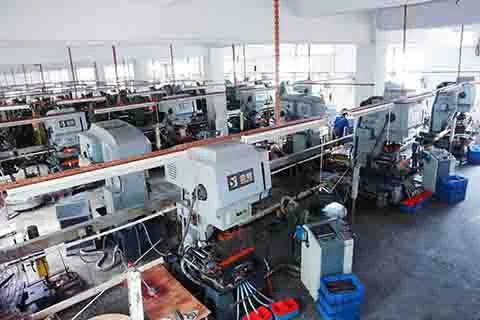
Songji has made metal buttons in Shenzhen since 1999, which makes 2026 our 27th year, with a 12,000-square-metre plant in Guanlan, Longhua and nearly 700 machines covering high-speed presses, CNC centres and mirror-spark machines. The line runs from snap fasteners, prong snaps, jeans buttons and shank buttons through rivets, eyelets and metal badges, in brass, stainless steel, iron, aluminium and alloy, with more than 10,000 styles on record. The factory holds ISO 9001:2015, OEKO-TEX Standard 100 Class I and GRS certification, along with HIGG FEM and GAP TQP, and has supplied infant snap fasteners to Carter's over a long run using nickel-free stainless steel and high-purity brass, with edge rounding, skin-sensitivity testing, a report and a traceability code on every batch, a defect rate held below 0.3% and more than 150 standardised quality gates between incoming material and dispatch. If you are evaluating hardware for a children's line, we would be glad to talk through the categories and the markets you are selling into. Want to learn more? Contact us.