With environmental awareness becoming increasingly embedded in the fashion industry, a growing number of global brands are incorporating sustainability goals into their supply chain management. From raw material procurement to manufacturing, every stage of the metal button production process is under the scrutiny of discerning brands and consumers. If you are looking for a supplier of eco-friendly metal buttons that meets both environmental standards and quality requirements, then this blog post is for you.
In this blog post, we will cover the meaning of GRS certification, the production standards for recycled metal buttons, how to select compliant metal button manufacturers, and the key certifications to verify before placing an order. Please read on!
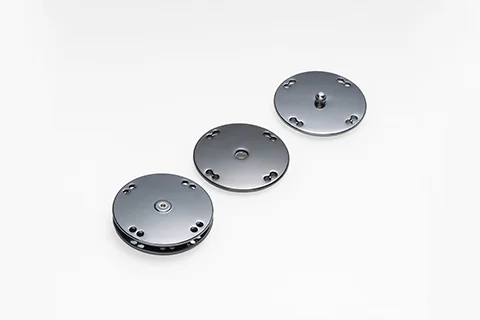
What is GRS certification? Why is it important for metal buttons?
Have you noticed that an increasing number of international brands are explicitly requiring suppliers to provide GRS certification in their procurement documents? GRS (Global Recycled Standard) is an international voluntary certification scheme that not only mandates a specified percentage of recycled content in products but also imposes strict requirements regarding supply chain traceability, environmental management, social responsibility and chemical restrictions.
GRS-certified metal buttons signify:
Traceability at every stage, from the source of the recycled metal to the final finished product.
Certified manufacturers must meet stringent environmental management requirements, including wastewater treatment and energy usage.
Button factories must comply with basic labour rights standards.
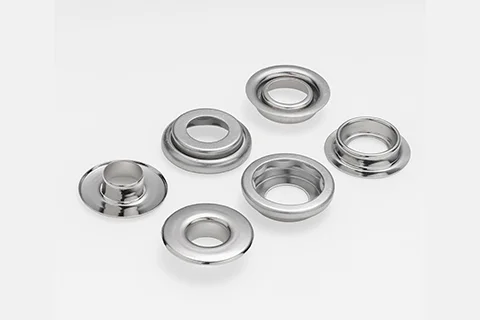
Now, let’s explore what to look for when selecting a wholesale supplier of clothing buttons or any type of button supplier, to help you find the partner best suited to your business. Firstly, you must clarify your core expectations of a compliant supplier, whilst also gaining a thorough understanding of the production standards for recycled metal buttons.
Production Standards for Recycled Metal Buttons
A truly eco-friendly metal button must not only fulfil functional requirements but also be environmentally friendly throughout every stage of production, from raw materials and manufacturing processes to waste management. For example, Songji uses GRS-certified recycled stainless steel and brass for its buttons.
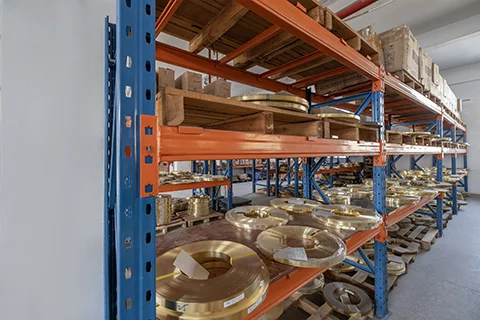
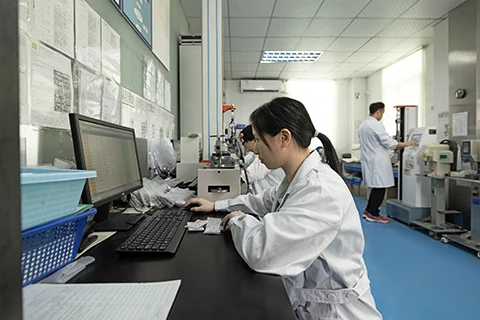
GRS certification requires that recycled materials account for no less than 20% of the total. At Songji, batch identification management is implemented at the raw material stage; each batch of recycled metal undergoes component screening via a spectrometer to ensure controllable impurity levels in the buttons.
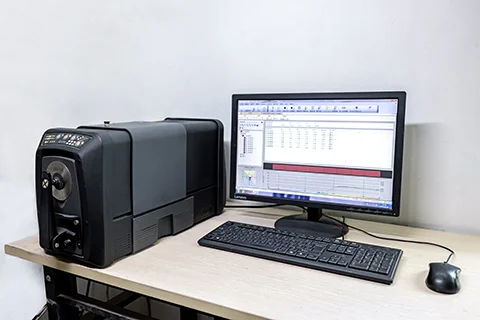
Furthermore, a heavy metal analyser is used to maintain total lead content consistently below 60 ppm – a figure that exceeds the standard EU REACH limit of 90 ppm.
The environmental sustainability of metal button production relies heavily on process optimisation. Songji achieves emissions reduction and efficiency gains through the following innovations.
Through a cyanide-free electroplating process utilising temperature control and pulsed current technology, coating uniformity has been improved to over 95%. Compared to traditional processes, VOC emissions have been reduced by 68%.
After undergoing three-stage treatment (neutralisation and sedimentation + membrane filtration + activated carbon adsorption), 85% of production wastewater can be reused in the cleaning process, reducing annual wastewater discharge by over 5,000 tonnes.
By collaborating with downstream brands to establish a recycling network, we smelt and recycle discarded metal buttons. Data shows that the energy consumption per tonne of recycled zinc alloy is only one-third that of virgin metal, with CO₂ emissions reduced by 75%.
How can the authenticity and quality of GRS-certified metal buttons be verified?
When selecting button manufacturers with environmental credentials, buyers should look beyond the surface and examine three key areas: the scope of certification, test reports, and traceability systems.
Firstly, request the supplier to provide the original GRS certificate to confirm that the product category explicitly includes ‘metal buttons’ or ‘metal trimmings’. Additionally, check the percentage of recycled material to ensure it aligns with the actual procurement requirements and standards.
GRS certification inherently includes restrictions on hazardous substances; professional suppliers should be able to provide corresponding test reports, with particular attention paid to heavy metal content—such as whether total lead, total cadmium and total mercury comply with REACH limits. Furthermore, the core of GRS certification is ‘traceability’; suppliers must establish comprehensive records covering the entire process from the procurement of recycled materials, through production and processing, to the dispatch of finished goods. Taking Songji Buttons as an example, each batch of products is assigned unique traceability information, allowing for the retrieval of details such as raw material batches, production dates and quality inspectors. Furthermore, all test reports are categorised and retained for at least five years, enabling rapid identification and resolution of any issues should they arise.
What else should be considered when selecting a GRS-certified metal button supplier?
In addition to GRS certification itself, buyers may also wish to examine the button manufacturer’s overall environmental credentials, such as whether they hold certifications beyond the GRS certificate.
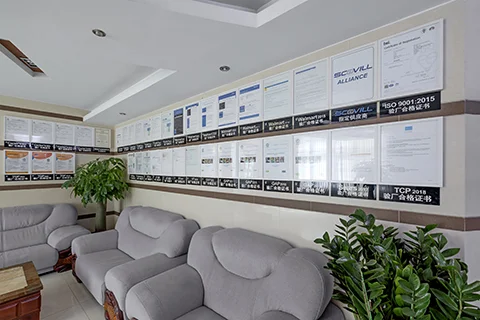
OEKO-TEX® Standard 100 Class I certification: Ensures products are safe and harmless, suitable for contact with infants and young children.
ISO 9001 Quality Management System certification: Guarantees control over the entire process from raw materials to finished product dispatch, ensuring consistent button quality.
HIGG FEM Environmental Performance Verification: A ‘must-have’ for international brands when screening suppliers, proving that the factory meets world-class standards in areas such as carbon emissions management and water safety.
Songji Buttons holds all of the above certifications and has additionally obtained national-level innovation certifications such as the High-Tech Enterprise Certificate and the Specialised, Refined, Unique and Innovative SME Certificate. Its wastewater recycling rate reaches 85%, and VOC emissions are reduced by 68% compared to traditional processes; these figures are all derived from actual production statistics.
Conclusion
Choosing GRS-certified recycled metal buttons is no longer merely a ‘bonus point’ for a handful of pioneering eco-friendly brands. For brand buyers, understanding the specific metrics behind the certification holds greater practical significance than simply looking at the certificate itself. Songji Buttons, a leading Chinese manufacturer of metal buttons, has built systematic capabilities spanning materials, processes, quality control and environmental protection through nearly 30 years of industry expertise. Furthermore, its track record of providing bespoke services to over 500 global brands—including Armani, Burberry, LEE, NUNA and BMW Child Safety Seats—demonstrates Songji’s professionalism and strength.
If you are looking for the best button supplier in China, please contact Shenzhen Songji Buttons. They offer a wide range of stylish button designs and provide customisation options. Contact them today!