When purchasing metal buttons in bulk, the differences in quality—aside from price—often stem from the integrity of the production processes and quality control systems employed by suppliers and brands. A compliant metal button must possess three key characteristics: safety, durability and aesthetic appeal. Achieving these qualities relies on the button manufacturer’s strict control of the entire process, from raw materials to the finished product.
Drawing on Shenzhen Songji Buttons’ 27 years of production and practical experience, this article will analyse how a high-quality metal button is produced and share Songji’s inspection procedures and production standards. If you are interested, please read on!
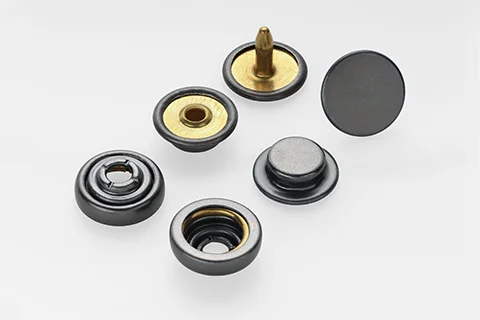
I. What Are the Characteristics of a Good Metal Button?
The key characteristics of a high-quality metal button include:
Safety and Compliance
Sturdiness and Durability
Suitability for Specific Applications
Safety and Compliance: Button manufacturers ensure that every button meets international standards by strictly controlling the levels of heavy metals such as lead and cadmium. Furthermore, the button surface must be free of burrs and sharp edges to prevent any risks during subsequent use. For example, all metal buttons produced by Songji Buttons have passed OEKO-TEX® Standard 100 Class I certification, with total lead content controlled below 60 ppm – far lower than the EU standard of 90 ppm.
Durable and robust: High-quality metal buttons are typically crafted from premium materials such as high-purity eco-friendly brass (Cu ≥ 99.5%) and 304stainless steel. During the testing phase, buttons undergo tens of thousands of opening and closing cycles to ensure consistent fastening strength, maintaining performance even after repeated use.
Performance in terms of salt spray resistance and wash resistance must also meet testing standards. For example, during the customisation of denim buttons for LEE, the buttons undergo 50 enzyme wash tests to ensure that the surface plating does not peel off and that the fastening strength remains consistent.
Scenario Adaptation: High-standard button manufacturers produce buttons with high dimensional accuracy and provide tailored button solutions to match different fabric thicknesses. They also have dedicated design teams to ensure that buttons are realised from concept to final specifications. Shenzhen Songji Buttons currently boasts a product library of over 10,000 styles, with materials ranging from solid copper and stainless steel to zinc alloy, supporting in-depth customisation for various industries.
For details on the specific requirements of the OEKO-TEX® certification standard for metal buttons, please refer to [What is OEKO-TEX® for Metal Buttons].
II. Raw Materials and Surface Finishing
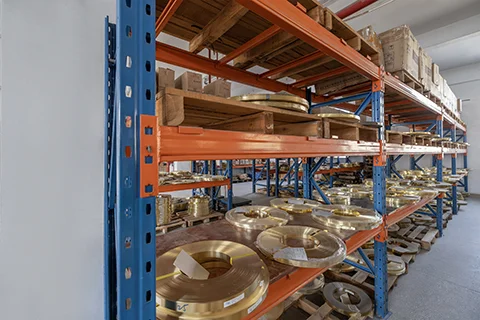
The first step in producing high-quality metal buttons is the rigorous selection of raw materials and the planning and selection of manufacturing processes. Songji Button’s suppliers conduct spectroscopic analysis to screen the composition of base materials prior to raw material intake, ensuring that the ratios of copper and zinc alloy meet standards and eliminating harmful substances at source. Songji’s acceptance criteria require that eco-friendly copper contain no less than 99.5% copper; each batch of raw materials is accompanied by a unique batch label, and heavy metal testing (lead ≤ 60 ppm) and hardness testing are completed before storage.
In terms of manufacturing processes, we design bespoke solutions tailored to specific applications; for instance, cyanide-free electroplating is used for infant and children’s products, whilst high-end apparel features mirror-finish polishing. Songji boasts a team of professional designers who launch an average of 100 new designs monthly; the company holds over 100 national patents and was designated a National High-Tech Enterprise in 2016. Our accumulated technical expertise in structural optimisation and material refinement provides a solid foundation for product safety and durability.
III. Precision Manufacturing and Customisation
Songji operates a production facility spanning over 12,000 square metres, equipped with nearly 700 pieces of intelligent machinery, enabling fully automated production from stamping to finishing.
Songji’s proprietary “one-die-multi-button” process enables the simultaneous moulding of 4 to 6 buttons in a single press, increasing production capacity by 6 to 10 times. Furthermore, through a closed-loop pressure feedback system, general dimensional tolerances are controlled within ±0.05 mm, whilst critical functional fit tolerances are narrowed to ±0.025 mm.
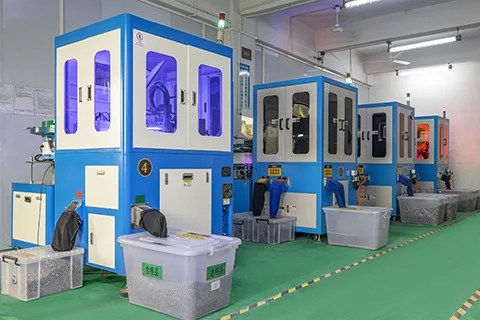
Customisation projects include, but are not limited to, high-end women’s fashion buttons for Ying’er Fashion Group, NUNA baby and children’s buttons, and BMW child safety seat buttons. Each bespoke product undergoes a comprehensive refinement process from mould development and sample testing through to final mass production, ensuring precise alignment between button quality and client requirements.
IV. End-to-End Inspection and Quality Control
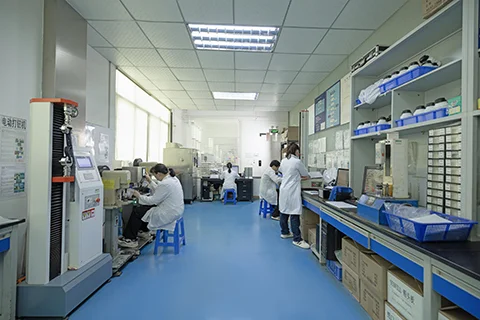
Before leaving the factory, finished buttons must undergo rigorous multi-faceted testing. Songji’s inspection protocol covers over 30 items, including heavy metal content, edge smoothness, dimensional accuracy, tensile strength and corrosion resistance testing. Equipped with specialised testing equipment and manual re-inspection procedures, we strictly prevent defective products from leaving the factory.
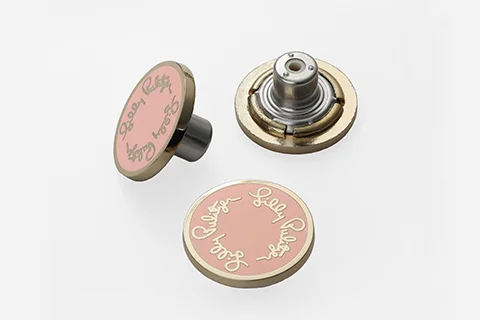
Key Testing Equipment: Tensile tester, colour matching machine, wash testing machine, salt spray tester, enzyme wash tester, Rockwell hardness tester, electric button-setting machine.
Core Performance Data:
Salt Spray Test: We can provide multi-level testing according to customer requirements, including 24 hours at 1% concentration, 24 hours at 5% concentration, and 50 hours at 5% concentration.
Tensile testing: Standard five-prong fasteners ≥90N; four-prong fasteners for children’s bicycles ≥35kg; special hook-and-loop fasteners ≥300kg.
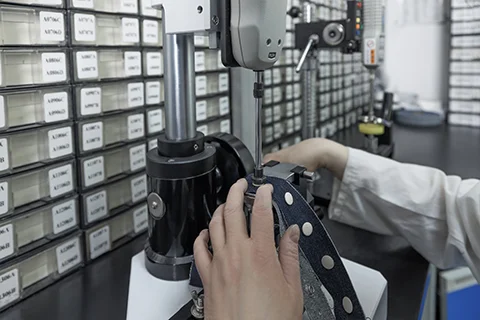
Wash testing: I-shaped buckles customised for LEE Denim maintain colour stability after 50 enzyme washes, with a decrease in fastening force of <5%.
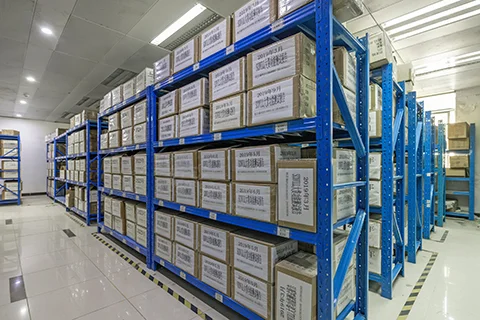
Furthermore, Songji has established a fully traceable system throughout the entire production process. Each batch of products is assigned a unique code, and production and testing data is retained for over five years, ensuring traceability of quality and the ability to investigate any issues. All inspection reports generated during the production process are categorised and archived, facilitating rapid post-sales enquiries and analysis.
V. Authoritative Certifications and International Factory Audits
Songji’s core certifications include:
ISO 9001:2015 Quality Management System Certification
OEKO-TEX® Standard 100 Class I Certification (Infant and Child Products)
GRS Global Recycled Standard Certification (held by only 10–20% of manufacturers in the industry)
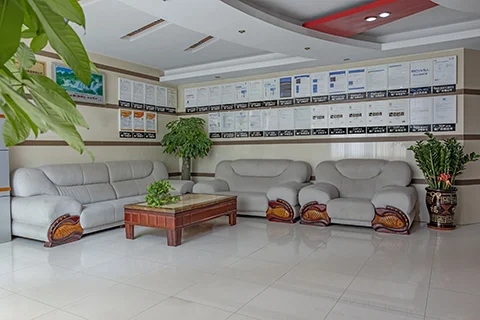
In addition, the company holds HIGG FEM Environmental Performance Verification, GAP-TQP Supplier Quality Certification, Intellectual Property Management System Certification, High-Tech Enterprise Certificate, and Specialised, Refined, Unique and Innovative SME Certificate, amongst others.
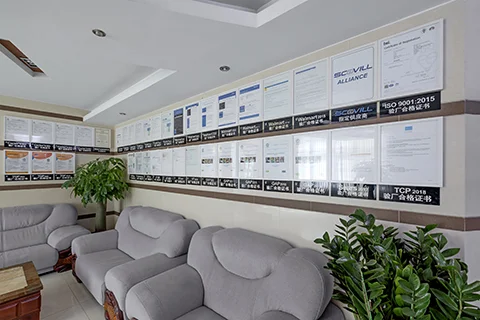
Over the past decade, we have successfully passed 72 on-site audits for eight major international brands, including GAP, Walmart, LEE and Carter’s, with a 100% pass rate. This track record directly demonstrates that Songji meets the standards of globally renowned brands in terms of compliance, social responsibility and environmental performance.
Conclusion
The creation of a high-quality metal button relies on several key factors: high-purity raw materials, production processes and standards, as well as certifications and accreditations. For brand buyers across numerous industries—including apparel, luggage and children’s pushchairs—selecting the right wholesale button supplier is crucial to helping your brand stand out.
By choosing a supplier based on the factors outlined in this blog, you can effectively minimise quality risks associated with buttons and ensure supply chain stability. If you are seeking the best button supplier in China, please contact Songji Buttons. They offer a wide range of button designs and production services, along with customisation options. Contact them today!